

HANOI - In his book "The One-Straw Revolution," Masanobu Fukuoka advocated for not weeding. The concept of lazy agriculture originated from that. However, agriculture in Vietnam can hardly be considered lazy.
HANOI - In his book "The One-Straw Revolution," Masanobu Fukuoka advocated for not weeding. The concept of lazy agriculture originated from that. However, agriculture in Vietnam can hardly be considered lazy.
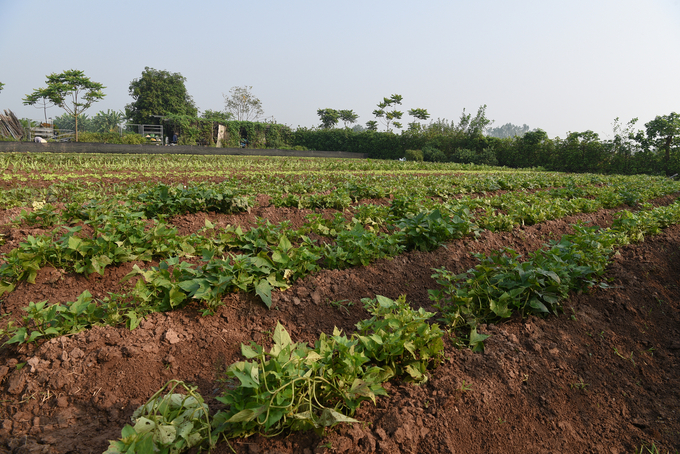
Crop diversification helps reduce pests and diseases. Photo: Duong Dinh Tuong.
Master's degree holder Tran Van Luyen is one of four members of the Green Gen group producing organic vegetables at a farm in Hiep Thuan commune (Phuc Tho district, Hanoi ). He confessed to me that at first, the group members were juggling work and farming, before finally quitting their government jobs because they felt the paperwork was no longer suitable for them.
“This land is where I used to grow pomelos like the 'sugar pomelo', 'Hiep Thuan' pomelo, and 'Que Duong' pomelo with Professor Vu Manh Hai. I even got to know the workers before deciding to rent the land to grow organic vegetables. The group's daily work is selling vegetables on Mondays, Wednesdays, and Fridays, while on Tuesdays, Thursdays, and Saturdays, we continue farming as usual.”
Of the four of us, Chinh is in charge of overall operations, Duyen handles posting sales ads and collecting debts, Thanh is responsible for plant varieties, planting times, and direct production. The rest are in charge of order processing, customer service, and delivery within the city – previously by motorbike, now by van. Every day we travel 15-17km from home to here to do these things,” Luyen explained.
Dr. Nguyen Duc Chinh shared that in organic farming, weeding is the most expensive activity, so Gen Xanh doesn't manage weeds thoroughly. We only cut weeds where they grow too vigorously and could affect the vegetables, while weeds under fruit trees like guava and mulberry don't need frequent weeding. Moreover, weeds are also beneficial.
Dr. Chinh said: "Weeds aren't always wild. Weeds compete with crops for light, nutrients, and water, but with tall fruit trees, weeds have difficulty competing and don't need to be managed too much."
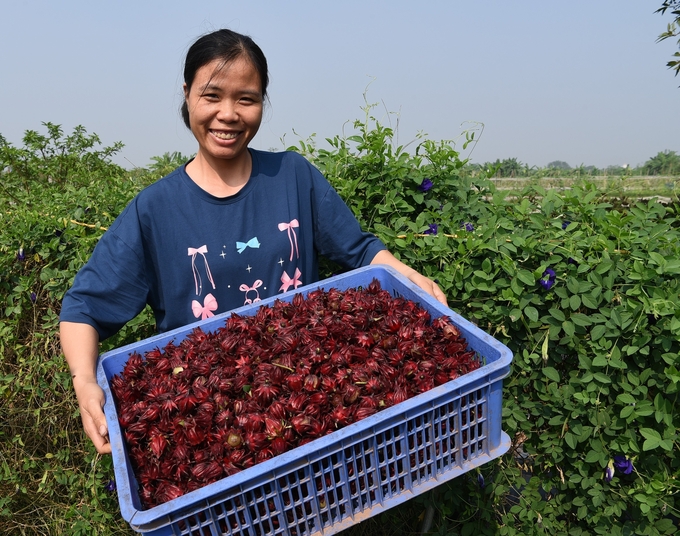
Ms. Nguyen Thi Thanh, a Master's degree holder, harvests hibiscus flowers. Photo: Duong Dinh Tuong.
Even Masanobu Fukuoka's book , "The One-Straw Revolution," doesn't weed. The concept of "lazy agriculture" stems from that. However, it's difficult for agriculture in Vietnam to be lazy. I completely agree with the Japanese author's observation that the productivity of organic farming is increasing and may approach that of chemical farming, because we see farm productivity increasing year by year as the soil improves with age. When productivity increases, costs decrease."
According to Chinh, the pressure on farmers when choosing between spraying and not spraying is immense because seeing insects eating vegetables makes them want to grab a sprayer, especially given the lax supervision in Vietnam. However, after reading a lot of materials, his Green Generation group believes that a shift in mindset is needed, where farmers see insects biting vegetables without feeling pain or distress, and they accept it until a certain point is reached before taking action.
Having learned from the Japanese spirit of self-discipline, the group committed to organic production (the farm has met Vietnamese organic standards) and never used banned substances. Even without supervision, they believed in self-management. Besides vegetables, Gen Xanh also grows medicinal herbs for making tea, such as chrysanthemum, rose, hibiscus, winter melon, bitter melon, and perilla.
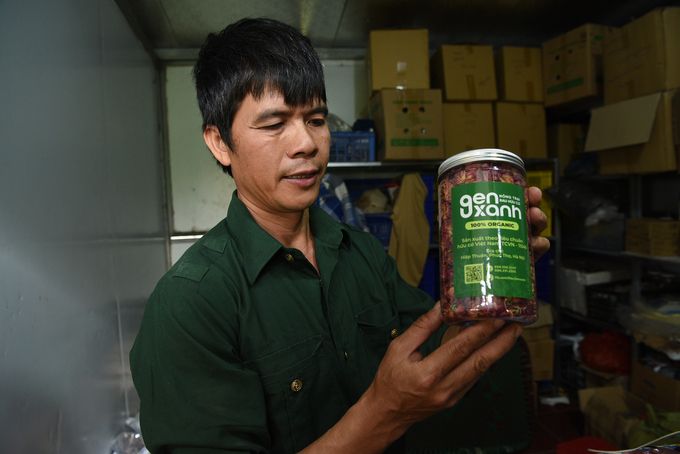
Dr. Nguyen Duc Chinh next to a jar of freeze-dried herbal tea. Photo: Duong Dinh Tuong.
“In Vietnam, you can find medicinal herbs like dandelion, sawtooth dogwood, basil, and centella asiatica everywhere you go… Many things are already here and don’t need to be cultivated because they grow naturally. I haven’t used medicine for a long time because I’m aiming for a natural, self-balanced life. When I’m sick, I just need to steam myself for a while and I feel better and can eat and drink again. Even my farm itself wants to be natural, so the less I buy as input materials, the better, to control quality and save costs,” Chinh shared.
Currently, the group's medicinal herbs are sold both fresh and dried/freeze-dried. Chinh himself has tinkered with and developed a low-cost freeze-drying technology, which consumes even less electricity than hot drying. With a freeze-drying system invested in at only 80 million VND, each batch can dry 1.5 - 3 quintals of goods, meeting the requirement of removing water from the product at a low temperature, not exceeding 40 degrees Celsius. Initially, it's used for chopped tea leaves and stems, then it can be further processed into tea bags or bath water. Besides drying medicinal herbs, Gen Xanh also uses freeze dryers to dry vegetables like water spinach, carrots, and cabbage.
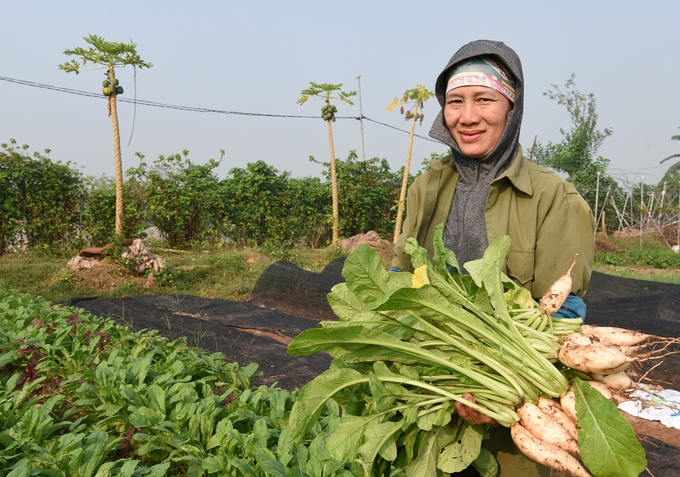
Harvesting radishes at Gen Xanh farm. Photo: Duong Dinh Tuong.
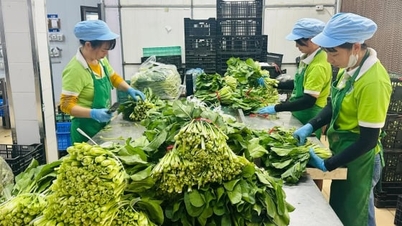
The main customers are individual buyers, following a farm-to-table model, meaning direct delivery to consumers, almost without going through retail stores. Loyal customers are formed through a fan page and a weekly sales group (Monday, Wednesday, Friday). Beforehand, the group posts what items are available that day and their prices. Orders are recorded, and goods are transported by car to a designated location in downtown Hanoi, where professional delivery drivers then deliver them to individual customers.
By delivering in this way, Gen Xanh sells at a higher price than delivering to stores, but customers get a lower price than buying from stores. Currently, the average price of leafy greens is 40,000 VND/kg, and that price remains stable throughout the year, with little fluctuation according to market conditions. The group sells 4-5 tons per month.
The group's annual revenue is a modest little over 2 billion VND, but it's enough to pay wages and vacation allowances for 11 employees, mostly elderly, disabled, and those in very difficult circumstances, as well as buy a van for delivery, rent land to expand the area, and purchase equipment.
The group is also considering partnering with organic vegetable farmers. This would involve supplying inputs, providing technical guidance, monitoring quality, and guaranteeing product purchase, all while building a larger, closed-loop production chain. Currently, Chinh is working with several partners to export organic herbs and medicinal plants to Japan and Europe.
Source: https://nongsanviet.nongnghiep.vn/lam-nong-nghiep-o-viet-nam-kho-co-the-luoi-duoc-d408240.html
![[Photo] Prime Minister Pham Minh Chinh holds a phone call with the CEO of Russia's Rosatom Corporation.](/_next/image?url=https%3A%2F%2Fvphoto.vietnam.vn%2Fthumb%2F1200x675%2Fvietnam%2Fresource%2FIMAGE%2F2025%2F12%2F11%2F1765464552365_dsc-5295-jpg.webp&w=3840&q=75)

![[Photo] Closing Ceremony of the 10th Session of the 15th National Assembly](/_next/image?url=https%3A%2F%2Fvphoto.vietnam.vn%2Fthumb%2F1200x675%2Fvietnam%2Fresource%2FIMAGE%2F2025%2F12%2F11%2F1765448959967_image-1437-jpg.webp&w=3840&q=75)






































![[OFFICIAL] MISA GROUP ANNOUNCES ITS PIONEERING BRAND POSITIONING IN BUILDING AGENTIC AI FOR BUSINESSES, HOUSEHOLDS, AND THE GOVERNMENT](https://vphoto.vietnam.vn/thumb/402x226/vietnam/resource/IMAGE/2025/12/11/1765444754256_agentic-ai_postfb-scaled.png)





































Comment (0)