

Gathering public opinion in a serious, democratic, and scientific manner.
Reporting at the session, Minister of Natural Resources and Environment Dang Quoc Khanh stated that the process of gathering public opinions on the draft amended Land Law was conducted from January 3, 2023 to March 15, 2023.
Minister of Natural Resources and Environment Dang Quoc Khanh affirmed that the process of soliciting public opinion has been implemented seriously, synchronously, democratically, scientifically, openly, transparently, and in-depth, ensuring substance and effectiveness with many diverse and rich forms down to the grassroots level of communes, wards, towns, residential areas, and neighborhoods. It has mobilized almost all agencies and organizations in the political system and all social strata to participate, attracting widespread attention from all strata of people in the country and Vietnamese people residing abroad, truly becoming a broad political activity and an important political and legal event. The opinions contributed by the people all demonstrate deep concern, dedication, and responsibility.
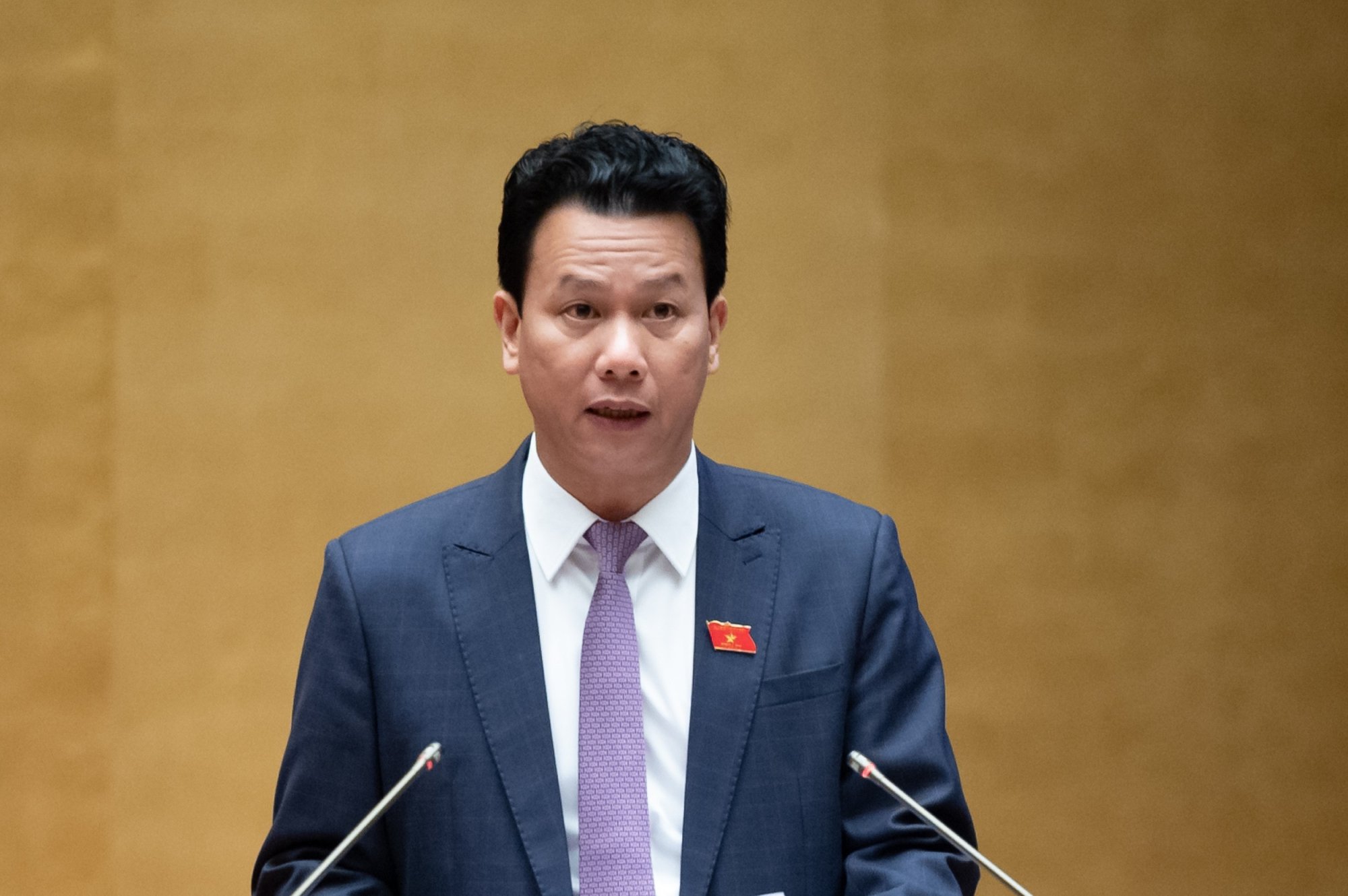
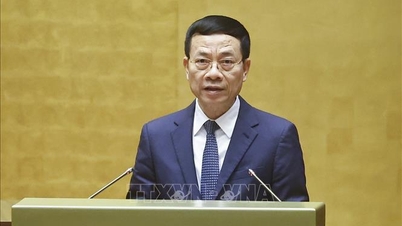
Minister of Natural Resources and Environment Dang Quoc Khanh presented the report explaining, receiving feedback, and revising the draft amended Land Law.
Added 5 sections and 40 new articles.
Minister of Natural Resources and Environment Dang Quoc Khanh said that, taking into account the people's opinions, a number of chapters, sections and articles have been revised and fundamentally changed in structure and content. The draft Law after completion has a structure of 16 chapters, 263 articles, of which 5 sections have been increased (section 3 Chapter IV, section 1 Chapter VII; sections 1, 2, 3 Chapter XVI), 40 new articles have been added, and 13 articles have been removed compared to the draft for public opinion.
Specifically, the draft Law has added to Article 32 a provision stipulating that land users currently leasing land from the State with a one-time payment for the entire lease period may choose to switch to annual land rent payments, and the land rent already paid will be deducted from the annual land rent payable; it also adds a provision that public service units to which the State has allocated land without collecting land use fees, and which need to use part or all of the allocated area for production, business, or service provision, may choose to switch to the form of land lease with annual land rent payments for that area; it adds the responsibilities of the Ministry of Interior and People's Committees at all levels in determining administrative boundaries on the ground, preparing administrative boundary records of localities, and using and providing cadastral records for land management; and it adds provisions on resolving administrative boundary disputes...
Fundamentally amend the provisions on land acquisition, compensation, support, and resettlement.
Regarding land acquisition, requisition, compensation, support, and resettlement, Minister of Natural Resources and Environment Dang Quoc Khanh emphasized that this is a matter that has received much public feedback. Taking into account the feedback, the draft Law has revised the entire content of Article 79 to stipulate that the State acquires land to implement socio-economic development projects for national and public benefit, aiming to maximize land resources, improve land use efficiency, develop socio-economic infrastructure in a modern direction, implement social welfare policies, protect the environment, and preserve cultural heritage; it also specifies cases of land acquisition for various types of public works in each sector; land acquisition for the construction of state agency headquarters, public service facilities, and other truly necessary cases.
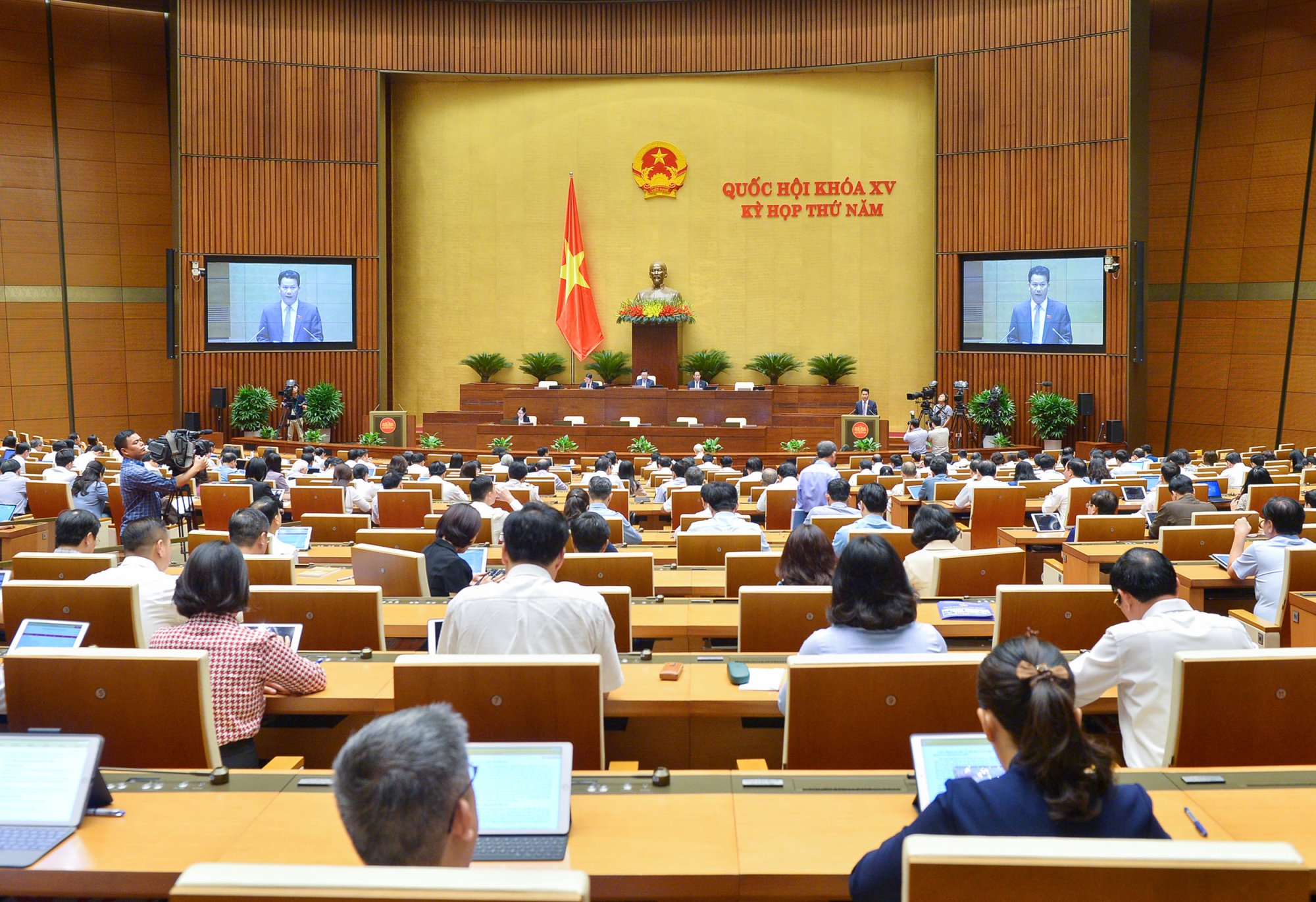
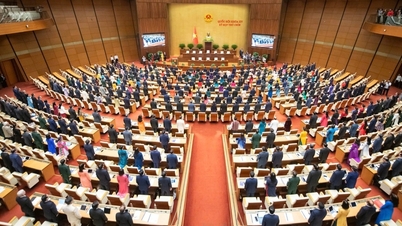
Overview of the meeting.
The drafting agency has studied and incorporated specific regulations, codifying several provisions in the current decrees guiding the implementation of the Land Law that have been proven appropriate in practice, ensuring the legitimate rights and interests of those whose land is expropriated, creating consensus, reducing complaints; and at the same time creating favorable conditions for localities in organizing implementation. Specifically: Compensation, support, and resettlement when the State expropriates land must ensure democracy, objectivity, fairness, openness, transparency, timeliness, and compliance with the law. Those whose land is expropriated are compensated for damages to the land, assets attached to the land, investment costs in the land, and losses due to cessation of production and business; they are supported with vocational training and job search, support for stabilizing their lives and production, and support for resettlement when the State expropriates residential land; and they are given priority in choosing monetary compensation if they so desire. The land compensation price is the specific land price of the type of land being acquired at the time of approval of the compensation, support, and resettlement plan;
Clarify the principles, basis, and methods of land valuation.
Notably, the draft Law also clarifies the principles of land valuation, market land prices, the basis for land valuation, input information for determining land prices, and land valuation methods. It adds regulations on land valuation consulting. Accordingly, land valuation must ensure the following principles: the method of determining land prices must follow market principles; adhere strictly to the methods, procedures, and processes of land valuation; ensure objectivity, openness, and transparency; and ensure independence in all stages of land price determination, appraisal, and decision-making. Input information for determining land prices using these methods must ensure: the land price is recorded in notarized and authenticated land use right transfer contracts; the land price obtained through auction of land use rights must not be affected by factors causing sudden price increases or decreases, transactions involving kinship, or other preferential treatments recorded in the national land database. In cases where land price information is not available in the land database, land price information should be collected through investigations, surveys, and information on revenue, costs, and income from land use according to market conditions.
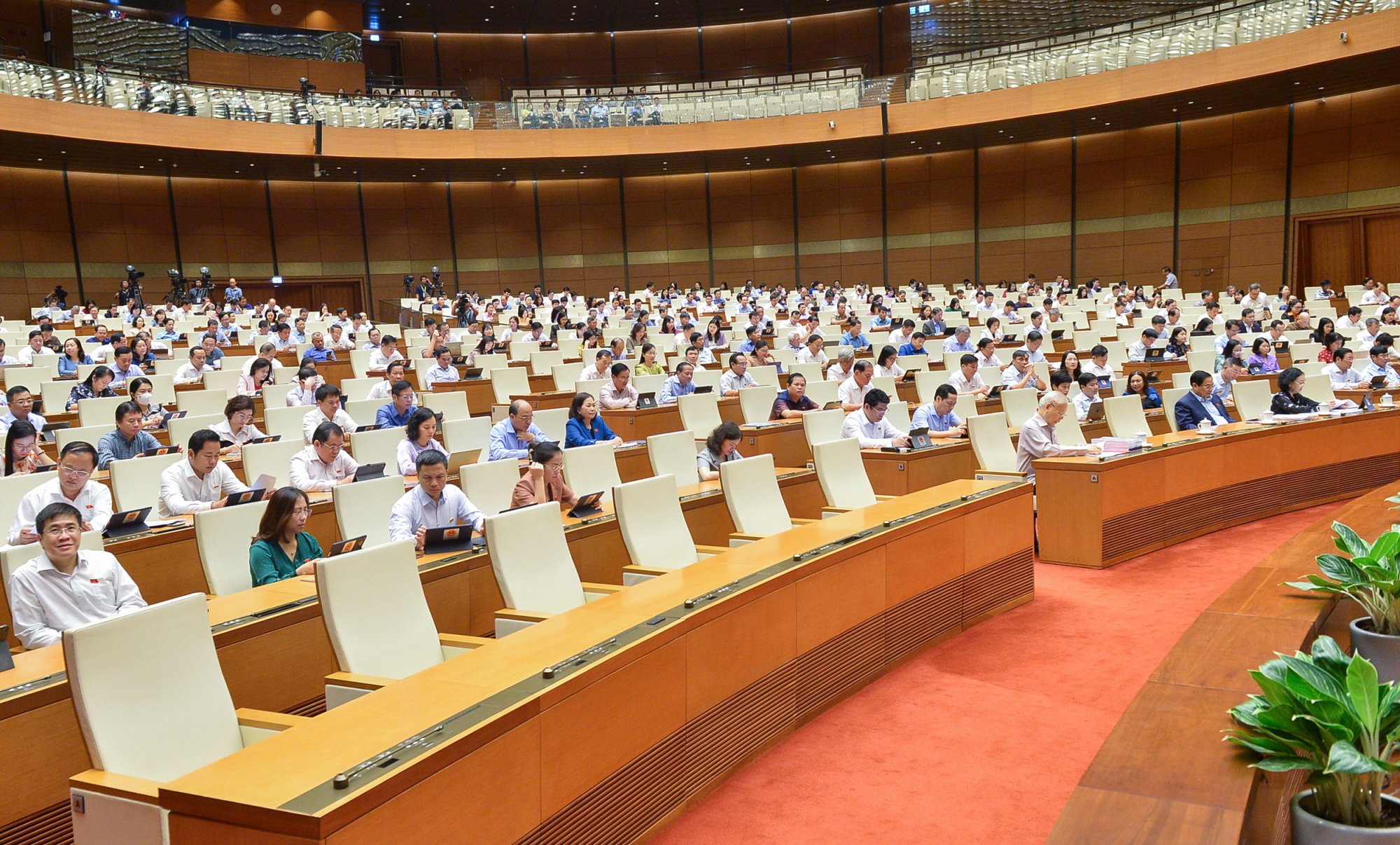
Delegates at the National Assembly session on the morning of June 9th.
At the same time, the regulation on issuing annual land price lists continues to ensure that land prices are consistent with market principles. However, a transitional provision is added to allow the continued use of the current land price list until December 31, 2025, to give localities sufficient time to develop and issue new land price lists in accordance with the new provisions of the Land Law. The regulation stipulates that the competent People's Committee must approve specific land price decisions within no more than 180 days from the date of the decision on land allocation, land lease, permission to change land use purposes, extension of land use, change of land use form, adjustment of land allocation/lease decisions, and adjustment of detailed planning.
Source
![[Photo] Prime Minister Pham Minh Chinh holds a phone call with the CEO of Russia's Rosatom Corporation.](/_next/image?url=https%3A%2F%2Fvphoto.vietnam.vn%2Fthumb%2F1200x675%2Fvietnam%2Fresource%2FIMAGE%2F2025%2F12%2F11%2F1765464552365_dsc-5295-jpg.webp&w=3840&q=75)



![[Photo] Closing Ceremony of the 10th Session of the 15th National Assembly](/_next/image?url=https%3A%2F%2Fvphoto.vietnam.vn%2Fthumb%2F1200x675%2Fvietnam%2Fresource%2FIMAGE%2F2025%2F12%2F11%2F1765448959967_image-1437-jpg.webp&w=3840&q=75)














































![[OFFICIAL] MISA GROUP ANNOUNCES ITS PIONEERING BRAND POSITIONING IN BUILDING AGENTIC AI FOR BUSINESSES, HOUSEHOLDS, AND THE GOVERNMENT](https://vphoto.vietnam.vn/thumb/402x226/vietnam/resource/IMAGE/2025/12/11/1765444754256_agentic-ai_postfb-scaled.png)















































Comment (0)