

The debate over whether to retain old names or adopt new ones when merging provinces and cities is attracting significant public attention. How can we preserve long-standing names that are deeply rooted in the local population and contribute to defining a cultural region? Furthermore, if new names are chosen, how can we ensure they are not merely a mechanical combination but still carry unique meaning and identity?
This issue was also raised by Prime Minister Pham Minh Chinh at the meeting of the Standing Committee of the Government Party Committee on the afternoon of March 11th. He noted that naming the merged provinces needs to ensure continuity and reflect the history and characteristics of the locality.
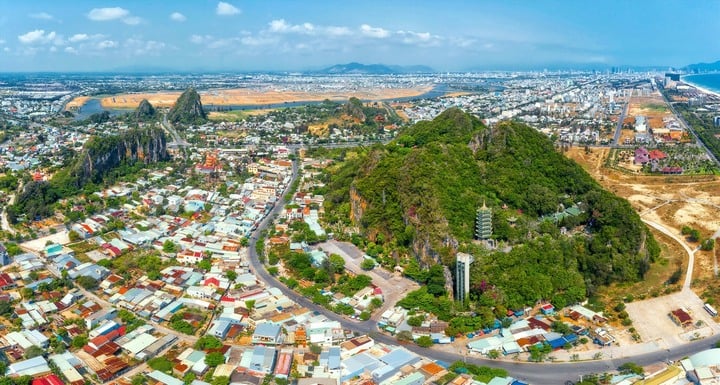
On November 6, 1996, the National Assembly passed a resolution allowing the Quang Nam - Da Nang province to be separated into Quang Nam province and Da Nang city, both directly under the central government. (In the photo: Ngu Hanh Son district, Da Nang city. Photo: Kim Lien)
Should we keep the old name or give it a new one?
Responding to a reporter from VTC News online, Associate Professor Bui Hoai Son, a full-time National Assembly representative at the National Assembly's Committee on Culture and Society, stated that choosing new names when merging provinces and cities is not simply an administrative decision but also carries profound cultural, historical, and local identity significance.
The name of a place is not just a designation but is also linked to its culture, people, and the passage of time, serving as a testament to changes and important milestones on the path of development.
"When studying the merger of several provinces, naming the new administrative unit is not just a matter of pure management; it also involves inheritance, recalling the past, expressing aspirations for progress, connecting with modern trends, and integration, " Mr. Son emphasized.
According to Mr. Son, there are two main approaches to naming the new administrative units.
The first approach is to restore historically existing place names as a way to honor and preserve local cultural and historical values. Many old place names carry stories and significant milestones in the formation and development of the region. Reusing these names can help people connect with the past, rekindle pride, and strengthen community bonds.
Mr. Son suggested that consideration could be given to restoring the old names that existed when the provinces were merged, such as Ha Bac (Bac Ninh - Bac Giang), Vinh Phu (Vinh Phuc - Phu Tho), Bac Thai (Bac Kan - Thai Nguyen), Nam Ha (Nam Dinh - Ha Nam), Nghe Tinh (Nghe An - Ha Tinh), etc.
These names not only help to remember an administrative unit but also evoke cultural imprints and regional characteristics that once existed, creating community cohesion and local pride.
" Reusing the old names could be a solution to make the merger process easier psychologically and socially. Additionally, it avoids unnecessary debates about the new names, as these are historically recognized and highly accepted names within the community, " Mr. Son said. However, he also noted that this approach is not suitable or advisable in every case, and requires careful consideration based on the specific characteristics of each locality.
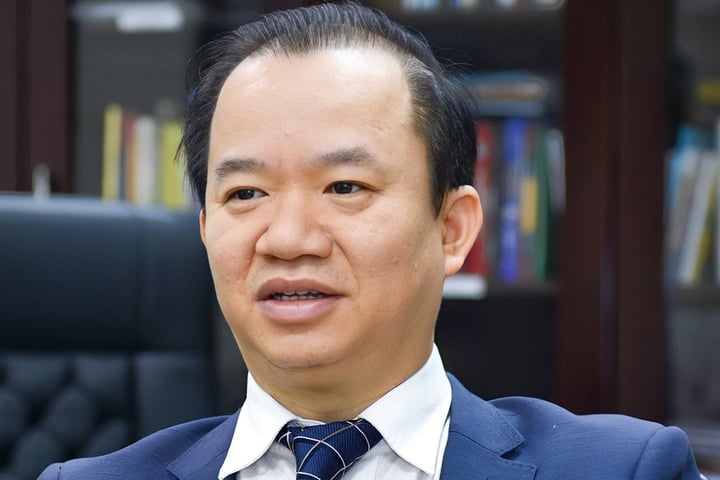
A disjointed name can sometimes make people feel alienated from their own homeland.
National Assembly Delegate Bui Hoai Son
The second approach mentioned by the National Assembly representative is to create new names, especially in cases where multiple administrative units with different identities are merged.
Mr. Son raised the issue that some provinces and cities, after being separated, have developed differently, possessing unique characteristics and new directions. Simply reverting to their old names might create a sense of nostalgia, but would that truly reflect the identity and transformation of the new region?
" The important thing is that the name must have a positive meaning, reflect the geographical, historical, and cultural characteristics of the entire merged area, and at the same time be in line with the development trends of the new era ," Mr. Son said.
In fact, in recent times, after the merger of some communes and districts, new names have been formed by combining two words from the two old administrative units. Mr. Bui Hoai Son assessed that this is a compromise but not yet optimal approach.
Because each place name carries its own rich history, culture, and identity, simply taking a part of the name and combining it with another place name can inadvertently diminish the complete meaning and dilute the unique character of each region.
" Is this the best approach? Two names, each with its own distinct identity, are being mechanically combined. Will this destroy the natural harmony of each region's identity? A disjointed name can sometimes make people feel alienated from their own homeland ," the National Assembly representative said.
Furthermore, some combined names can be lengthy, difficult to pronounce, hard to remember, and in some cases even controversial, as people feel that parts of their locality's name have been omitted or not fully represented. According to Mr. Son, this could affect community morale and reduce consensus during the merger process.
In the discussion, Ms. Nguyen Thi Viet Nga, Deputy Head of the Standing Delegation of the National Assembly of Hai Duong province, noted that naming new places after mergers is a matter of great concern to many people. When a locality is merged, every locality wants to retain its original name.
" Because that name is associated with tradition, history, and culture, closely linked to the locality since ancient times. Vietnamese people are inherently very patriotic, and that love is expressed in the desire to preserve the long-standing name ," Ms. Nga said.
However, we need to think in a new and deeper way, because mergers are not meant to wipe out any locality, nor to cause anyone to lose their homeland, but rather the goal is to help our homeland and our country develop further.
The female National Assembly representative stated that naming a newly merged province must be based on many factors.
The new name after the merger could retain the name of the current province, or it could revert to the old name, or it could be a new name based on the names of the former provinces... This is a scientific issue that needs careful research, and there is no general formula for it.
" Therefore, each case must be considered individually. Regardless of the approach, I hope to receive the agreement and support of the people. The fact that the province can no longer retain its old name does not mean we are at a disadvantage or have lost anything; what is important is to aim for overall development ," Ms. Nguyen Thi Viet Nga expressed.
Gathering public opinion to build consensus.
Instead of applying a mechanical naming method, Associate Professor Bui Hoai Son suggests considering more important criteria when naming, such as historical, geographical, or cultural factors, or a common symbol that represents the entire region.
Regarding historical factors, Mr. Son emphasized that the name of a locality should reflect its rich traditions, important events, or distinctive values that have shaped the identity of that region.
" Some place names have gone down in history through periods of nation-building and defense, or through outstanding figures and cultural heritage. When choosing new names, we need to consider whether they can continue this tradition. Naming places based on ancient names and place names that existed before can be a reasonable approach, as long as it remains consistent with current development ," Mr. Son said.
In addition, local culture is a factor that needs to be taken into account. Each region has its own unique characteristics in terms of customs, traditions, language, and lifestyle. Therefore, a suitable name not only helps people feel connected and proud but also reflects the spirit of unity and harmony among communities.
Furthermore, Mr. Son suggested that the new name should reflect the locality's development vision and aspirations for progress. Some countries around the world have adopted symbolic naming conventions that reflect socio-economic characteristics or future orientations.
" In Vietnam, this approach can certainly be adopted, as long as it's not unfamiliar to the lives of the people. For example, if a province or city has advantages in terms of the sea, tourism, industry, or heritage, the name can evoke those characteristics, helping to build a clearer local brand ," he stated.
According to National Assembly Deputy Bui Hoai Son, if there is a change in the name, a name with a broad meaning, representing the common spirit of the entire region, should be found, instead of just reflecting a part of the previous locality.
Furthermore, the name of a new locality should also reflect a long-term vision, aligning with future development directions.
However, Mr. Bui Hoai Son believes that no matter how good a name is, if it is not accepted by the people, it is difficult for it to become a common symbol for the entire region. To ensure the consensus of the people in choosing a new name when merging administrative units, the most important thing is to place the people at the center of this process.
" If a name is proposed without listening to and respecting the opinions of the community, it is very likely to create negative reactions, even disunity and a loss of connection with the very land that the name represents, " said Associate Professor Bui Hoai Son, adding that there are many ways to conduct consultations effectively.
The government can organize surveys and consultations through workshops, forums, or even digital media channels. This not only helps gather diverse perspectives but also makes citizens feel respected and have a voice in important local decisions, leading to a more natural consensus.
To avoid a proliferation of unfounded and unfounded naming suggestions, Mr. Son suggested that the government should offer several naming options based on certain criteria so that people can choose.
In addition, clearly explaining the meaning of the name is crucial. Whether to keep the old name or choose a new one, a story and a compelling reason are needed for people to understand and empathize.
A name can be linked to the history and cultural symbols of a region, or it can reflect the local aspirations for development in a new era. When people understand the meaning behind a name, it's easier for them to accept it.
More importantly, according to Mr. Son, once there is consensus, the chosen name must be respected and preserved for the long term. A locality cannot constantly change its name simply because of conflicting opinions that arise later.
" Seeking public opinion is not just a step in the administrative process, but also an opportunity to build consensus, awaken local pride, and show respect for the history and culture of that land. A name only truly has meaning when it originates from the people, is widely accepted by the community, and becomes a common symbol for a new stage of development ," the National Assembly representative added.
Vtcnews.vn
Source: https://vtcnews.vn/lam-sao-de-ten-goi-tinh-sau-sap-nhap-khong-chi-la-phep-cong-co-hoc-ar931310.html



![[Photo] Closing Ceremony of the 10th Session of the 15th National Assembly](/_next/image?url=https%3A%2F%2Fvphoto.vietnam.vn%2Fthumb%2F1200x675%2Fvietnam%2Fresource%2FIMAGE%2F2025%2F12%2F11%2F1765448959967_image-1437-jpg.webp&w=3840&q=75)
![[Photo] Prime Minister Pham Minh Chinh holds a phone call with the CEO of Russia's Rosatom Corporation.](/_next/image?url=https%3A%2F%2Fvphoto.vietnam.vn%2Fthumb%2F1200x675%2Fvietnam%2Fresource%2FIMAGE%2F2025%2F12%2F11%2F1765464552365_dsc-5295-jpg.webp&w=3840&q=75)








































![[OFFICIAL] MISA GROUP ANNOUNCES ITS PIONEERING BRAND POSITIONING IN BUILDING AGENTIC AI FOR BUSINESSES, HOUSEHOLDS, AND THE GOVERNMENT](https://vphoto.vietnam.vn/thumb/402x226/vietnam/resource/IMAGE/2025/12/11/1765444754256_agentic-ai_postfb-scaled.png)














































Comment (0)