

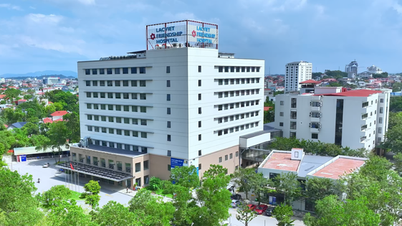
On September 9th, Professor and Doctor Pham Nhu Hiep, Director of Hue Central Hospital, announced that for the first time in Vietnam, doctors at Hue Central Hospital had successfully performed a Thalassemia bone marrow transplant on a child using bone marrow from the child's biological mother, but with a blood type incompatibility.

Six-year-old VQC, a child from Bac Ninh province , with leaders and the bone marrow transplant team from Hue Central Hospital on the day of his discharge.
PHOTO: SHANGXIAN
Six-year-old VQC, from Bac Ninh province, was diagnosed with Beta-Thalassemia at six months old and required monthly blood transfusions. After hearing about successful Thalassemia bone marrow transplants at Hue Central Hospital, her family brought her to Hue to request a transplant.
At Hue Central Hospital, after HLA testing confirmed a 11/12 HLA match with the child's biological mother, the hospital's management board held a consultation with various departments and centers within the hospital, as well as experts from Italy, to plan the transplant. The bone marrow transplant was performed on August 11th.
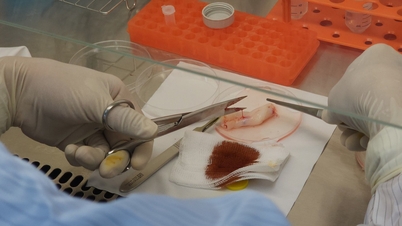
"This is a special transplant case due to blood group incompatibility between mother and child; the baby has blood type A, and the mother has blood type AB. Previously in Vietnam, for cases with blood group incompatibility, red blood cell apheresis would be performed after collecting bone marrow or peripheral blood stem cells, and some hospitals would use Rituximab. But at Hue Central Hospital, a new technique has been applied, using immune tolerance by gradually increasing the volume of the donor's blood into the recipient's body. Alongside the blood transfusion, the patient also received multiple intravenous fluids and anti-allergy medication."

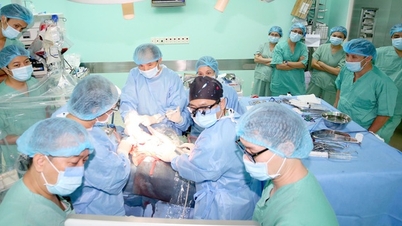
Bone marrow transplant team at Hue Central Hospital
PHOTO: SHANGXIAN
Four days after receiving the recipient's blood type, the child will undergo antibody titer testing to determine the next step. If the antibody titer is less than 1/32 of the donor's stem cell collection date, the cells will be transfused into the recipient's body without red blood cell apheresis. Only when the antibody titer is greater than or equal to 1/32 will red blood cells be apheresis required from the stem cell bag. This method is less expensive and has the advantage of preserving the patient's stem cell count. This is the third allogeneic thalassemia bone marrow transplant with blood type incompatibility.
Furthermore, this is the first thalassemia bone marrow transplant in Vietnam using marrow from the mother. According to statistics, 20% of siblings in a family have HLA compatibility. However, only 5% of cases will result in children having HLA matching with either their father or mother. For thalassemia bone marrow transplants using donors from parents, a different conditioning protocol is used compared to transplants from siblings," Professor Pham Nhu Hiep stated.
This opens up more opportunities for bone marrow transplants for children with life-threatening illnesses.
Following the transplant, the patient's condition gradually improved, with platelet and granulocyte counts recovering on days 20 and 24, respectively. By September 8th, the 28th day after the transplant, C.'s health had fully recovered and she was discharged from the hospital.
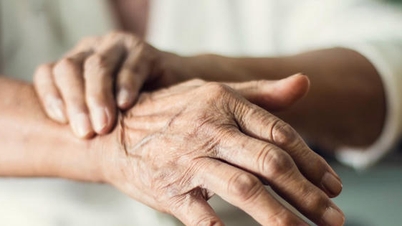
Thalassemia is a common inherited hematological disorder, with approximately 2,000-2,500 children in Vietnam diagnosed with a severe form each year. These children require lifelong treatment with blood transfusions and iron chelation therapy, leading to numerous complications affecting the heart, liver, kidneys, endocrine system, bones, and physical and mental development. Their lives are closely tied to hospitals, becoming a burden on their families and society.

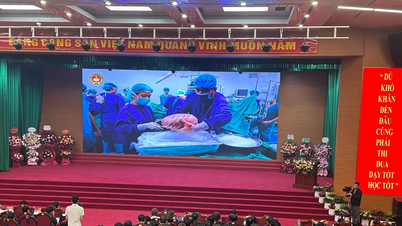
The medical team at Hue Central Hospital was delighted to hear the report on the successful bone marrow transplant from a mother with an incompatible blood type.
PHOTO: SHANGXIAN
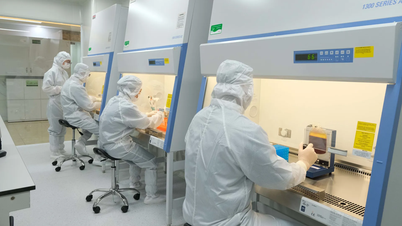
"Currently, with the investment in modern equipment, the hospital can perform transplants on four pediatric patients simultaneously. And in the very near future, the hospital will conduct half-matched transplants for children with Thalassemia who do not have complete HLA compatibility with their siblings and parents, expanding the opportunity for healthy living for more Thalassemia children, especially in cases where there were previously no options for definitive treatment, bringing great hope to families and the community," Professor Pham Nhu Hiep further informed.
Source: https://thanhnien.vn/lan-dau-tien-ghep-tuy-thanh-cong-tu-me-ruot-bat-dong-nhom-mau-185250909174401208.htm
















![[Photo] Prime Minister Pham Minh Chinh holds a phone call with the CEO of Russia's Rosatom Corporation.](/_next/image?url=https%3A%2F%2Fvphoto.vietnam.vn%2Fthumb%2F1200x675%2Fvietnam%2Fresource%2FIMAGE%2F2025%2F12%2F11%2F1765464552365_dsc-5295-jpg.webp&w=3840&q=75)







































Comment (0)