

 |
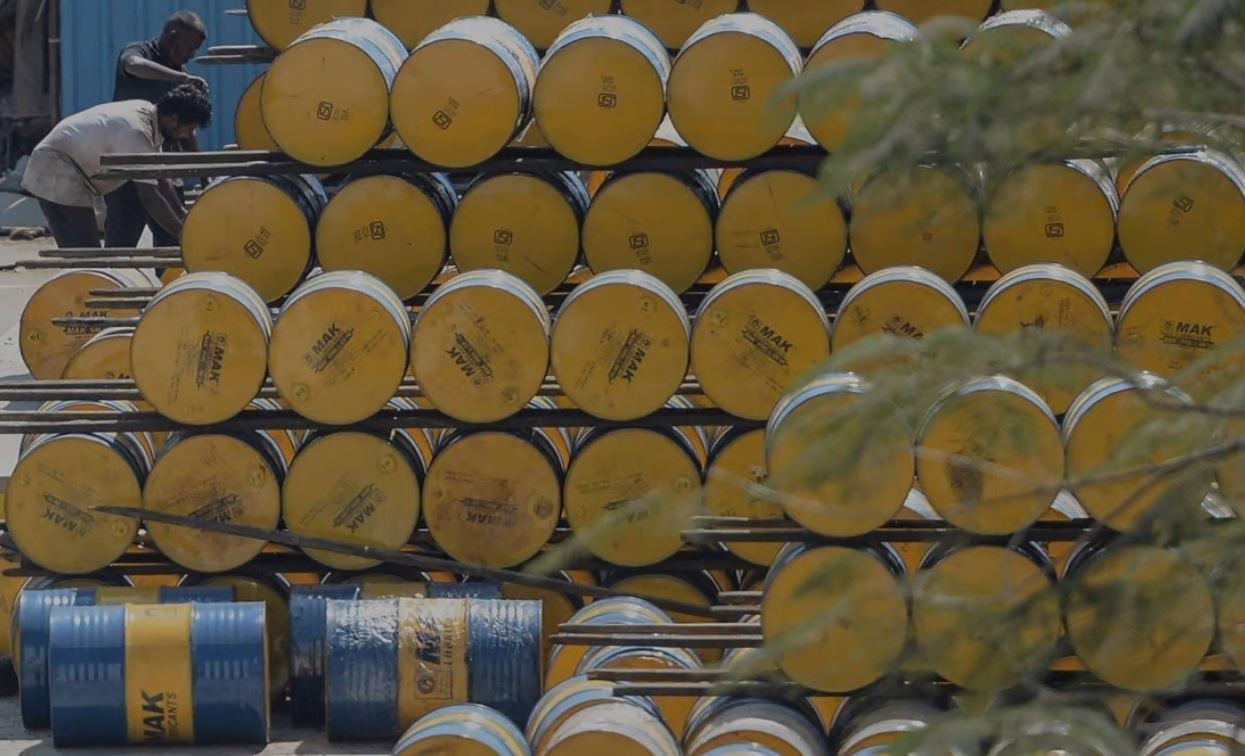
| Workers arrange oil drums at a plant in Chennai, India. (Source: AFP) |
Traders expect Urals crude oil shipments to Türkiye to exceed 1.4 million tons in October, breaking the record of 1.43 million tons since October 2022.
Türkiye has been importing the most cheap Russian oil since its largest refinery, STAR, came under the ownership of Azerbaijani company SOCAR.
In the first half of November, Urals crude oil exports to Türkiye are expected to reach 800,000 tons, a figure that could increase as more oil tankers head to Turkish ports.
According to LSEG data, India remained the main customer for Urals crude oil shipments loaded at Russian ports in October, importing at least 5 million tons of this type of fuel.
Meanwhile, according to traders, no shipments of Urals oil were sent to China in November, where Urals oil imports totaled 500,000 tons last month.
Russian energy export revenues reached 1.63 trillion rubles ($17.7 billion) in October – the highest level in 18 months.
The U.S. Treasury Department has sent notices to ship-owning companies requesting information on 100 oil tankers that the government suspects are violating Western sanctions on Russian oil.
According to the source, one of the companies that received the notification is based in Türkiye.
Reuters reported that the letters sent to companies in these 30 countries represent the biggest move since Russia imposed a price cap on oil.
The U.S. Treasury Department declined to comment on this information.
A spokesperson for the ministry said that while the ministry does not confirm or comment on investigations or necessary actions, it “remains committed to enforcing the price ceiling and reducing Russia’s resource consumption.”
In 2022, the European Union (EU), the United States, other G7 countries, and Australia agreed on a price ceiling of $60 per barrel for seaborne Russian oil. This measure took effect on December 5, 2022.
Media reports indicate that sanctions have spurred the emergence of the "black fleet"—dilapidated ships carrying oil to Russia.
Neil Roberts, head of marine and aviation insurance at Lloyd's London, said these oil tankers "operate outside the dollar system and undermine Western efforts."
Source













































































Comment (0)