

According to Mr. Nguyen Canh Cuong, former Vietnamese Counselor and Minister Plenipotentiary to the United Kingdom, in order to effectively utilize the UKVFTA, Vietnamese businesses need to ensure transparency in their supply chains, invest in green production, and avoid using plastic packaging.
Supply chain transparency and green production will help ensure sustainable exports.
According to Mr. Nguyen Canh Cuong, former Vietnamese Counselor and Minister Plenipotentiary to the United Kingdom, in order to effectively utilize the UKVFTA, Vietnamese businesses need to ensure transparency in their supply chains, invest in green production, and avoid using plastic packaging.
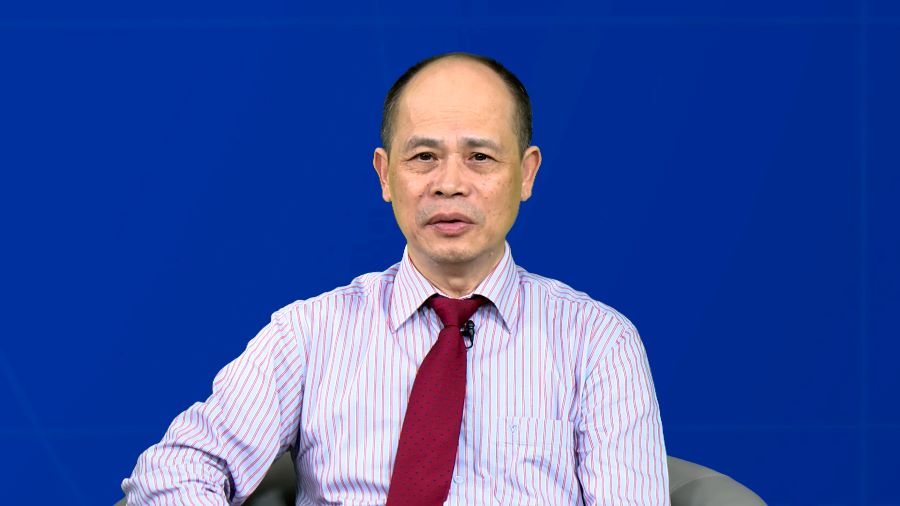 |
| Mr. Nguyen Canh Cuong, former Counselor and Minister Plenipotentiary to the United Kingdom. |
Sir, after more than 3 years of implementing the UKVFTA, Vietnam's trade with the United Kingdom has seen positive changes, and businesses have taken advantage of the fact that Vietnam was one of the first countries to have a bilateral FTA to accelerate exports?
It is true that Vietnamese businesses have many advantages in trade with the UK market thanks to the UKVFTA.
Following the UK's departure from the EU, the supply chain and business relationships of British companies with EU companies have experienced some degree of decline.
Data shows that UK imports and exports to the EU have declined by up to 30% in some sectors since the UK left the EU. This decline in trade relations between the UK and the EU has created gaps in the supply chain. This could be seen as a new opportunity or advantage for Vietnamese businesses, because market demand remains and may even increase.
In addition to that advantage, trade relations between Vietnam and the United Kingdom are developing very well. In the minds of British businesses and consumers, Vietnam is a developing country, an open economy , deeply integrated, with a growing scale of production and trade thanks to domestic investment and attracting FDI.
British businesses highly appreciate the Vietnamese economy in general and the supply capacity of Vietnamese enterprises in particular. This is a significant step forward, a rise in national and corporate prestige, the prestige of the economy, and the prestige of Vietnamese products, thereby creating more favorable conditions for exporters to access the UK market.
Having served as a trade representative in the UK for many years and witnessed export industries leveraging the UKVFTA to enhance trade, what advice would you give to Vietnamese businesses regarding the challenges of sustainability standards and greening production for sustainable exports to the UK?
Vietnamese businesses currently have many favorable factors due to the excellent bilateral relations between the two countries, further boosted by the UKVFTA, which helps Vietnamese exporters compete more effectively with many similar products from other countries in the region and around the world in the UK.
However, I want to emphasize that standardization is a common and almost prerequisite requirement for British businesses when they import goods. This includes the trend towards sustainable, environmentally friendly consumption, the requirement to avoid plastic packaging, the requirement for supply chain transparency, and the ability to trace product origins using digital tools.
At the same time, it is necessary to strengthen the application of science and technology, develop production and deep processing systems, and optimize production cycles to increase the competitiveness of goods.
To take advantage of resources from the UK market with the "launching pad" of the UKVFTA, besides green and sustainable production and traceability, what other requirements do businesses need to comply with?
I would like to reiterate that standardization is a common and almost prerequisite requirement for British businesses when they want to explore new products.
Secondly, the trend towards sustainable, environmentally friendly consumption and emission reduction has been a priority agenda of the British government for many periods, and this agenda of reducing emissions, minimizing environmental pollution, and combating climate change has been translated into trade and business policies. British consumers are highly aware of this issue.
Therefore, Vietnamese suppliers and exporters must be aware of this high level of concern from British businesses and consumers, ensuring their products meet their expectations while avoiding the use of plastic packaging.
The next requirement is for supply chain transparency and product traceability using digital tools. Vietnamese businesses exporting products to the UK must be able to tell buyers where the raw materials come from and what the production process is like.
The entire supply chain must be readily available, but not in the traditional way. Instead, it must have a readily available database and digital platform that customers can verify themselves.
Source: https://baodautu.vn/minh-bach-chuoi-cung-ung-san-xuat-xanh-se-giup-xuat-khau-ben-vung-d229110.html



































































Comment (0)