

Salaries and allowances have long been a matter of social concern, closely linked to the lives of millions of officials, civil servants, and members of the armed forces. However, the old mechanism with its outdated, overlapping, and redundant coefficients and allowances has prevented this policy from truly becoming an incentive for them to contribute.
In the context of implementing a revolution to streamline the organizational structure and operate a two-tiered local government system, reviewing and developing new salary and allowance policies has become urgent. With the new model, the job structure changes, leading to changes in the responsibilities and scope of work of officials. When streamlining the organizational structure, many positions are reorganized; if the old allowance system is maintained, inequality will arise where people doing the same work receive different benefits, or those who work more receive less, and those who work less receive more.
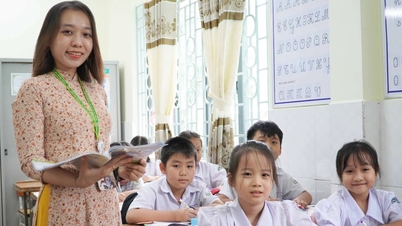
In developing new policies, the core principle is ensuring "fairness." Fairness is not about equal distribution, but about reasonable allocation based on job position, nature of work, and regional conditions. Teachers in mountainous and disadvantaged areas, doctors and nurses in coastal and island regions, border guards who work day and night in border areas, and scientific researchers who make exceptional contributions to the community and the country... must receive commensurate compensation.
This is the necessary fairness to retain talented and dedicated employees and to encourage those who make exceptional contributions. It helps build trust among staff that their efforts and contributions are properly recognized, and ensures that the public believes the budget is used appropriately, efficiently, and responsibly.
This is also placed in the context of the implementation of the Law on Organization of Local Government in 2025 and the Law on Employment in 2025, with fundamental and important issues being the use and evaluation of officials according to the principle of "entry, exit, promotion, and demotion." Simultaneously, salaries and allowances should be linked to job positions, public service responsibilities, and performance evaluation based on KPIs with clear, tangible criteria, including service quality and satisfaction levels, to eliminate the situation where officials simply "carry their umbrellas to work in the morning and carry them back home in the evening."
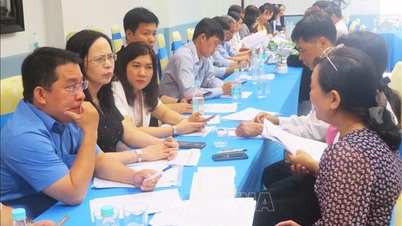
The experience in Ho Chi Minh City has proven that performance-based allowances are entirely feasible when applying a policy of providing additional income to part-time officials at the commune, neighborhood, and hamlet levels based on their work performance. These individuals are not on the payroll but receive allowances for qualifications, public service, and insurance benefits equivalent to those of civil servants, ensuring there is no situation where "they do the same work but receive different benefits."
Another example is Khanh Hoa province, which is a pioneer nationwide in applying the KPI system to evaluate officials, civil servants, and public employees; salary classification and bonus payments are based on position, results, and work efficiency… This creates motivation and changes the mindset of officials towards a positive, transparent, and responsible approach to work.
Thus, salary reform is no longer just about "changing the hierarchy," but also about changing the way the entire system operates, using results as the measure, and increasing service efficiency. This will be a major reform, not only in terms of salaries but also in terms of the trust of officials and civil servants in the policy, as well as the trust of the people in the system. When the compensation policy is implemented in a transparent and fair manner, it is proof of a constructive state that serves the people.
Source: https://www.sggp.org.vn/minh-bach-cong-bang-tu-tien-luong-va-phu-cap-post812484.html







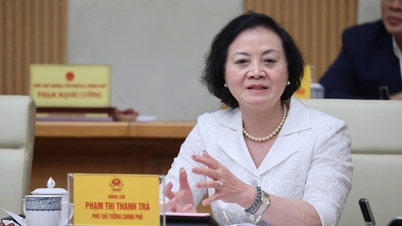








![[Photo] Prime Minister Pham Minh Chinh holds a phone call with the CEO of Russia's Rosatom Corporation.](/_next/image?url=https%3A%2F%2Fvphoto.vietnam.vn%2Fthumb%2F1200x675%2Fvietnam%2Fresource%2FIMAGE%2F2025%2F12%2F11%2F1765464552365_dsc-5295-jpg.webp&w=3840&q=75)









































Comment (0)