

Mr. NVL (51 years old, residing in Tay Ninh ) was admitted to People's Hospital 115 (Ho Chi Minh City) in a state of shortness of breath, rapid pulse, and difficult-to-measure blood pressure after suddenly fainting while working in the field.
Prior to this, he had experienced symptoms such as dizziness and chest tightness.
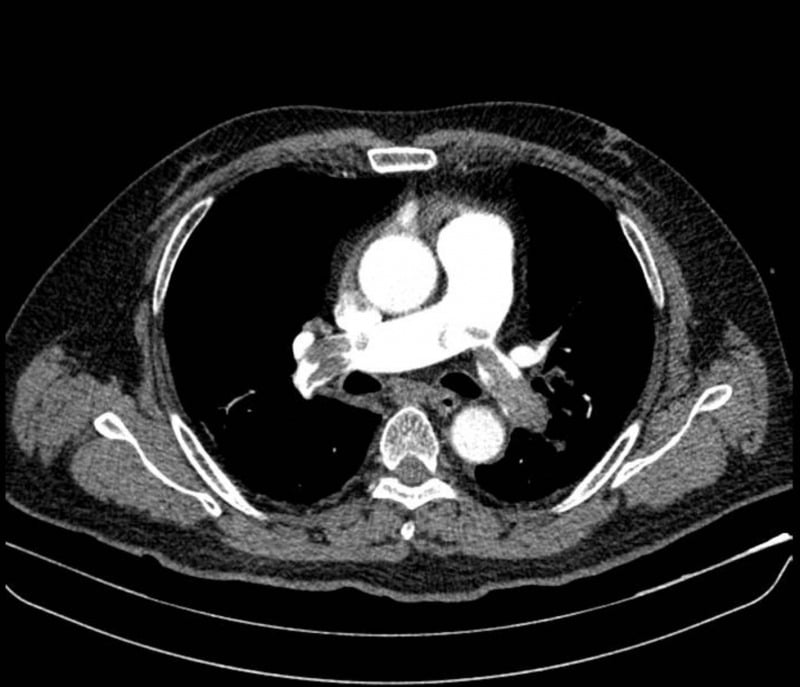 |
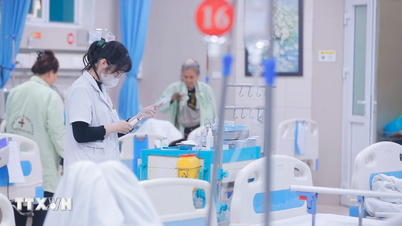
| Illustrative image. |
At the frontline, he was diagnosed with suspected myocardial infarction and quickly transferred to another hospital. A CT scan of the pulmonary blood vessels at People's Hospital 115 revealed acute pulmonary embolism, with large blood clots obstructing both pulmonary arteries, causing obstructive shock. The patient was treated with thrombolytic drugs and recovered after one week.
Lower extremity vascular ultrasound revealed thrombosis in the left femoral and popliteal veins. Doctors determined the cause was related to the patient's smoking habit of over 20 years, with a smoking level of approximately one pack per day.
According to Dr. Do Cong Tuan (Emergency Department), smoking is not a direct cause of pulmonary embolism, but it increases the risk of deep vein thrombosis (DVT), leading to serious complications. Furthermore, tobacco is a contributing factor to many other dangerous cardiovascular and respiratory diseases.
To prevent pulmonary embolism, doctors recommend quitting smoking, limiting alcohol consumption, maintaining a healthy weight, and increasing physical activity. Quitting smoking is a simple but effective way to protect your own health, your family's health, and the health of the community.
Besides traditional cigarettes, e-cigarettes and heated tobacco products are emerging as a new trend, especially among young people, but they also pose serious risks. According to the Ministry of Health , the rate of e-cigarette use among 13-15 year olds has increased rapidly, from 3.5% in 2022 to 8% in 2023. In the 15-24 age group, this rate is 7.3%.
Data from nearly 700 medical facilities nationwide shows that in 2023 alone, there were 1,224 hospitalizations related to e-cigarettes and heated tobacco products. Common symptoms included allergies, poisoning, and acute lung damage. Notably, 81 cases were first-time users.
A study by the School of Public Health (2023) conducted on over 3,800 students in 11 provinces and cities showed that 14% had tried e-cigarettes and 7% were using them in the last 30 days. The rates for heated tobacco products were 1.8% and 1.0%, respectively.
Numerous international and domestic studies have shown that e-cigarettes are not "safe." Users experience impaired lung function and increased respiratory resistance. A Canadian study of over 44,000 adults found that the risk of impaired lung function due to obstruction was twice as high in e-cigarette users compared to non-users.
E-cigarettes can also cause cardiovascular disorders such as atherosclerosis, hypertension, coronary artery disease, stroke, and even cancer due to DNA damage. The aerosols and metals in the e-liquid can activate cancer-causing enzymes, increase chemotherapy resistance, and worsen disease progression.
Another emerging risk is the misuse of e-cigarettes for drug use. The Ministry of Public Security has recorded numerous cases of products being mixed with synthetic cannabis, ketamine, heroin, etc. In 2023, the Poison Control Center at Bach Mai Hospital received nearly 130 cases of poisoning related to e-cigarettes, many of which tested positive for drugs.
According to Ms. Nguyen Thu Thuy, Deputy Head of the Legal Department, Ministry of Health, the risks from e-cigarettes are even higher than those from traditional cigarettes due to their high nicotine content, large volume, long usage time, lack of clear labeling, and absence of child-resistant packaging.
It is known that the National Assembly has passed a Resolution banning the production, trading, import, transportation, and use of e-cigarettes and heated tobacco products, effective from January 1, 2025.
Source: https://baodautu.vn/moi-dieu-thuoc-la-mot-buoc-gan-hon-toi-phong-cap-cuu-d410699.html






















































































Comment (0)