


According to CNA, a worrying factor in the current picture is the recent actions taken by the Department of Government Effectiveness (DOGE) – an agency headed by billionaire Elon Musk – targeting the Federal Deposit Insurance Corporation (FDIC), which is considered a pillar of the US financial defense system.
This move is not an isolated incident. Last February, President Trump issued an executive order expanding the White House's control over independent regulatory agencies, including the FDIC. Concentrating executive power on institutions that previously operated independently, such as the FDIC, represents a significant escalation in efforts to restructure the federal financial regulatory system.
Unlike most federal agencies, the FDIC is not directly supervised by the executive branch, nor does it receive funding from the federal budget. Instead, the FDIC is funded through fees levied on the very banks it supervises – a structure designed to minimize political pressure and ensure operational neutrality.
Campaign to reshape the management system
DOGE has taken a series of steps to reduce FDIC's capacity, including laying off 1,000 employees – both permanent and temporary – as part of a federal administrative streamlining program. Simultaneously, reports indicate that DOGE is conducting a comprehensive review of the agency's contracts and staffing structure.
There were even proposals within the Trump administration to completely abolish the FDIC – an idea that had been raised during meetings to select executives for banking positions. Simultaneously, in February, the administration also sought to dissolve the Consumer Financial Protection Bureau (CFPB) – an institution established after the 2008 crisis to protect consumers from risky financial practices. However, a federal judge blocked this action, calling it a “blatant violation of the law.”
Sources also indicate that the FDIC's banking supervision and enforcement functions may be transferred to the Office of the Comptroller of the Currency (OCC) – an agency under the Ministry of Finance and therefore directly influenced by the executive branch.
The consequences of these reforms will not be limited to domestic legal or political risks, but could act as a catalyst for a new global financial crisis.
Why is FDIC an indispensable “line of defense”?
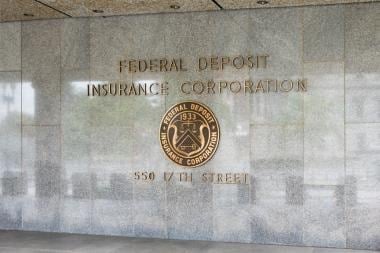
The FDIC is the deposit insurance agency – an institution designed to ensure that depositors do not lose all their money when a bank fails. In the US, the nominal insurance limit is $250,000. However, in practice, the 2023 Silicon Valley Bank bankruptcy demonstrated that insurance coverage can be expanded to prevent the spread of crises.
Deposit insurance serves two essential functions: protecting depositors and preventing a wave of mass withdrawals – one of the leading causes of chain bank failures. Additionally, the FDIC has the authority to conduct orderly bank liquidations, helping to avoid using taxpayer money for large-scale bailout packages like those used during the 2008 crisis.
The post-crisis Dodd-Frank Act gave the FDIC more tools to deal with systemic banks. These reforms were not just internal U.S. efforts but also the result of global negotiations – bolstering cross-border coordination during the crisis.
Nevertheless, the Heritage Foundation's Project 2025 – which supports DOGE – has publicly called for the repeal of these reforms, threatening the FDIC's strategic role in the financial defense structure of the US and the world.
Risks to the global financial system
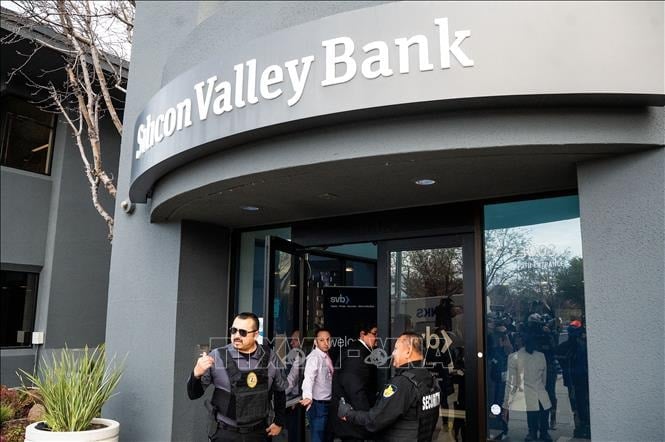
The FDIC's failure to prevent the collapse of Silicon Valley banks in 2023 stemmed from two factors – including the loosening of regulations during Trump's first term and a severe staffing shortage that existed even before the recent cuts.
Nevertheless, the FDIC's subsequent intervention helped contain the damage and prevent a ripple effect. If the FDIC were weakened in terms of resources, authority, or independence, the U.S. would lose a key tool in responding to future banking crises. Limiting the FDIC's ability to intervene would put the U.S. back on track in the world before 2008. Weak supervision leads to moral hazard, and banks could revert to a "too big to fail" state with the expectation of bailouts.
It's not just the U.S. that's suffering. At the international level, the FDIC collaborates with foreign regulatory agencies to plan for potential crises and implement solutions should a crisis occur.
International supervisory bodies, particularly those regulating banks with branches in the U.S., also rely on the FDIC for information sharing and coordinated action. This role was clearly demonstrated when the FDIC, along with its international partners, smoothly resolved the Credit Suisse bankruptcy in 2023.
Undermining or politicizing the FDIC would not only erode international trust but also make the global financial system more vulnerable to systemic shocks.
The FDIC is not just a domestic agency, but an integral part of the modern global financial structure. As the U.S. begins to withdraw from its leadership role and prioritize short-term political interests, the world must prepare for far greater instability than stock market fluctuations.
Source: https://baodaknong.vn/my-co-the-lap-lai-sai-lam-cua-cuoc-khung-hoang-tai-chinh-nam-2008-249686.html













































































Comment (0)