

From April 28-30, the heat will be extremely intense.
According to the National Center for Meteorological and Hydrological Forecasting, the entire country will face peak heat waves over the next three days. Specifically, the Northern Delta region, Son La, Hoa Binh, and the area from Thanh Hoa to Phu Yen will experience exceptionally intense heat with maximum temperatures commonly ranging from 39-42 degrees Celsius, and exceeding 42 degrees Celsius in some places; the lowest relative humidity will commonly be between 30-35%.
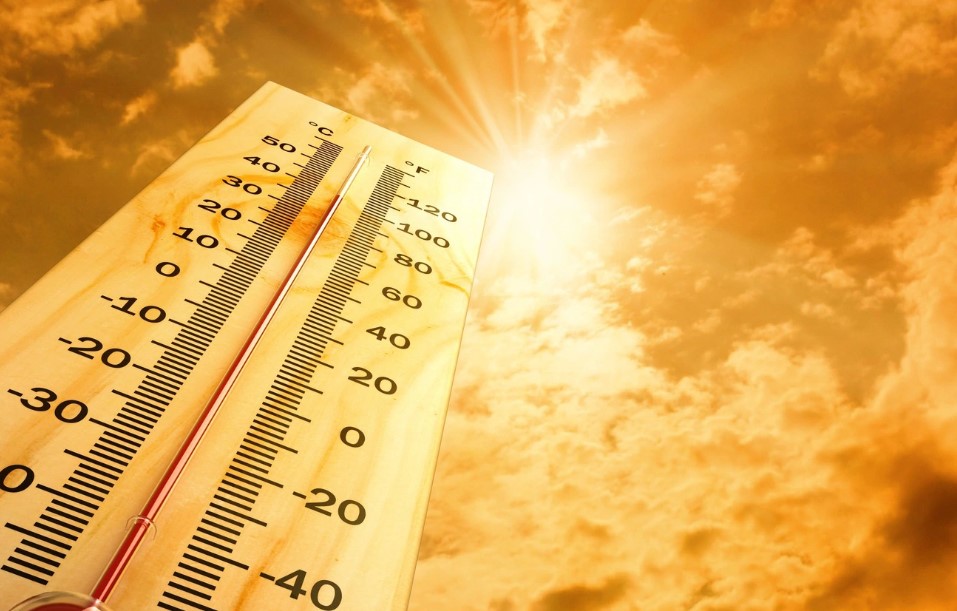
For three consecutive days, from April 28th to 30th, temperatures are forecast to exceed 40 degrees Celsius (illustrative image).
Other areas in Northern Vietnam, the Central Highlands, and Southern Vietnam will experience hot and intensely hot weather, with some places experiencing exceptionally intense heat. Maximum temperatures will generally range from 36-39 degrees Celsius, with some areas exceeding 39 degrees Celsius; humidity will be between 40-45%.
The area from Khanh Hoa to Binh Thuan is experiencing hot weather, with some places experiencing intense heat and maximum temperatures commonly ranging from 35-37 degrees Celsius, and some places exceeding 37 degrees Celsius.
According to weather expert Nguyen Ngoc Huy, the forecast for the three consecutive days from April 28-30 predicts that previous temperature records will be broken. In particular, for the first time, Vietnam may record temperatures as high as 45 degrees Celsius inside a weather shelter on April 30. The above forecast is the meteorological temperature. The actual temperature outdoors may be higher or lower depending on the environment. For example, under the shade of trees, the temperature may be 3-4 degrees lower, while outdoors in urban areas lacking trees, it could reach 48-50 degrees Celsius.
Dr. Huynh Tan Vu, from the University Medical Center of Ho Chi Minh City, warns that when temperatures rise above 39 degrees Celsius, anyone, whether adults or children, can suffer from heatstroke or sunstroke. This is because the body loses a lot of water, sweats excessively, and its thermoregulation is disrupted by intense sunlight. Adults with heatstroke often experience fever, dizziness, and even fainting. Young children may show signs of fussiness, lethargy, loss of appetite, fever, and even convulsions.
According to Mr. Ngoc Huy, this heatwave is both extreme in intensity and prolonged, causing heat to accumulate in the final days, resulting in stifling air. The elderly and children should absolutely avoid going outdoors between 11 am and 4 pm in areas where temperatures exceed 43°C. Human tolerance for temperature has limits, and since we have never experienced such record temperatures before, caution and gradual adaptation are necessary.
Identifying and handling someone suffering from heatstroke or heat exhaustion in 6 steps.
According to Dr. Vu, the signs of heatstroke or sunstroke include: fever of 40 degrees Celsius or higher, dry, hot skin or increased sweating; dizziness, lightheadedness; red skin; rapid pulse, headache... The causes are insufficient water intake in hot weather, poor air circulation indoors, and direct sunlight. Excessive sun exposure can increase body temperature by up to 15 degrees.
In addition, heatstroke is also related to the heat index. Relative humidity of 60% or higher will hinder the evaporation of sweat and the body's ability to cool itself.
It's especially important to note that the elderly and outdoor workers are most susceptible to heatstroke and sunstroke, as the risk increases with high temperature indices. Therefore, it's crucial to pay close attention to temperature indices in weather forecasts, particularly during peak heatwaves.
According to Dr. Vu's recommendations, here are 6 steps to take when encountering someone suffering from heatstroke or sunstroke:
- Step 1: Quickly call the emergency services 115 or your local medical facility .
- Step 2: While waiting for the ambulance, move the person suffering from heatstroke to a shady place.
Step 3: Remove any unnecessary clothing.
Step 4: Regularly check your body temperature.
- Step 5: Cool the body in any way possible, such as: spraying the body with water, using a misting fan; placing ice packs or cool towels on the neck, armpits, and groin; giving the person suffering from heatstroke cool water to rehydrate (if possible)...
- Step 6: Assess the level of consciousness of the person suffering from heatstroke (shake, touch, etc.).
Dr. Vu noted that if the victim is conscious, they should be given fluids and electrolytes. If the victim is not yet conscious, continue cooling the body while waiting for the ambulance. In cases where the victim is unconscious and shows no signs of circulation (breathing, coughing, or movement), artificial respiration should be performed quickly.
To prevent heatstroke and sunstroke in the summer, according to Dr. Vu, when the temperature index is high, it is best to stay in a cool environment. If you have to go outside in the sun, you can prevent heatstroke by drinking fruit juices that help lower body temperature on hot days; wearing loose, comfortable, light-colored clothing and a wide-brimmed hat; and using sunscreen with a sun protection factor (SPF) of 30 or higher.
To prevent dehydration, people should drink at least 1.5 liters of water, fruit juice, or vegetable juice daily. Electrolyte-rich sports drinks can also be used on days with high temperatures and low humidity. At the same time, avoid liquids containing caffeine or alcohol, as these can worsen dehydration. Also, do not take salt tablets without a doctor's prescription. The simplest and safest way to replace salt and electrolytes during heatwaves is to drink sports drinks or fruit juices.
Source: https://www.baogiaothong.vn/nang-nong-dinh-diem-luu-y-tinh-trang-say-nang-say-nong-192240428112443844.htm


















































































Comment (0)