

The digital age has also created competitors for the journalistic institution. Most notably, there is competition from social media platforms, where anyone can perform the work of a journalist.
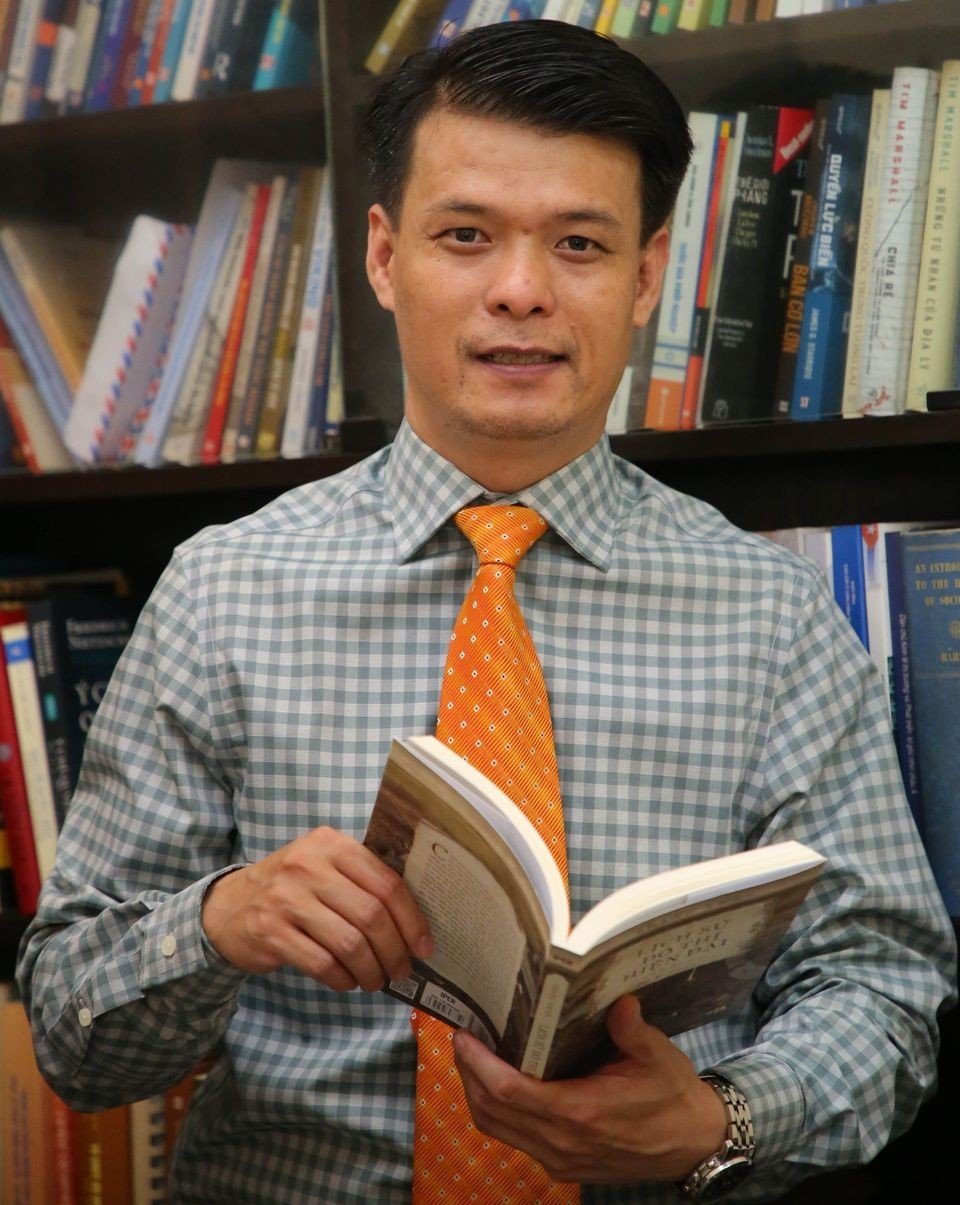 |
| Dr. Nguyen Van Dang argues that the digital age also creates rivals for the journalistic institution. |
Press institutions
Appearing in Germany in the early 17th century, the first printed newspapers performed the most classic function of journalism: "information." Since the late 1970s, the digital age has enabled journalism to undergo revolutionary changes.
The combination of personal computers, the Internet, and smartphones has brought journalistic products closer to a readership no longer limited by space and time.
Online newspapers, with their superior advantages, have quickly taken the place of traditional print newspapers.
With digitalization and internet connectivity, journalistic genres are becoming increasingly diverse, presented attractively, and meeting the needs of readers with ever-improving levels of sophistication.
Consequently, dynamic and modern newsrooms with multimedia communication methods are gradually replacing traditional newsrooms, which are becoming increasingly monotonous and less flexible.
The power of the press lies in its ability to convey information to a large number of people, connecting opinions, analyzing, discussing, and even debating. Journalistic products not only increase readers' understanding of issues arising in daily life, but can also create diverse streams of public opinion.
Diverse public opinions, especially critical ones, can create social pressure, strongly impacting and changing the perceptions and behaviors of individuals and organizations.
The digital age has also created rivals for the journalistic institution. Most notably, there is fierce competition from social media platforms, where anyone can perform the work of a journalist.
However, with its absolute advantages in terms of legitimacy, professional journalists, increasingly modern equipment, ever-increasing variety of genres, and high level of accountability, the journalistic institution still maintains its number one position in terms of media power.
Connecting theory with practice
Press power, or media power, has long been considered the "fourth power" alongside state power. Distinguished from the "hard" nature of state power and economic power, press power is considered a "soft" power based on its ability to persuade individuals and organizations to voluntarily change their behavior.
Besides its informational function, the press has long been an effective means of conveying theoretical knowledge to the masses, not only contributing to raising community awareness but also fostering collective action to change society in a more positive direction. Typical examples of using the press to disseminate theoretical knowledge include K. Marx, F. Engels, V. Lenin, and previous generations of revolutionaries in our country such as President Ho Chi Minh and General Secretary Truong Chinh...
Major international publications like The New York Times consistently feature leading intellectuals in the role of "columnists," regularly contributing articles that utilize theoretical knowledge to analyze practical issues. A similar format, but at a higher level, is found in mid-sized theoretical journals such as Foreign Affairs, The Economist, and the Financial Times.
Many of the authors who publish articles in the aforementioned journals are not professional journalists, but rather experts and researchers who are able to connect theory with events and situations occurring in daily life through journalistic products, rather than scientific reports.
Humanity is currently moving from an industrial society to an information society and a knowledge-based economy. With the increasing level of education, people's needs for journalism are no longer simply for information.
Instead, citizens in modern societies increasingly demand knowledge from journalistic products and view journalism as a means to actively participate in addressing community issues.
Human history shows that the development of each community, nation, or even the world cannot take place if we do not mobilize collective efforts, guided by positive belief and knowledge, to implement changes for the better and for progress.
It is precisely because of the aforementioned developmental logic that theoretical researchers inevitably need the press as a powerful means to disseminate positive beliefs and knowledge, express viewpoints on problem-solving, and thereby influence the process of designing and selecting policy actions aimed at development.
Impact on management
It is evident that the journalistic institution worldwide is undergoing profound changes to meet the increasingly complex needs of humanity. Beyond its classic functions of information, education, entertainment, and social connection, the modern journalistic institution is also undertaking a range of new functions such as: monitoring public power, shaping policy issues, fostering community action, and building and cultivating cultural values…
With the aforementioned new functions, modern journalism has become an institution with an increasingly powerful influence on community governance, in at least four aspects.
First, the press can shape public opinion to control government power, detect and push back against abuses of power. Second, the media can highlight leadership challenges facing communities. Third, the press can identify policy issues and participate in setting policy agendas. Fourth, the press remains the most open and transparent means of connecting the policy needs and aspirations of social groups with all levels of government.
Due to these new functions, theoretical knowledge will become increasingly necessary to improve the quality of journalistic products. As a distillation of human understanding of social life, theoretical knowledge is constantly enriched over time. Naturally, to increase the theoretical content of journalistic products, the participation of theoretical researchers in the field of journalism is essential.
When engaging in journalism, which is not their primary occupation, theoretical researchers also face challenges. For example, they must possess a solid and continuously updated foundation in theoretical knowledge. At the same time, they must closely follow daily life events, identify leadership challenges, and uncover policy issues underlying individual events.
In addition, they must be able to use theoretical knowledge to analyze and clarify the nature of policy issues, and to propose policy action options that citizens can discuss and the government can consider.
Source













































































Comment (0)