

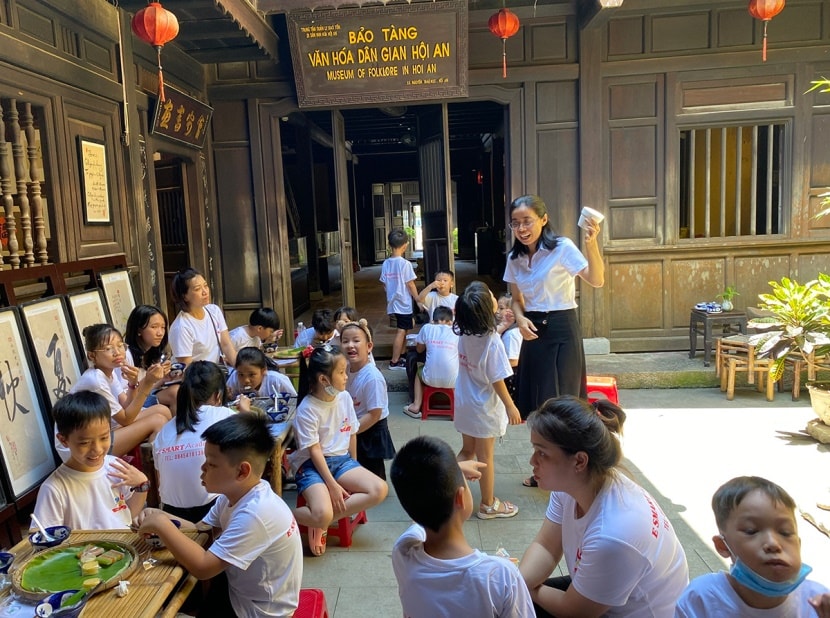
As a leading conservation and museum professional in our country, Associate Professor Nguyen Van Huy pointed out: The depth of each culture is "spoken" through its historical and cultural heritage, among which tangible heritage is of great value.
Museum artifacts and historical sites are vivid evidence that tells historical and cultural stories to younger generations. Each artifact and document contains hidden information that those who want to promote the value of heritage must research to answer questions such as: Whose is it? Who made it? When, where, how, and why does it exist? Heritage education is about helping the younger generation discover and answer these questions on each artifact and historical site.
It is necessary to implement it.
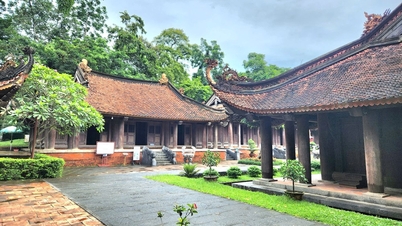
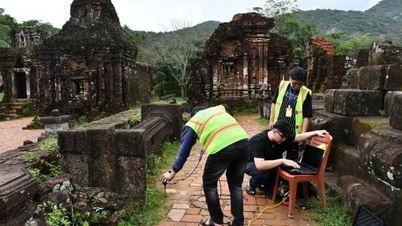
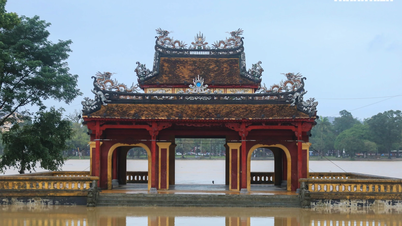
Quang Nam is a land that brings together UNESCO-recognized world cultural heritage sites: Hoi An Ancient Town, My Son Sanctuary, Central Vietnamese Bai Choi art, along with many other provincial and national cultural heritage sites.
The "Quang Nam - Heritage Journey" festival was first held in 2003 and has since been organized every two years to promote the globally valuable heritage and unique cultural features of the locality to the outside world.
However, heritage education for the younger generation has not yet received sufficient attention from all levels of government, sectors, schools, and society as a whole.
The capacity to organize heritage education activities, as well as the accompanying conditions (funding, time, human resources, etc.), have not been adequately invested in. Furthermore, the content of heritage education has not been flexibly adapted to the specific characteristics of each locality. Coordination among heritage education forces is not tight, and the mechanisms and operation of this coordination are not truly effective.
In the program to build "Friendly Schools, Active Students," there are two components related to protecting and promoting cultural heritage values: organizing cultural and spiritual life in schools linked to the exploitation of folk culture; and caring for heritage linked to learning about historical and cultural relics.
This means encompassing both heritage education and education through heritage, enabling students to understand heritage, thereby fostering feelings, ethics, and pride in the traditional values of the nation and country.
However, in reality, the number of students who understand the value of cultural heritage is still low, and the level of cultural illiteracy is alarming. This clearly has a significant impact on the effectiveness of preserving and promoting the values of cultural heritage.
Learning through artifacts
One of the key principles of heritage education theory in modern museology is the idea of "seeing through artifacts." Accordingly, students are given the opportunity to directly interact with artifacts and hear their stories. Museums become classrooms, using artifacts and other heritage information to expand students' historical and cultural knowledge. They are guided, prompted to ask questions, find answers, and draw conclusions based on the artifacts.
Experiential heritage education inspires students, stimulates their imagination, and leaves them with profound and vivid impressions. It fosters critical thinking, enhances their awareness, and fosters a love for history and culture. This, in turn, helps them appreciate traditional values and contribute to the preservation, conservation, and promotion of cultural heritage in a more effective and practical way.
This is necessary and a correct approach, consistent with current educational practices. There is no better traditional method of education than allowing children to "hear, see, and touch" the land where they were born and raised, the place where their grandparents and parents settled and built their lives. Each person's love for their country must stem from their love for their homeland.
In Hanoi, the capital city, for many years, the Thang Long - Hanoi Heritage Conservation Center has organized heritage education programs for tens of thousands of primary and secondary school students. The center has created numerous interactive areas and experiential activities for students, developed heritage education themes suitable for each grade level, and integrated history lessons into heritage exploration programs with various topics.
Since 1994, UNESCO has established the World Heritage Education Programme for Youth (WHE) to promote the role of young people in the preservation of world heritage. Heritage education is an effective way to teach history and culture, using information and materials about cultural heritage sites. Heritage sites and cultural institutions can become learning environments where students of all ages can directly experience and learn.
The way Hoi An does it
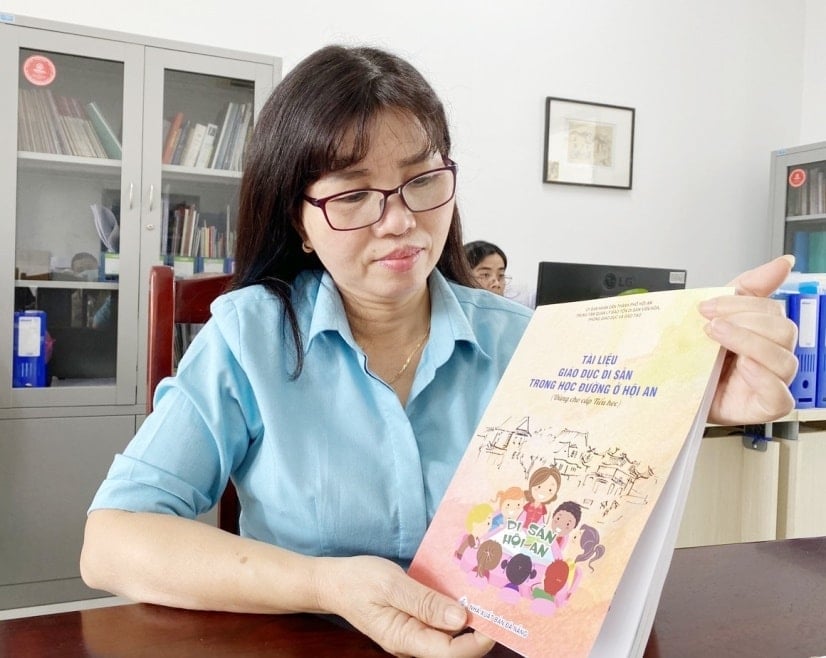
In Hoi An City, after a 7-year trial period, starting from the 2021-2022 school year, the Hoi An Cultural Heritage Conservation Management Center, in coordination with the Department of Education and Training, officially introduced the "Heritage Education in Schools" curriculum into primary schools in the area. Over 10,300 publications for teachers and students, 5 video clips, and 10 thematic visual materials have been published and distributed. Among these, the content related to Hoi An's historical sites and cultural heritage stands out.
The implementation of the teaching materials has received positive feedback and support from teachers, parents, and students. The materials are presented in a concise and scientific manner, while still ensuring richness and liveliness.
This facilitates teachers in conveying lesson content and makes it easier for students to access and absorb information during the learning and experiential process. Beyond classroom hours, the "Let's Explore the Museum Together" activity has provided students with many interesting experiences, equipping them with basic knowledge about the land and people of Hoi An. This helps to enhance their sense of responsibility and love for the local heritage, history, and traditional culture.
Hoi An's heritage education program in schools has been highly praised by the public and aligns with important recommendations in UNESCO Conventions on the protection of cultural and natural heritage, and intangible cultural heritage.
Dr. Nguyen Thi Minh Ly, Vice President of the Vietnam Cultural Heritage Association, affirmed: “Hoi An has successfully linked heritage education at historical sites with the school curriculum. I think this issue needs further research and expansion. Perhaps we can creatively combine it with social science subjects, as is currently the case, to achieve practical and in-depth results. If the program is implemented well in Hoi An, it will be an experience recognized by UNESCO. This model should be shared with other World Heritage sites, special national monuments, and provincial and city museums.”
Based on the innovative and effective approaches of Hoi An and many other places in the country, I believe it's time to invest in upgrading heritage education for the younger generation. This is also an effective investment for the future.
Museums and historical sites play a crucial role in educating children and building a solid foundation of cultural and historical knowledge. It is paradoxical that while government agencies and relevant organizations have invested heavily in restoring and renovating historical sites and establishing museums, they have yet to invest in long-term, fundamental projects for heritage education through these sites and museums!
Source: https://baoquangnam.vn/nghi-ve-giao-duc-di-san-cho-the-he-tre-3144654.html




















![[Photo] Prime Minister Pham Minh Chinh holds a phone call with the CEO of Russia's Rosatom Corporation.](/_next/image?url=https%3A%2F%2Fvphoto.vietnam.vn%2Fthumb%2F1200x675%2Fvietnam%2Fresource%2FIMAGE%2F2025%2F12%2F11%2F1765464552365_dsc-5295-jpg.webp&w=3840&q=75)











































Comment (0)