

Preserving traditional customs amidst the modern whirlwind.
The Bo Y population in Vietnam is only a few thousand, mainly concentrated in the communes of Quan Ba, Dong Van, and Meo Vac. Their lives are closely tied to corn fields, terraced rice paddies, and the weekly markets where the people meet and socialize. Amidst the whirlwind of integration, many old customs have faded, but the traditions, rituals, and especially the traditional costumes remain, making this community a "living treasure" in the heart of the rocky plateau.
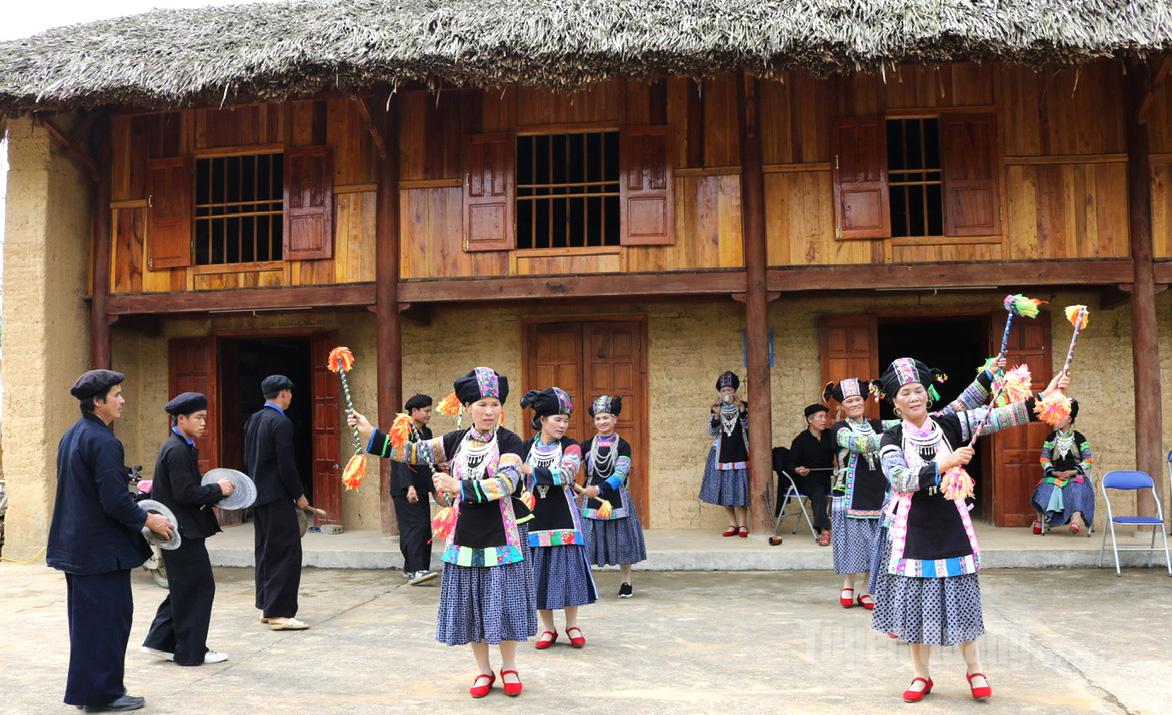 |
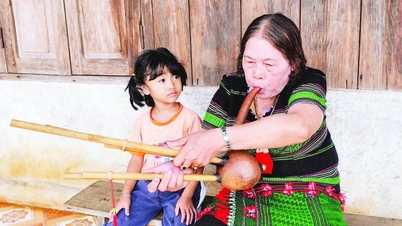
| The Pố Y people's community living space is filled with dances and music deeply rooted in their traditions. |
"We are a small community, so we must preserve our customs to avoid being lost. For example, in weddings and ancestral worship ceremonies, everything must be done according to ancient traditions," shared village elder Duong Van Thanh in Quan Ba commune.
Looking at their marriage customs, we can clearly see traces of cultural exchange. The Bo Y wedding has a wife-abduction custom similar to the Hmong, but it also includes a ceremony of exchanging silver bracelets and headscarves with Tay and Nung influences. In funerals, the Bo Y people value the farewell rituals performed with folk songs, as a link between the living and the spirits of their ancestors.
Furthermore, throughout the year, the Bo Y people maintain many small festivals associated with the harvest and agricultural beliefs. The Bo Y people believe that all things have souls, so when clearing land for farming, they first offer prayers to the mountain and forest spirits. During the Lunar New Year, they hold ancestral worship ceremonies in a warm atmosphere, with offerings typically including five-colored sticky rice, boiled chicken, corn wine fermented with leaves… all prepared by the family themselves.
Clothing, food , and lifestyle - An enduring identity.
Beyond customs, clothing has become the most distinctive "sign" for identifying the Bo Y people. Bo Y women stand out in their vibrant indigo-embroidered blouses. On the bodice, red, yellow, and blue embroidery is arranged in balanced, sophisticated, and expansive patterns. The hem is often edged with red thread – a color symbolizing good fortune. Most notably, their headscarf is considered the soul of the outfit. When a daughter goes to her husband's home, her mother gives her the headscarf as a reminder to uphold the family traditions and values.
A valuable detail that few people know: The Bo Y people have a long-standing tradition of growing cotton, spinning yarn, and weaving fabric, and they don't use fabric bought from the market. Each piece of fabric, each stitch, embodies months of labor and a desire to preserve their unique beauty. Therefore, their traditional clothing is not just for wearing, but also a miniature history book, telling the story of the community's origins and beliefs.
Ms. Loc Thi Ha, a young woman of the Bo Y ethnic group in Meo Vac, shared: “Wearing traditional clothing makes me feel confident and like I'm carrying the identity of my ethnic group with me. Many tourists come to take pictures and ask to buy our clothes, which makes me very happy, but most importantly, my daughter will still know how to embroider and preserve this craft.”
Today, community-based tourism is opening up opportunities for the Bo Y people to spread their cultural identity. At the markets of Quan Ba or Dong Van, it's not uncommon to see Bo Y women selling hand-embroidered scarves or brightly colored fabric bags. Many homestays managed by Bo Y families have also become attractive destinations for tourists wanting to experience local culture.
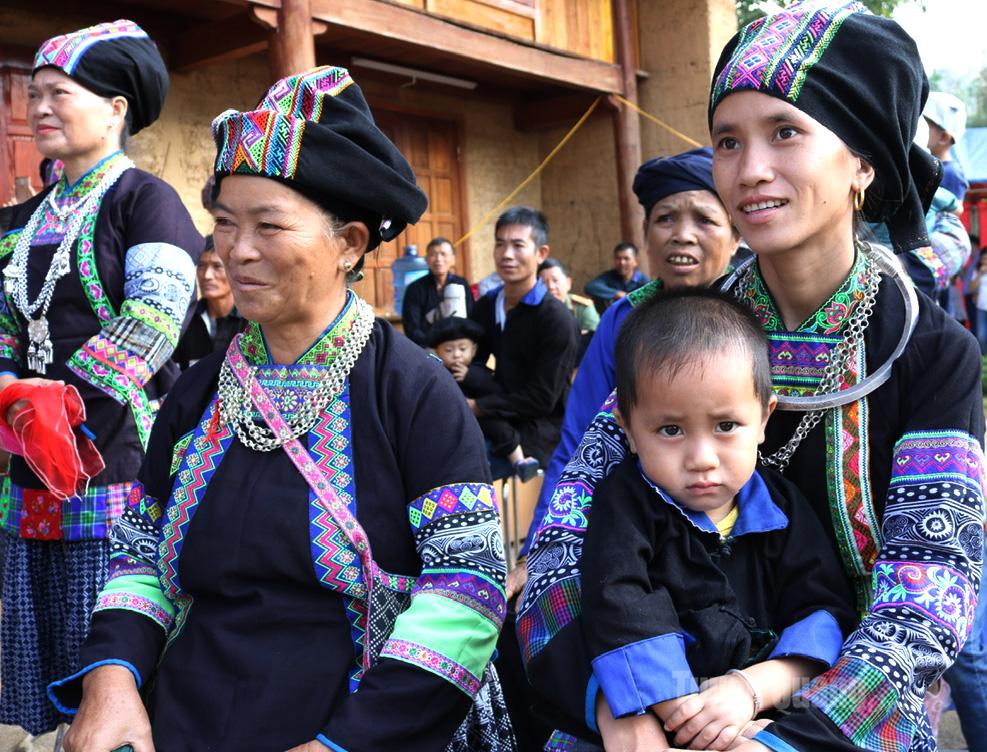 |
| The gentle smiles of the Po Y women, along with the radiant glow in their brightly colored, hand-embroidered costumes. |
Tourist Nguyen Thi Thu Ha from Hanoi, after her trip to Quan Ba, shared: “What impressed me most was seeing a Po Y girl sitting by the loom, her hands nimbly moving the shuttle, each thread of fabric seemingly alive. When I tried on their clothes, I clearly felt the connection between the people and the mountains and forests. It wasn't just clothing, but a vibrant breath of culture.”
The cuisine of the Bo Y people also possesses many refined characteristics. Besides familiar dishes of the highland people such as thang co (a traditional stew) and smoked meat, the Bo Y have their own secrets in processing soybeans, creating various types of fermented soybean paste and sourdough starter for year-round consumption. Corn wine fermented with leaves is also an indispensable drink during festivals and celebrations. Particularly noteworthy is their five-colored sticky rice, which is both visually appealing and embodies spiritual beliefs – the five colors symbolize the five elements and the balance of yin and yang.
Preserving cultural identity - A source of pride for future generations.
The Bo Y villages are simple yet deeply philosophical. Their houses are typically earthen-walled or low stilt houses with thatched roofs and rustic wooden floors, nestled against the mountain slopes. The Bo Y people believe that building their houses facing the valley will attract positive energy, ensuring bountiful harvests. Inside, there is usually an ancestral altar in the main room, with a constantly burning hearth, symbolizing togetherness and warmth.
It is in this setting that visitors from afar often feel the hospitality firsthand. They will be offered a cup of corn wine, a bowl of wild vegetable soup, and hear stories about their ancestors. It is a moment when the boundary between guest and host seems to disappear, leaving only the connection of heartfelt feelings.
“In Bo Y village, I saw a simple yet warm way of life. From the smiles of the women at the market to the meals served with wild vegetables and stream fish, everything was genuine. It was this hospitality that made my trip more memorable than ever,” expressed Nguyen Anh Dung, a tourist from Ho Chi Minh City.
However, the decline of these traditions remains a constant concern. The number of Bo Y ethnic households is dwindling, and many young people are leaving their hometowns to study or work far away, leaving them with little opportunity to engage with their customs. Therefore, preserving the weaving and embroidery craft requires collective effort. Party committees, local authorities, and cultural organizations in the communes have implemented numerous conservation projects, but the most important factor remains community awareness.
"Preserving our culture is not only about remembering our ancestors, but also about giving our descendants a sense of pride," emphasized Mr. Lo Van Pa, an elder of the Bo Y village.
On the rocky plateau, where clouds drift lazily over verdant hillsides, the Bo Y people persistently weave their own unique tapestry. Each scarf, each garment is not merely clothing, but a whisper to the past, an affirmation of the resilience of a small community amidst the vast wilderness. And it is this uniqueness that makes the Bo Y a precious highlight in the diverse tapestry of ethnic groups in the Northeast region.
Text and photos: Duc Quy
Source: https://baotuyenquang.com.vn/van-hoa/du-lich/202508/nguoi-bo-y-thanh-am-rieng-giua-nui-rung-dong-bac-7ca1eb4/


![[Photo] Closing Ceremony of the 10th Session of the 15th National Assembly](/_next/image?url=https%3A%2F%2Fvphoto.vietnam.vn%2Fthumb%2F1200x675%2Fvietnam%2Fresource%2FIMAGE%2F2025%2F12%2F11%2F1765448959967_image-1437-jpg.webp&w=3840&q=75)

![[Photo] Prime Minister Pham Minh Chinh holds a phone call with the CEO of Russia's Rosatom Corporation.](/_next/image?url=https%3A%2F%2Fvphoto.vietnam.vn%2Fthumb%2F1200x675%2Fvietnam%2Fresource%2FIMAGE%2F2025%2F12%2F11%2F1765464552365_dsc-5295-jpg.webp&w=3840&q=75)
























































Comment (0)