


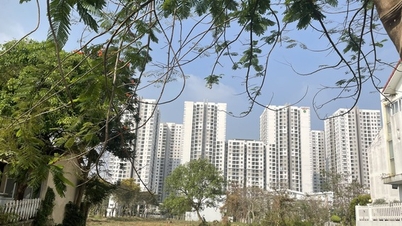
In this context, affordable housing is a promising segment for investors today, with high demand, coupled with increasingly完善 infrastructure and attractive investment support policies from the Government . On the other hand, close cooperation between the public and private sectors is a crucial factor in solving the problem of affordable housing.
Huge demand for housing
Between 2019 and 2023, real estate prices in Hanoi increased by an average of 6% per year and in Ho Chi Minh City by 3% per year, while personal income only increased by 4% and 3% respectively. This widening gap makes home ownership more difficult than ever for many people. Furthermore, legal barriers, issues faced by developers, and delays in implementing housing support policies have further complicated the situation.
A sustainably developed real estate market typically has a diverse range of segments, especially in the B and C segments. However, in both Hanoi and Ho Chi Minh City, the supply of these types of housing is severely lacking. The demand for approximately 50,000 apartments per year, primarily from middle-income earners and young families, remains unmet.
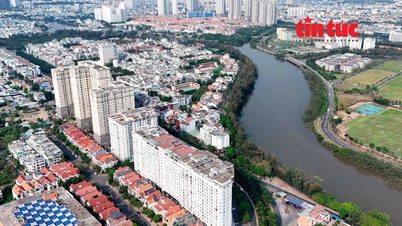
According to Ms. Giang Huynh, Director of Research and S22M at Savills Vietnam, both Ho Chi Minh City and neighboring provinces such as Binh Duong, Dong Nai, and Long An are facing a housing supply shortage. In the near future, Ho Chi Minh City will see an increase in high-end projects, while the supply of affordable housing will be limited. Conversely, Hanoi will focus on developing B-class projects. This imbalance is due to several factors, including income growth, limited land availability and rising land costs, along with complex administrative procedures in granting permits for new development projects.
A series of infrastructure and policy support measures.
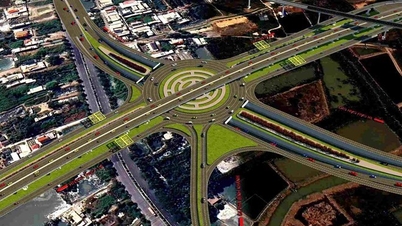
With public investment in infrastructure accounting for approximately 6% of GDP, the government is implementing many large-scale projects such as the construction of roads, bridges, airports, and seaports. Simultaneously, the 2024 Land Law has created more favorable conditions for the implementation of these projects. The main goal of these projects is to improve transportation connectivity between provinces and cities, shorten geographical distances and travel times, especially between urban centers and suburban areas. This will create favorable conditions for socio-economic development and attract investment.
“The Transport-Oriented Development (TOD) model, exemplified by metro systems, has proven effective in addressing traffic congestion and providing housing. By focusing development on areas surrounding metro lines, building density increases, facilitating travel and connectivity between regions. Simultaneously, utilizing land along metro lines reduces investment costs, thereby creating more affordable housing options for residents,” added Ms. Giang Huynh.
The enactment of new laws such as the 2024 Land Law, the 2023 Real Estate Business Law, and the 2023 Housing Law is expected to create positive changes in the real estate market. These new legal regulations promise to improve land use efficiency, simplify administrative procedures, and create more favorable conditions for investors to participate in the market. “In particular, the 2023 Housing Law has simplified the process of buying and selling houses, while also providing clear regulations on home ownership for foreigners. Accordingly, foreigners can own a maximum of 30% of the total number of apartments in a building and no more than 250 houses in a ward. The ownership period is 50 years and can be extended. However, in the case of marriage to a Vietnamese citizen, foreigners are allowed to own houses permanently,” Ms. Giang Huynh cited as an example.
To address the housing shortage and prevent land speculation, the 2023 Real Estate Business Law prohibits the subdivision of residential land in major cities from January 31, 2025. Simultaneously, the 2023 Housing Law also includes significant adjustments, focusing on housing development in key urban areas. Furthermore, the mandatory requirement to allocate 20% of land for commercial projects has been abolished, opening up opportunities for investors to convert this land for social housing construction. Social housing investors will enjoy attractive incentives such as free land use, exemption from land lease fees, and access to preferential interest rate loans.
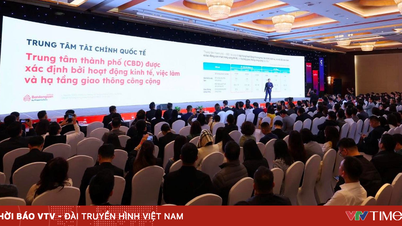
At a recent seminar held in Ho Chi Minh City, Mr. Ha Quang Hung, Deputy Director of the Department of Housing and Real Estate Market Management (Ministry of Construction), stated that in recent times, localities have implemented various methods to attract businesses, real estate investors, and other economic entities to actively participate in the construction of social housing.
Specifically, statistics from 2021 to the present show that 619 social housing projects have been implemented in 61 out of 63 localities, with a total of 561,800 units. However, to date, only 79 projects have been completed, comprising 40,600 apartments; the remaining 128 projects have commenced construction and are underway, with a total of approximately 112,000 apartments. In addition, 412 projects have received investment approval, totaling nearly 410,000 units, and are in the process of completing procedures to begin construction.
In this context, according to experts from Savills Vietnam, to solve the problem of affordable housing for the people, we need a comprehensive solution, combining the strengths of both the public and private sectors. No single party can solve this difficult problem alone. On the other hand, the state budget is limited and interest rates are high, making it difficult to finance social housing projects; the private sector also faces inflationary pressure on input costs. Therefore, effective cooperation between the two sides is essential.
Local authorities should implement strong policies to encourage landowners to cooperate in creating sustainable new residential areas. By maximizing land use, incorporating shared amenities and green spaces, we can partially address the increasingly urgent housing problem. Close collaboration between the government and investors will be key to turning these ideas into reality.
Source: https://doanhnghiepvn.vn/kinh-te/nhieu-co-hoi-cho-nha-dau-tu-vao-phan-khuc-gia-nha-phai-chang/20240930110450535


























![[Photo] Prime Minister Pham Minh Chinh attends the Conference summarizing and implementing tasks of the judicial sector.](/_next/image?url=https%3A%2F%2Fvphoto.vietnam.vn%2Fthumb%2F1200x675%2Fvietnam%2Fresource%2FIMAGE%2F2025%2F12%2F13%2F1765616082148_dsc-5565-jpg.webp&w=3840&q=75)































































Comment (0)