

On September 26th, the Ho Chi Minh City National Assembly Delegation held a workshop to provide feedback on the draft Law on the Organization of the People's Courts (amended). Speaking at the workshop, a representative from the Ho Chi Minh City People's Procuracy stated that many proposed amendments and additions to the draft law are not consistent with the Constitution and lack uniformity and synchronization with the existing legal system. These proposed changes could disrupt the judicial system, potentially leading to amendments and additions to the Constitution and many related laws.
3 noteworthy issues
Accordingly, the Prosecutor's Office cited three noteworthy issues.
Firstly, according to the Ho Chi Minh City People's Procuracy, the establishment of first-instance and appellate courts to replace district and provincial courts was mentioned in Resolution No. 49. However, after 15 years of review, the Politburo concluded that this policy should not be implemented, and Resolution No. 27 also did not mention this content.
Therefore, according to the Procuratorate, changing the name as proposed in the draft law is unnecessary, as it is merely a formality and does not fundamentally alter the situation. This would directly impact and disrupt the relevant legal system in the judicial field, requiring amendments and additions such as the Criminal Procedure Code and the Civil Procedure Code, and would be wasteful due to the need to change the nameplate, seal, and headquarters.
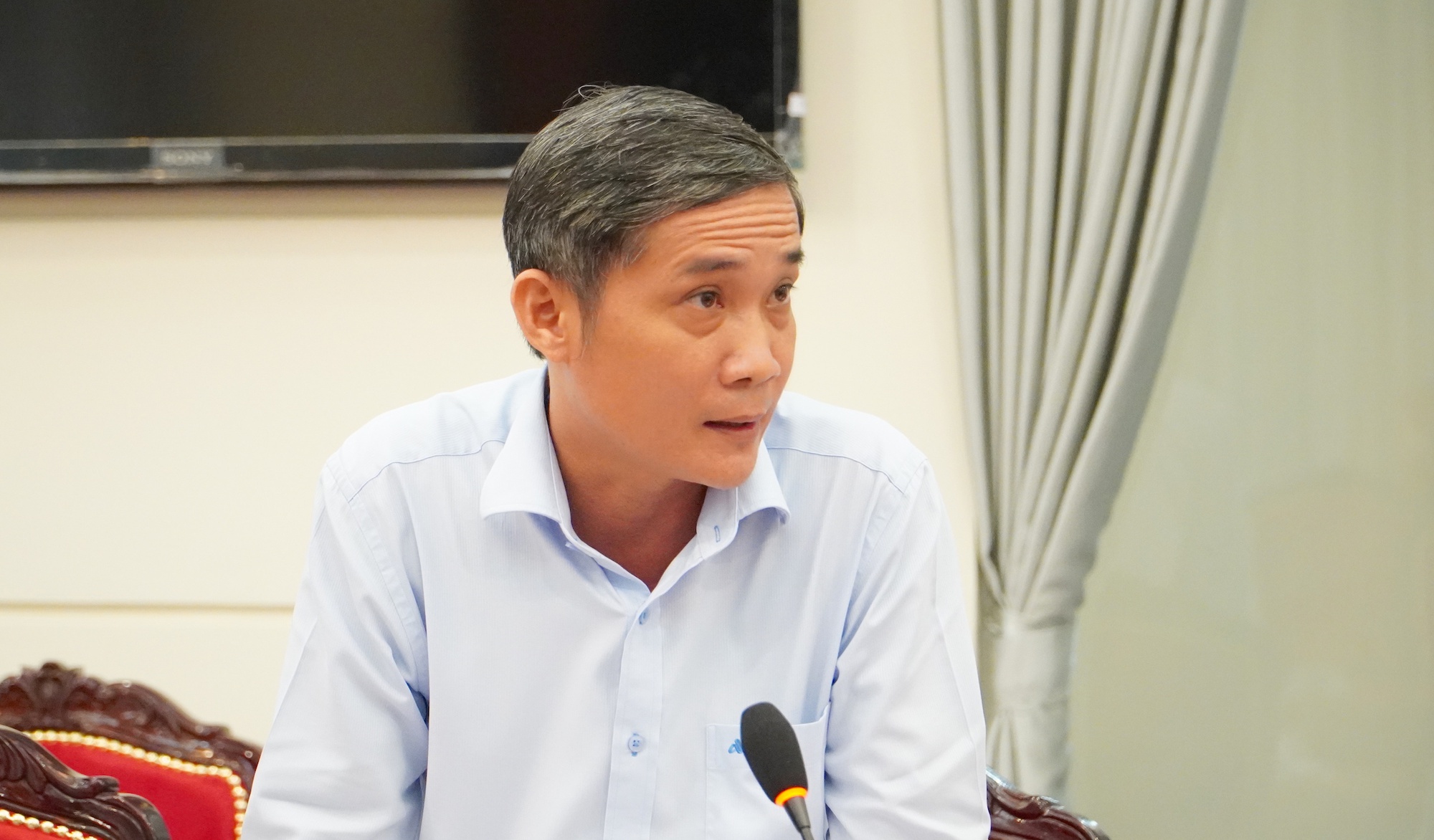
According to a representative of the Ho Chi Minh City People's Procuracy, the proposal to abolish the court's requirement to collect evidence at this stage is not in line with practical realities.
Secondly, the Ho Chi Minh City People's Procuracy stated its position regarding the proposal to abolish the court's requirement to collect evidence at this stage. This is not in line with reality. In fact, in our country today, the level of education and legal awareness of the people, especially the working class, is still limited. People do not have enough information or the means to go to competent authorities to gather evidence; state agencies do not automatically provide evidence to the people unless requested or asked by a competent authority.
Prioritizing support for vulnerable groups is necessary; however, all citizens are equal before the law and are not subject to discrimination. Furthermore, current regulations already provide legal assistance to vulnerable groups, including support in gathering evidence.
According to current regulations, parties involved do not have the right to request the court to collect documents and evidence in all cases, but only have the right to request the court's assistance if they are unable to collect them themselves, and in cases stipulated by law.
In reality, there are many cases where, despite the court directly collecting, verifying, and assessing evidence, it still fails to properly evaluate the nature of the case, leading to errors, annulment, modification, or non-enforcement of judgments. Therefore, to align with the Party's policy of building a "people-serving" judicial system, the Procuracy proposes continuing to regulate the duties and powers of the court in collecting documents and evidence.
Thirdly, regarding the handling of judges who violate regulations, Article 105 of the draft law stipulates that the arrest, detention, prosecution, and search of the residence and workplace of Supreme People's Court judges must have the opinion of the President of the Socialist Republic of Vietnam; while for judges, it must have the opinion of the Chief Justice of the Supreme People's Court.
The aforementioned regulation implies "immunity" (special rights) for judges, similar to the "immunity" for National Assembly representatives currently stipulated in Article 81 of the Constitution. The Ho Chi Minh City People's Procuracy argues that even if the Party agrees with the principle of recognizing "immunity" for judges, it must be considered on the basis of ensuring the principle of equality before the law for all citizens, including civil servants. In particular, it is necessary to promptly prevent and strictly punish all violations of the law and crimes, without any exceptions or forbidden areas.
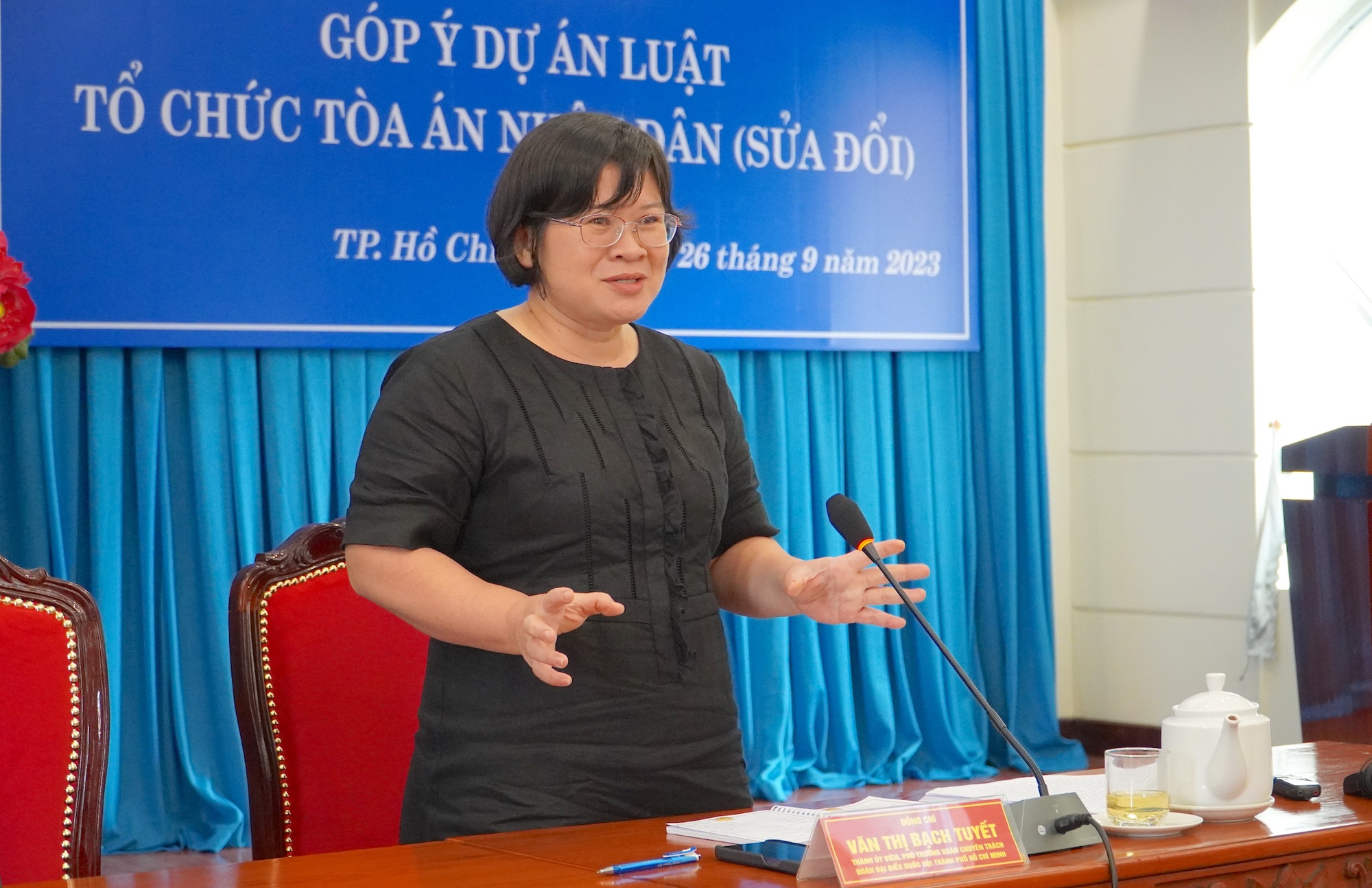
Ms. Van Thi Bach Tuyet (Deputy Head of the Standing Delegation of the National Assembly of Ho Chi Minh City)
What did the court representatives say?
Meanwhile, representatives from the Ho Chi Minh City People's Court, District 6 People's Court, and Binh Thanh District People's Court all expressed agreement with the draft law. According to Judge Tran Thi Thuong of the Ho Chi Minh City People's Court, the activities of the Bar Association, the Legal Aid Center, the Lawyers' Association, and bailiffs will help people gather evidence. After the Law on the Organization of the People's Courts is passed, society will agree to develop accordingly…
Meanwhile, the representative from the Military Court of Military Region 7 raised the issue: "According to the draft, the detention of a judge requires the opinion of the Chief Justice of the Supreme People's Court or the President. If the opinion of the Chief Justice and the President is not granted, the proceedings will not be applied. This infringes upon the procedural activities. In my opinion, an adjustment is needed; reporting to the President or the Chief Justice of the Supreme People's Court would be more appropriate."
According to Ms. Van Thi Bach Tuyet (Deputy Head of the Ho Chi Minh City National Assembly Delegation), whether the court collects evidence or not does not affect the objectivity of the judge. "It's true that, in general, whoever wants to sue must provide evidence, and the court only bases its decision on the evidence collected. Some argue that judges collect evidence to pressure one side or the other, but I believe this view is incorrect. Does this mean that the court's collection of evidence has always been biased?" Ms. Tuyet questioned.
Source link



![[Photo] Prime Minister Pham Minh Chinh holds a phone call with the CEO of Russia's Rosatom Corporation.](/_next/image?url=https%3A%2F%2Fvphoto.vietnam.vn%2Fthumb%2F1200x675%2Fvietnam%2Fresource%2FIMAGE%2F2025%2F12%2F11%2F1765464552365_dsc-5295-jpg.webp&w=3840&q=75)
![[Photo] Closing Ceremony of the 10th Session of the 15th National Assembly](/_next/image?url=https%3A%2F%2Fvphoto.vietnam.vn%2Fthumb%2F1200x675%2Fvietnam%2Fresource%2FIMAGE%2F2025%2F12%2F11%2F1765448959967_image-1437-jpg.webp&w=3840&q=75)









































![[OFFICIAL] MISA GROUP ANNOUNCES ITS PIONEERING BRAND POSITIONING IN BUILDING AGENTIC AI FOR BUSINESSES, HOUSEHOLDS, AND THE GOVERNMENT](https://vphoto.vietnam.vn/thumb/402x226/vietnam/resource/IMAGE/2025/12/11/1765444754256_agentic-ai_postfb-scaled.png)


































Comment (0)