

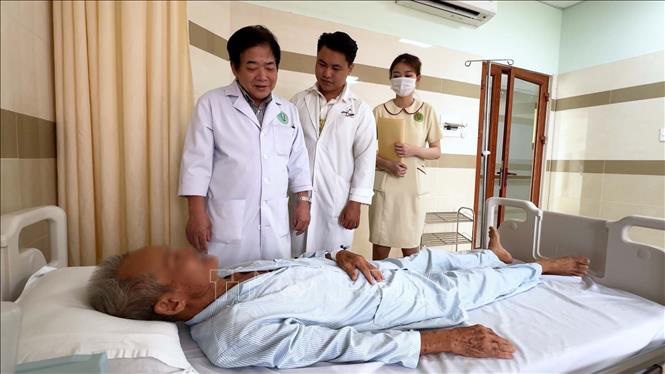
Doctors examine patients after the procedure - Photo: VNA
Mr. NVT was brought to the hospital by his family for examination and admission with symptoms of high blood pressure, shortness of breath, chest tightness, abdominal pain, and blood in the urine. He had been taking over-the-counter medication for about a week but his condition did not improve.
According to the patient's family, Mr. T. had a history of kidney stones and underwent endoscopic surgery to remove them a year ago. The doctors inserted a JJ stent. This is a hollow tube made of flexible plastic or silicone, placed in the ureter to ensure the flow of urine from the kidney to the bladder.
This tube needs to be removed from the patient's body after a period of time, depending on the doctor's instructions in each specific case.
However, after being discharged from the hospital, Mr. T. did not go for his regular follow-up appointments as advised by his doctor. Recently, he complained of excessive fatigue, abdominal pain accompanied by blood in his urine, and looked pale and weak.
His family bought medicine for him to take on their own, but the pain did not subside, so they took him to Nam Can Tho University Hospital for treatment.
Here, doctors examined and conducted clinical tests on Mr. T., concluding that he had chronic obstructive pulmonary disease, urinary tract infection, kidney stones, and acute renal failure; in particular, there were foreign objects and stones embedded in his right kidney and bladder, and they decided to perform emergency surgery on June 15th.
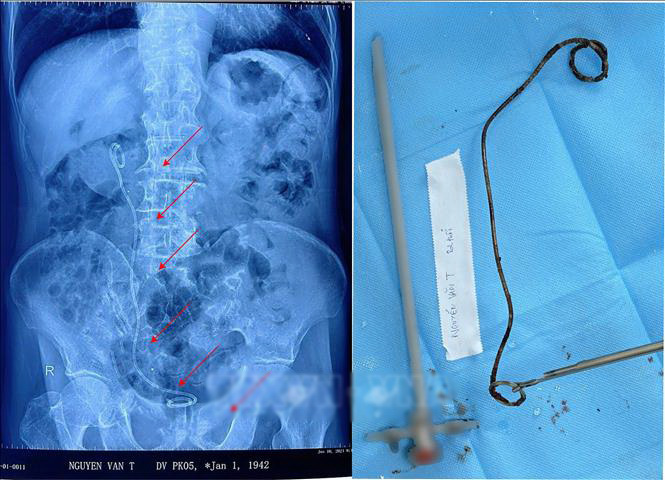
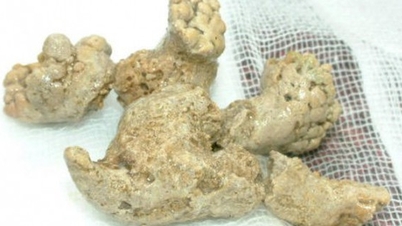
The JJ stent, over 20cm long, had turned black and was clogged with stones after being removed from the patient - Photo: VNA.
Doctors determined this was a difficult and risky intervention due to the patient's advanced age, multiple underlying conditions, the large foreign body, and the fact that it had been lodged in the body for too long, causing the surrounding mucosa to adhere tightly (also known as mosaicism). Surgery could potentially pull the ureteral mucosa along with it, leading to very serious complications.
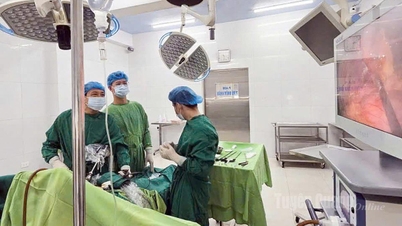
After more than an hour, with the focused and coordinated efforts of multiple specialties, the foreign object was safely removed from the patient. The foreign object was a JJ stent (approximately 20-25 cm long) that had turned black and was clogged with stones.
Two days after the intervention, the patient is now conscious, responsive, vital signs are stable, pain symptoms have significantly decreased, there is no more hematuria, and the patient is able to eat and drink. The patient will continue to be monitored and examined post-operatively.
Associate Professor, Doctor Dam Van Cuong, Director of Nam Can Tho University Hospital and lead surgeon of the surgical team, advises that when experiencing persistent, unusual pain for several days, people should immediately go to reputable medical facilities for examination and treatment.
At the same time, after undergoing surgery or procedures, especially those involving catheter placement, patients need to remember to return for follow-up appointments as instructed by their doctor to have the catheter removed, avoiding complications and even life-threatening situations.
Source: https://tuoitre.vn/ong-sonde-hon-20cm-ngu-quen-trong-than-bang-quang-cu-ong-82-tuoi-20240618080209691.htm





























































































Comment (0)