

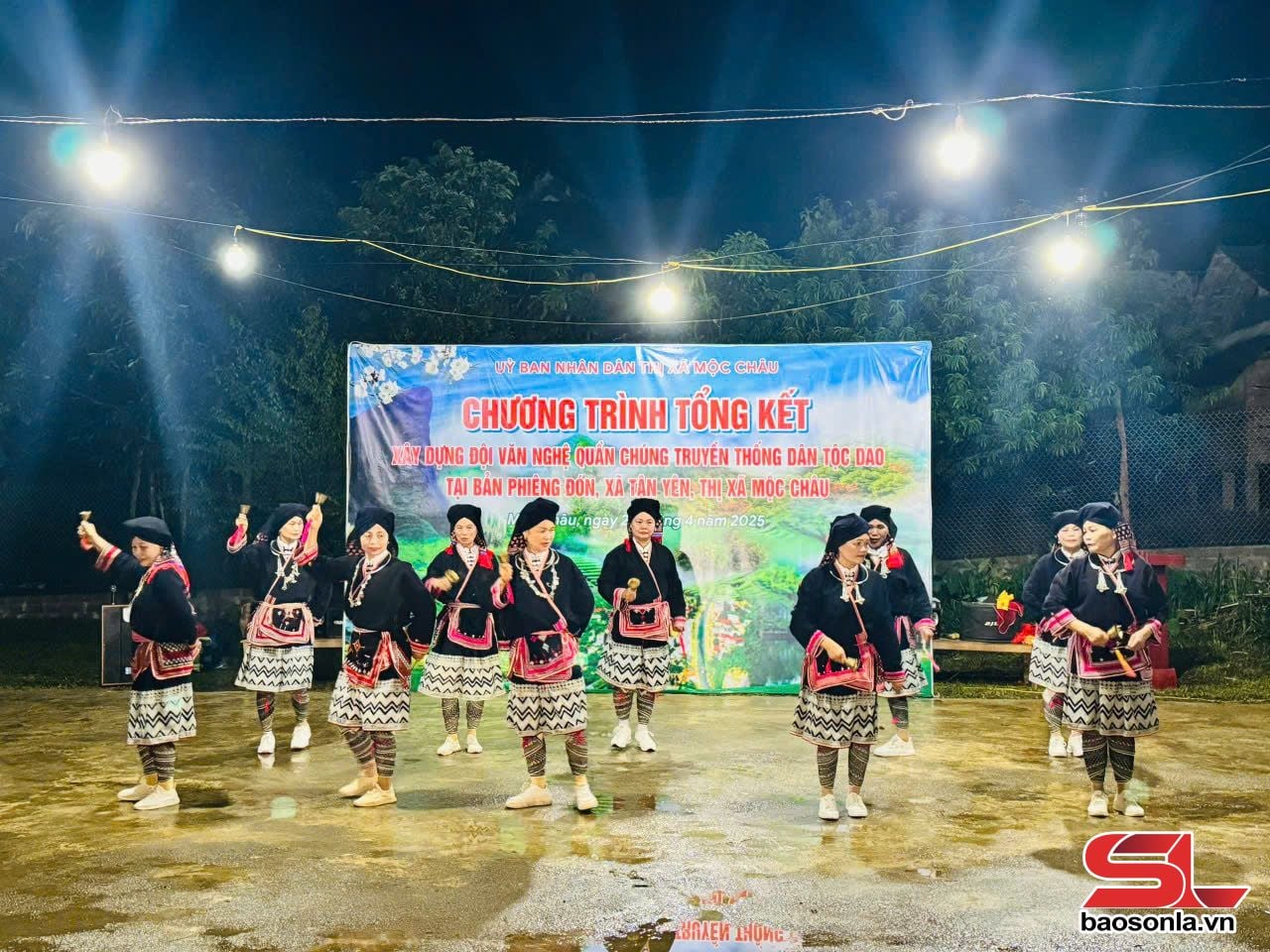
Coming to the Dao Phieng Don village, Tan Yen commune, every late afternoon, the sports field in front of the cultural house is bustling with laughter, cheers and cheers for volleyball teams practicing and competing. In the evening, women call each other to gather at the cultural house to practice dancing, singing and folk dancing. Like that, the cultural house is always lit up, with music, singing and laughter resounding, everyone is excited, practicing together, chatting and sharing experiences about life, family and production development. On weekends, the cultural house is also where artisans organize classes to teach Nom Dao script, teaching traditional culture to the people in the village.
Ms. Trieu Thi Thu, the leader of the art troupe of the Women's Union of Phieng Don village, Tan Yen commune, excitedly said: The village's cultural house and sports ground have been invested in to be spacious and well-built, with tables, chairs, electricity systems, and basic equipment, helping the villagers have a meaningful place to live. The village currently has 3 art troupes and sports teams and groups that operate regularly. After each hard day's work, in the evening, everyone gathers here to practice, both to exchange, entertain, and strengthen the relationship between the village and the neighbors.
In Bon village, Muong Chien commune, many years ago, the village invested in building a cultural house, a stadium, a viewing hut, and a playground connected to Tu Ti Nang Han temple (Han temple) with a total area of nearly 1 hectare. This is a place where cultural exchange activities, arts, festivals, and the Xip Xi New Year of the Bon people and neighboring villages are regularly held. This system of cultural institutions is prioritized for construction right on the bank of the Da River lake, which is the first place tourists set foot when coming to the Bon community tourism village.
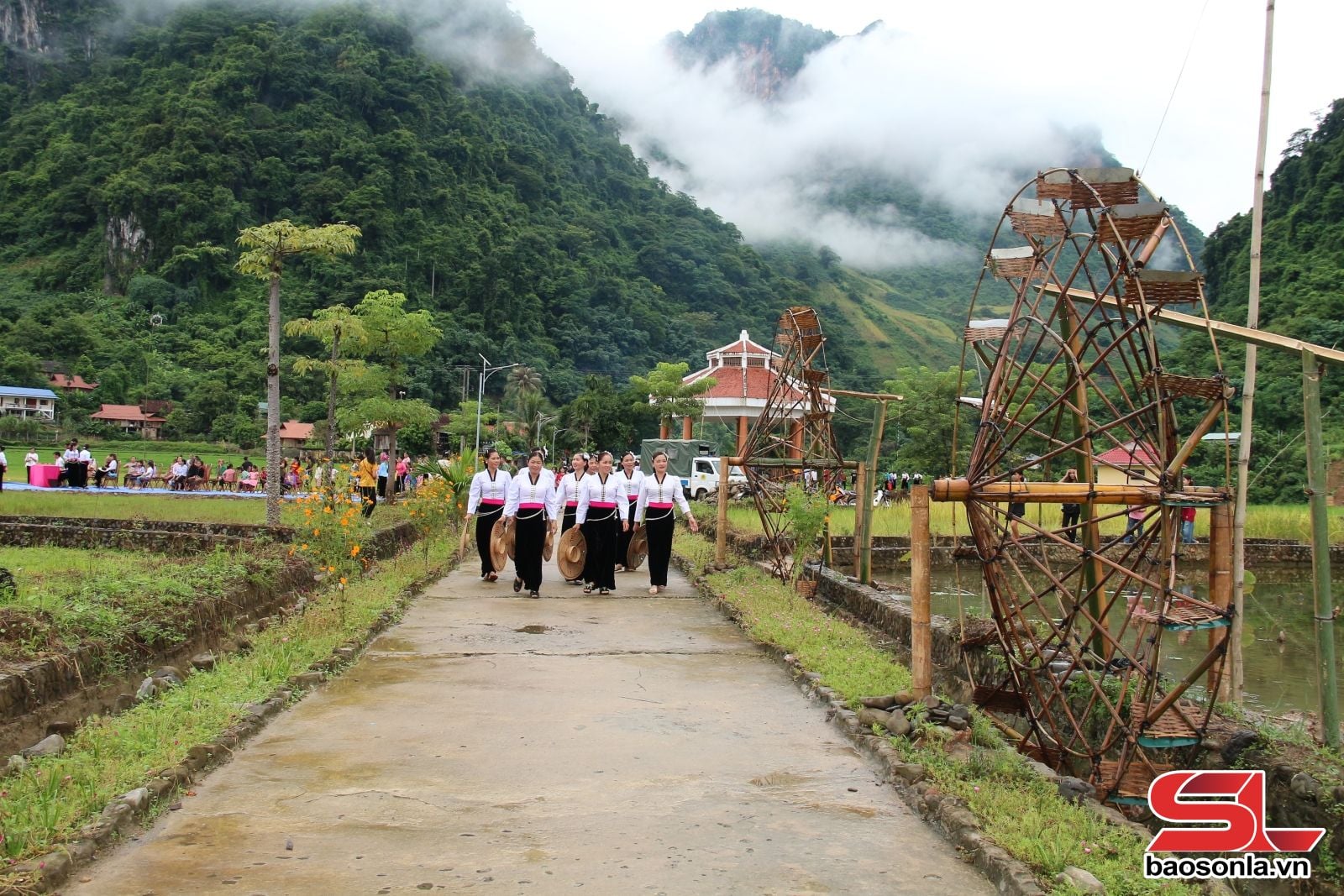
Mr. Lo Van Phieng, Party Cell Secretary and Head of Bon Village, shared: The villagers highly value the stadium and the village cultural house, and encourage each other to preserve and protect them. They also plant flowers and trees along the roads to make the village more beautiful. Last year, the Bon Village Community Tourism Cooperative also invested in building water wheels, traditional rice pounding mortars, swings, and sightseeing spots, which not only beautified the village landscape to attract tourists, but also created a common living space for the villagers and a safe playground for children.
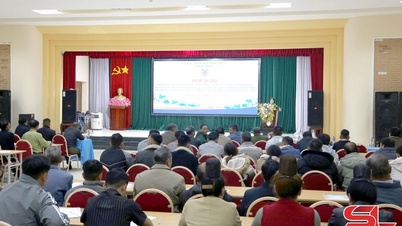
Not only in Phieng Don and Bon villages, but also in many villages, hamlets, sub-areas, and residential groups from urban to rural areas, cultural institutions are being managed, used, and promoted effectively. In particular, the cultural house has become a place to hold village meetings, party cell activities, and disseminate laws to people; a place to open literacy classes, teach ethnic writing, teach folk songs, and traditional culture; practice, perform, and exchange arts; and organize the National Great Unity Day...
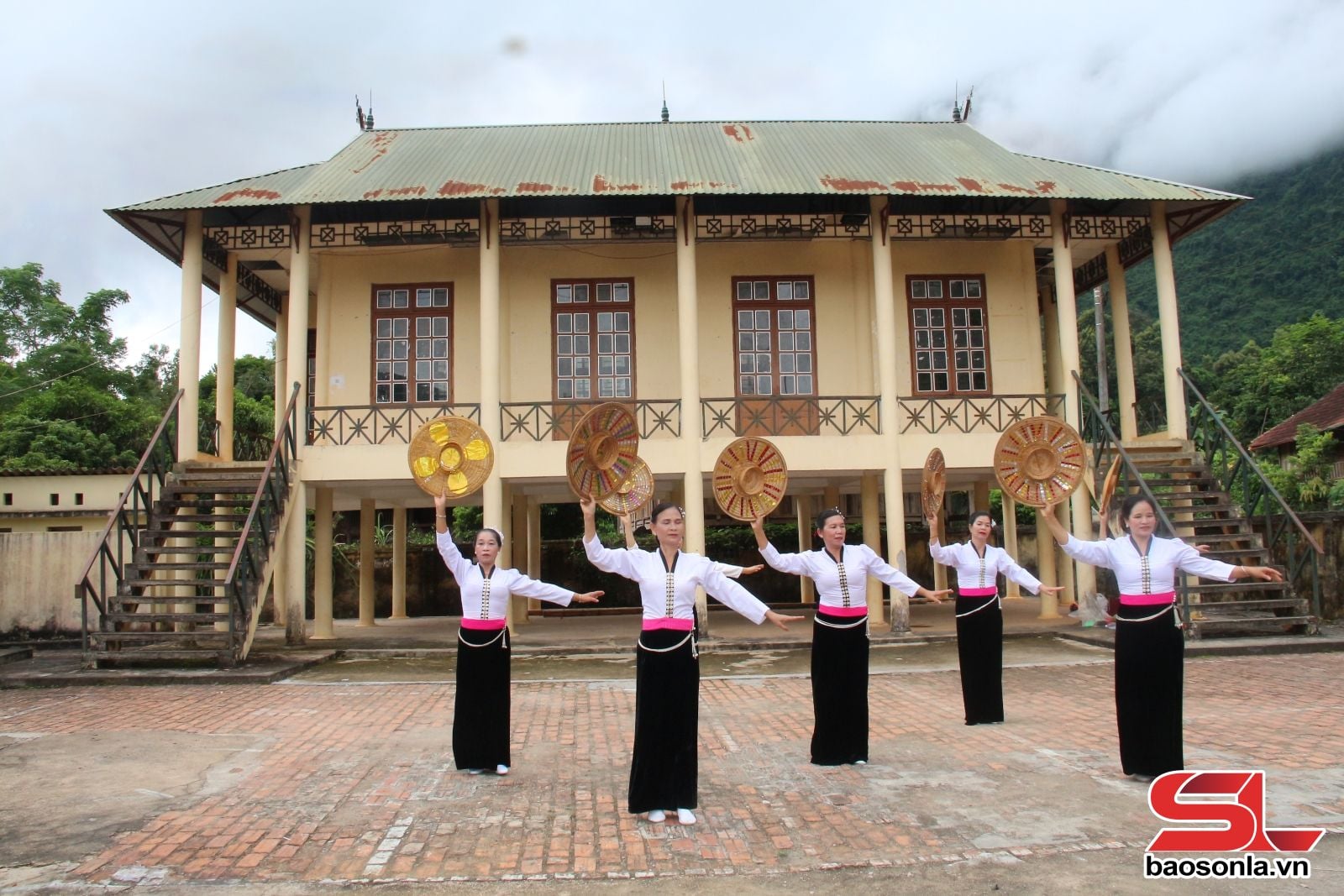
Currently, 75/75 communes and wards have cultural houses or conference centers handed over from the previous district and city levels; 2,175/2,509 groups, hamlets and sub-areas have cultural houses; 563 works are being used for physical education and sports activities. At the grassroots level, there are currently over 2,000 mass art troupes and hundreds of cultural clubs, folk dance clubs, and hobby groups; 510 sports clubs... which are the core elements actively contributing to the movement to build cultural life at the grassroots level, helping to increase the rate of cultural families to 78.8%; the rate of cultural hamlets and residential groups reaching 53.9%; the rate of sports households reaching 23.4%.
Mr. Pham Hong Thu, Deputy Director of the Department of Culture, Sports and Tourism, said: The Department has planned to review and evaluate the current status of cultural houses in villages, sub-areas, residential groups and cultural houses in communes and wards after the merger to assess the current situation in management and use, and propose solutions to effectively promote cultural institutions. At the same time, promote propaganda work, innovate organizational methods, launch emulation movements and campaigns on building cultural life according to the motto of focusing on the grassroots.
Promoting the effective role and function of grassroots cultural institutions is a practical solution to improve and enhance the spiritual life of each village and residential area, contributing significantly to creating a community living space, consolidating national solidarity, and promoting the emulation movement to build cultural life and civilized lifestyle at the grassroots level.
Source: https://baosonla.vn/nong-thon-moi/phat-huy-vai-tro-cua-thiet-che-van-hoa-co-so-dV6Yu8WvR.html
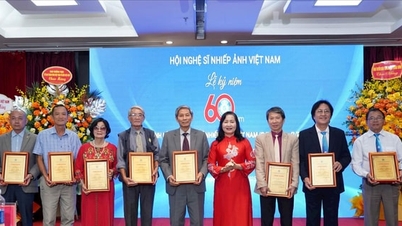
![[Photo] 60th Anniversary of the Founding of the Vietnam Association of Photographic Artists](/_next/image?url=https%3A%2F%2Fvphoto.vietnam.vn%2Fthumb%2F1200x675%2Fvietnam%2Fresource%2FIMAGE%2F2025%2F12%2F05%2F1764935864512_a1-bnd-0841-9740-jpg.webp&w=3840&q=75)


![[Photo] National Assembly Chairman Tran Thanh Man attends the VinFuture 2025 Award Ceremony](/_next/image?url=https%3A%2F%2Fvphoto.vietnam.vn%2Fthumb%2F1200x675%2Fvietnam%2Fresource%2FIMAGE%2F2025%2F12%2F05%2F1764951162416_2628509768338816493-6995-jpg.webp&w=3840&q=75)





















































Comment (0)