

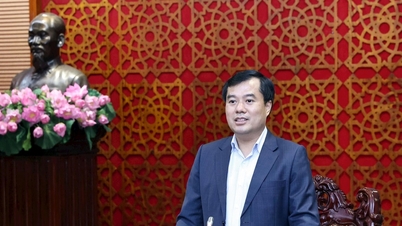
Before the delegates cast their votes, Le Quang Huy, Chairman of the National Assembly's Committee on Science , Technology and Environment, presented a summary report explaining, accepting, and revising the draft Law on Water Resources (amended).
Regarding water resource protection and restoration, Mr. Huy stated that, incorporating the opinions of National Assembly deputies, the draft Law has been revised to focus on management based on technical standards and regulations for technical provisions such as: preventing and controlling seawater pollution; exploiting water resources for domestic use; collecting and treating used water in industrial production, mining and mineral processing; preventing and controlling saltwater intrusion; preventing and controlling land subsidence; and preventing and controlling erosion of riverbeds, banks, and beaches.
There was a suggestion to clarify the legal basis for determining the minimum flow rate. Regarding this matter, the Standing Committee of the National Assembly believes that the regulation of the minimum flow rate in the draft Law is inherited from the 2012 Water Resources Law, Resolution No. 62 dated November 27, 2013 of the National Assembly on strengthening the management of planning, investment in construction, operation and exploitation of hydropower projects, and has been implemented stably for many years. Therefore, there is sufficient legal and practical basis for regulating the minimum flow rate.
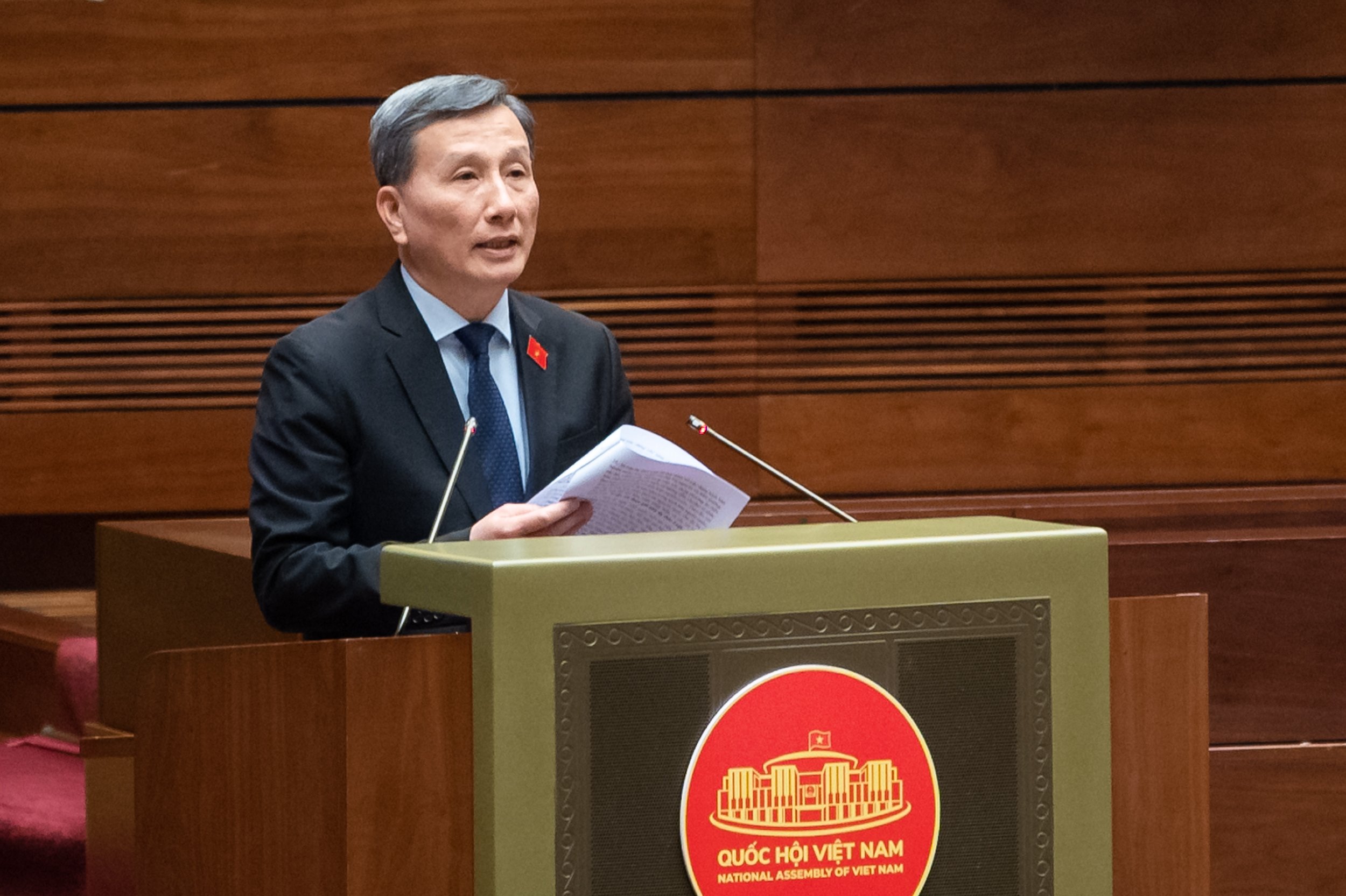
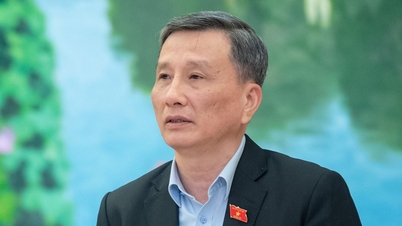
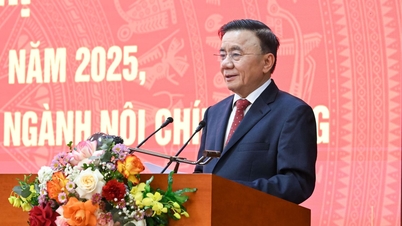
Chairman of the National Assembly's Committee on Science, Technology and Environment, Le Quang Huy.
Mr. Huy affirmed that, taking into account the opinions of National Assembly deputies, the draft Law has been reviewed, supplemented, and revised to prioritize investment in searching, exploring, and exploiting water resources and water storage; and to have preferential policies for investment projects in exploiting water for domestic and production purposes for people in freshwater-scarce areas, ethnic minority areas, mountainous regions, border areas, and islands.
Encourage water storage activities; apply and develop technologies in water storage; prioritize investment and construction of water storage facilities combined with artificial groundwater recharge in islands and water-scarce areas; encourage organizations and individuals to research solutions and implement artificial groundwater recharge, and assign the Minister of Natural Resources and Environment to specify regulations on artificial groundwater recharge.
Regarding the exploitation and use of water resources, some opinions suggest adding regulations related to the amount of water permitted to allow for greater flexibility under normal and abnormal conditions, as in point h, clause 2, Article 42, because water exploitation permits only specify a flow rate value under normal exploitation conditions.
The Standing Committee of the National Assembly recognizes that the adjustment of water extraction flow under normal conditions is already reflected in the license through the water extraction quota stipulated in point d, clause 1, Article 41, and under abnormal conditions through the plan for regulating and distributing water resources when drought and water shortage occur, as stipulated in point h, clause 2, Article 42. Therefore, we request that the draft Law be retained as is.
Regarding the suggestion to review relevant regulations to strictly define responsibilities in water extraction for domestic use, and to assign the Government to specify parameters for automatic monitoring, frequency, and periodic monitoring to closely supervise changes in water quality before it is used in water extraction projects for domestic purposes.
Taking into account the opinions of National Assembly deputies, the draft Law has been reviewed and revised to strictly regulate the responsibilities of agencies in exploiting water for domestic use in Clauses 3 and 4 of Article 43 on exploiting water resources for domestic use; on monitoring and supervising water resource exploitation in Clauses 1 and 2 of Article 51, and assigning the Government to provide detailed regulations in Clause 3 of Article 51.
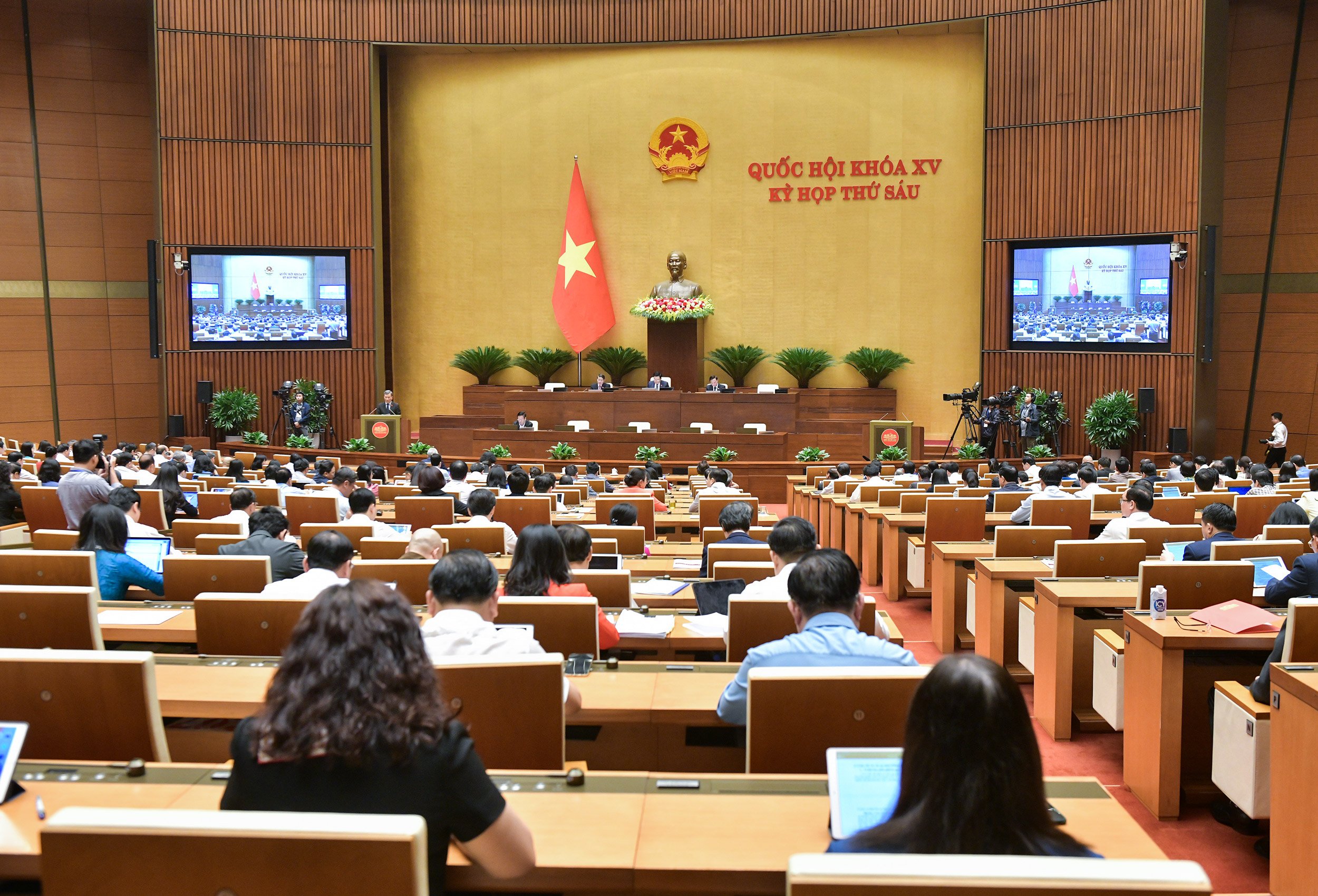
The National Assembly has officially passed the amended Law on Water Resources.
Regarding economic tools, policies, and resources for water resources, some opinions suggest researching and supplementing regulations on other legitimate funding sources besides the State budget to carry out the activities stipulated in Articles 72 and 74 of the draft Law.
According to Mr. Huy, incorporating the opinions of National Assembly deputies, the draft Law has been reviewed, revised, and supplemented with regulations on ensuring financial mechanisms and policies for activities to restore degraded, depleted, and polluted water sources: Funding for the restoration of degraded, depleted, and polluted water sources will be allocated from the State budget, economic and environmental development funds, development investment funds, environmental protection funds, payments from those causing degradation, depletion, and pollution of water sources, and other contributions from organizations and individuals;
At the same time, Clause 1 of Article 34 of the Chapter on Water Resource Protection and Restoration is supplemented with regulations on the development of plans, programs, and projects for the restoration of degraded, depleted, and polluted water sources; prioritizing the restoration of "dead rivers" to restore water sources, create flow, and improve the ecological environment and landscape, including priority programs, projects, and initiatives to revive rivers (as is being started with the Bac Hung Hai, Nhue, and Day rivers through the construction of dams to create flow).
After receiving feedback and revising the draft Law, which consists of 10 Chapters and 86 Articles, 7 articles were added, 4 articles were removed, and 3 articles were added compared to the draft Law submitted by the Government to the National Assembly .
Source








































































Comment (0)