


The resolution aims to expand healthcare benefits and reduce medical costs for citizens.
Specifically, the plan involves increasing the rate and level of reimbursement for medical examination and treatment costs under health insurance; and allocating funds from the Health Insurance Fund for screening, diagnosis, and early treatment of certain diseases and priority groups, following a roadmap consistent with the country's socio -economic development, the state budget's capacity, the Health Insurance Fund's balance, and the increase in health insurance contributions.
Individuals participating in health insurance who belong to near-poor households and elderly people aged 75 and above receiving social retirement benefits are entitled to 100% coverage of medical examination and treatment costs within the scope of their health insurance benefits.
At the same time, increase the benefit rate within the scope of coverage for health insurance participants who are beneficiaries of social policies, vulnerable groups, low-income earners, and some other priority groups.
The health insurance fund also covers screening, diagnosis, and early treatment of certain diseases.
In addition, the policy of waiving basic hospital fees within the scope of benefits for health insurance participants should be implemented according to a roadmap that is consistent with the socio-economic development conditions of the country, the balancing capacity of the Health Insurance Fund, and the increase in health insurance contributions.
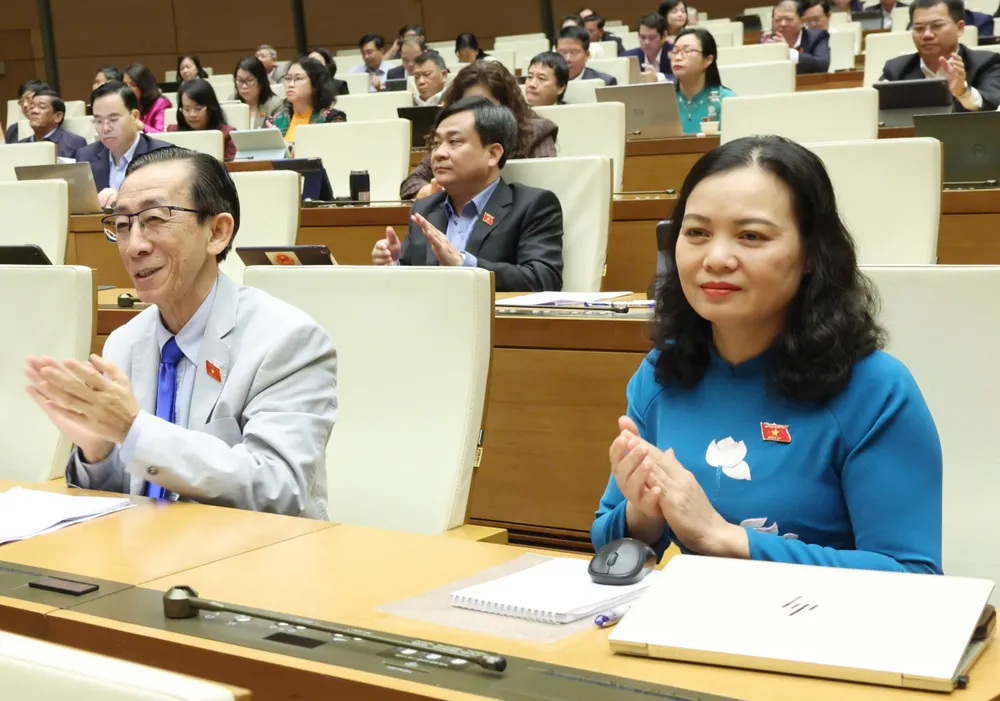
The resolution also states that pilot programs should be implemented to diversify health insurance packages, diversify types of health insurance services, and provide supplementary health insurance services offered by insurance companies based on people's needs when conditions permit.
The National Assembly has tasked the Government with stipulating the beneficiaries and the roadmap for increasing the benefit level within the scope of coverage for health insurance participants; and the list of diseases and the implementation roadmap consistent with the increase in health insurance contributions from 2027.
The resolution also specifies the scope and roadmap for implementing free hospital services starting in 2030.
The resolution stipulates the salary and allowance policies for medical staff. Medical doctors, traditional medicine doctors, dentists, preventive medicine doctors, and pharmacists are assigned salaries starting from bậc 2 (level 2) upon recruitment into their respective professional positions until new salary regulations are issued. Those regularly and directly engaged in medical professional work in the fields of psychiatry, forensic medicine, forensic psychiatry, emergency resuscitation, and pathology are entitled to a professional incentive allowance at 100%.
Individuals who regularly and directly perform medical professional duties at commune-level health stations and preventive health facilities are entitled to a professional incentive allowance at the following rates: 100% for ethnic minority and mountainous areas, areas with difficult socio-economic conditions, areas with particularly difficult socio-economic conditions, border areas, and islands; and a minimum of 70% for other cases.
Any person who commits acts that violate the physical integrity, health, life, or insult the honor and dignity of medical staff shall, depending on the nature and severity of the violation, be subject to disciplinary action, administrative penalties, or criminal prosecution. If damage is caused, compensation must be paid in accordance with the law; and a public apology must be issued through mass media, at the person's place of residence, at the person's workplace, or at the medical facility where the violation occurred.
Regarding recruitment in the healthcare sector, the requirement for length of service as stipulated by law on civil servants does not apply when hiring individuals as civil servants at commune-level health stations if they meet the following conditions: possessing a medical practice license appropriate to the requirements of the intended position; and providing a written commitment to work at the commune-level health station for at least 5 years.
A person who is recruited as a civil servant but does not work for a full five years will be dismissed in accordance with the law on civil servants.
The resolution also stipulates that corporate income tax will be exempted for public health facilities and non-profit health activities of private health facilities. The state budget will ensure funding for recurrent and investment expenditures for commune-level health stations...
From the date this resolution takes effect, medical doctors, traditional medicine doctors, dentists, preventive medicine doctors, and pharmacists who have been recruited and are currently receiving salary level 1 will be moved to salary level 2.
The National Assembly also passed a Resolution approving the investment plan for the National Target Program on Health Care, Population and Development for the period 2026-2035. The goal is to ensure that all citizens receive primary healthcare management and care, early and remote disease prevention at the grassroots level, and disease reduction; to increase the birth rate, strive for a naturally balanced sex ratio at birth, adapt to population aging, and improve the quality of the population; to strengthen care for vulnerable groups; and to contribute to improving the physical and mental health, stature, life expectancy, and quality of life of the people, building a healthy Vietnam.
The total capital for implementation during the 2026-2030 period is VND 88,635 billion, of which VND 68,000 billion comes from the central government budget. Based on the results of the Program's implementation during the 2026-2030 period, the Government will submit to the National Assembly a proposal for the resources to implement the Program during the 2031-2035 period.
Source: https://www.sggp.org.vn/quoc-hoi-chot-tang-ty-le-muc-thanh-toan-chi-phi-kham-chua-benh-bao-hiem-y-te-post828068.html
























































































Comment (0)