

"The heart of the water" amidst the mountains and forests.
For generations, the people of the former Thuong Xuan district have been familiar with the Chu River, sometimes gentle and peaceful, other times raging fiercely during storm seasons. But deep in their memories still linger the haunting memories of prolonged droughts, sudden floods, fields waiting for water, and lives precarious amidst the uncertainty of nature.
In that context, January 29, 2003, became a special milestone. The Prime Minister signed Decision No. 130/QD-TTg, approving the Cua Dat Reservoir Project – one of the largest-scale irrigation projects in Central Vietnam at that time. The entire province of Thanh Hoa received great news, as the long-held dream of flood control was about to become a reality.
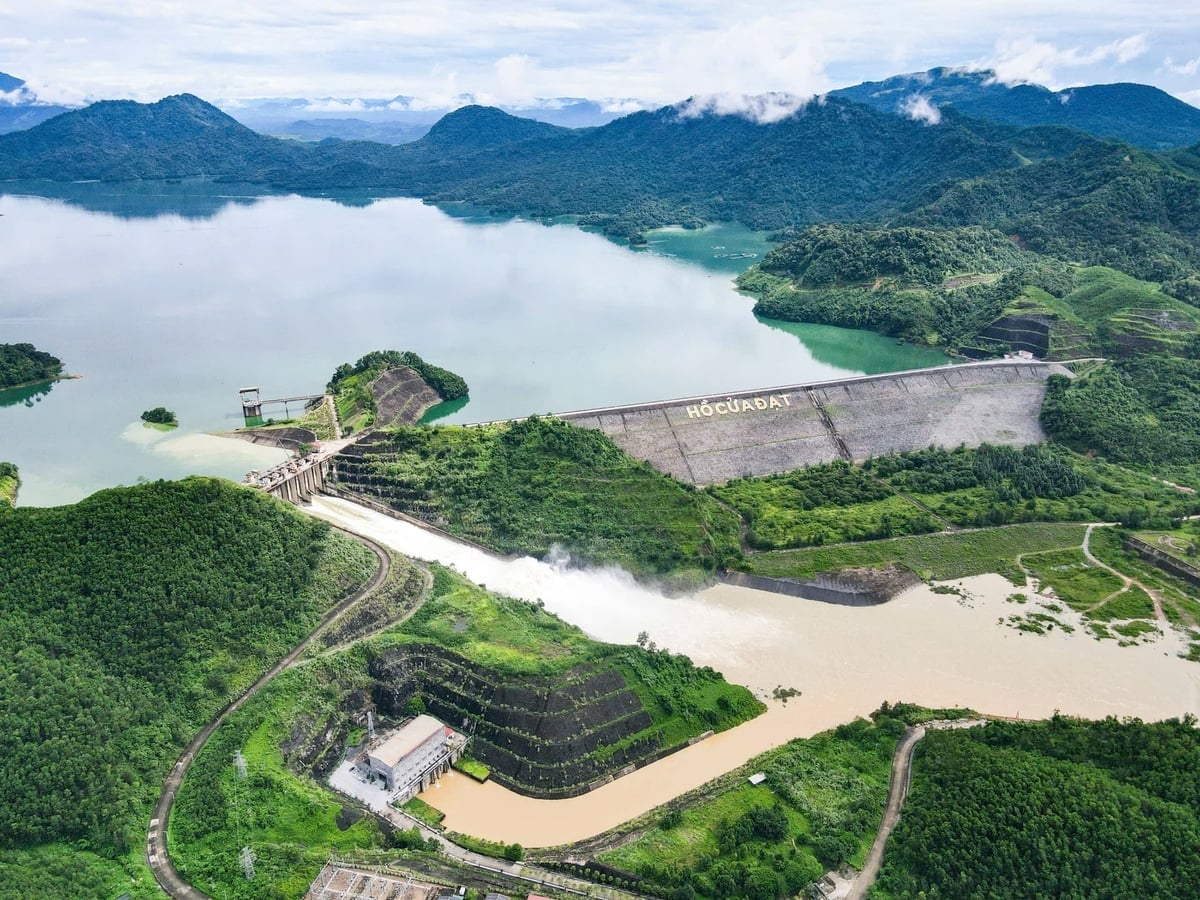
The Cua Dat reservoir is a crucial policy for Thanh Hoa's agriculture . Photo: Thanh Tam.
According to a government decision, the Ministry of Agriculture and Rural Development (now the Ministry of Agriculture and Environment) was assigned as the investor for the main irrigation project. Simultaneously, the People's Committee of Thanh Hoa province decided to establish a joint-stock company, in which the Vietnam Construction Import-Export Corporation held a controlling stake, to undertake the investment and construction of the hydroelectric power plant.
In February 2004, the sounds of excavators and bulldozers echoed throughout the mountainous region, signaling the beginning of a key national project. The road leading to the reservoir was then full of rocks and dust, but groups of workers and engineers continued to work tirelessly on the construction site. Temporary camps were erected amidst the vast forest, and nighttime lights illuminated the weary but determined faces of the workers.
In 2009, after months of hard work, the main components of the project were completed. Just one year later, in 2010, the Cua Dat reservoir officially came into operation, marking a major turning point for the entire downstream area north and south of the Chu River.
"The Cua Dat reservoir is not only an important irrigation project but also a stable source of livelihood for hundreds of thousands of people downstream," shared Mr. Nguyen Duc Cuong, Deputy Director of the Department of Agriculture and Environment of Thanh Hoa province.
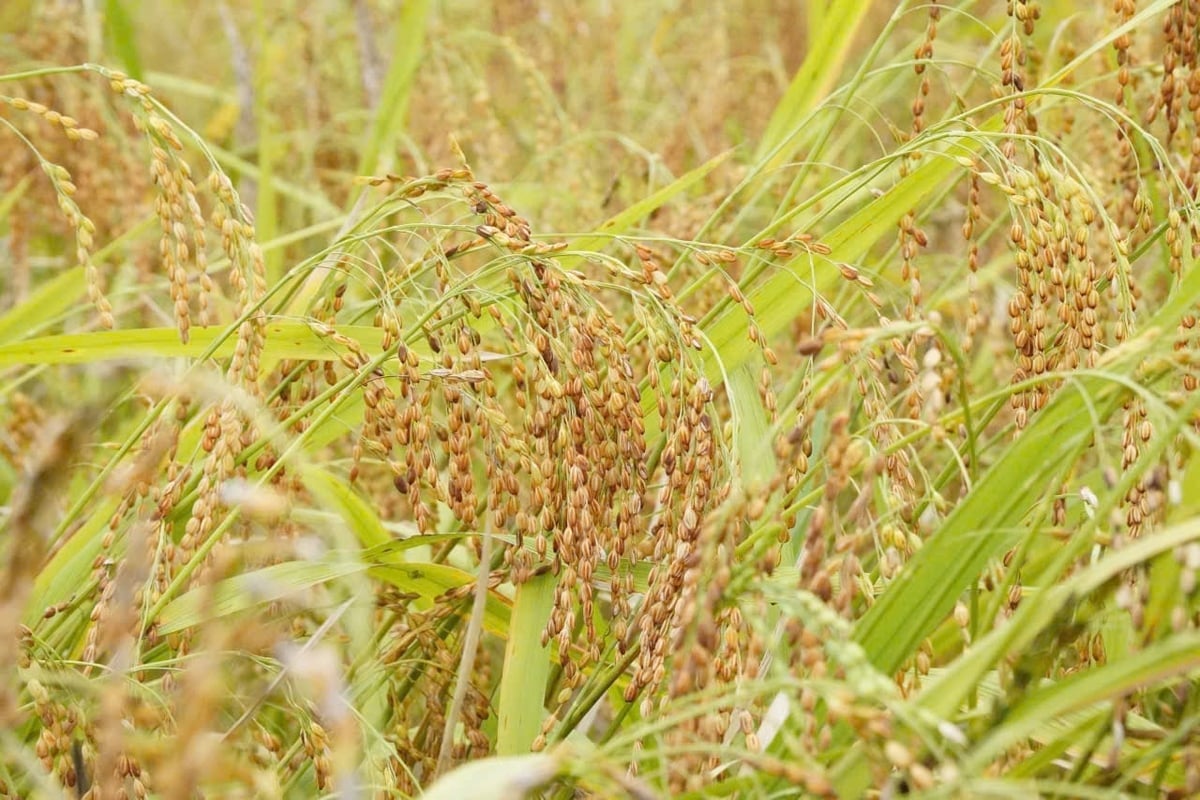
The Cua Dat reservoir is a prerequisite for a breakthrough in Thanh Hoa's agriculture. Photo: Thanh Tam.
Since then, the water collected in the vast lake nestled in the heart of the mountains has not only been a resource, but also a source of hope for improving agricultural productivity and providing a livelihood for hundreds of thousands of people downstream.
A reservoir with 5 major missions
Cua Dat Lake is considered the "regulating heart" of the Chu-Ma river system, situated in a vast valley with a catchment area of up to 5,938 km², of which Thanh Hoa province alone accounts for 593 km².
With a capacity of 1.45 billion cubic meters , the reservoir resembles a small sea of water nestled amidst the vast forest, designed to fulfill five strategic objectives.
The North Chu River - South Ma River gravity irrigation canal system is essentially phase 2 of the Cua Dat reservoir construction project (after the completion of the main irrigation headworks), which was invested in and constructed from 2011 to 2018 with a total cost of approximately 4,300 billion VND; the total length of the entire route is over 370 km (including first, second, and third-level canals).
Before the Cua Dat reservoir was built, every rainy season brought anxiety to the Xuan Khanh area and the entire downstream of the Chu River. However, the project was designed to reduce flood frequency to P = 0.6% , ensuring that the water level in Xuan Khanh does not exceed +13.71 m. Its flood control capacity of 387 million m³ acts as a solid shield, allowing people to confidently continue production and maintain stable livelihoods.
The lake provides water for domestic and industrial use with a flow rate of 7,715 m³/s, making a significant contribution to the formation and expansion of new industrial zones, urban areas, and residential areas in the province.
Areas that previously lacked clean water now have a stable supply year-round. This has been the foundation for Thanh Hoa to attract investment and develop processing, manufacturing, and service sectors in recent years.
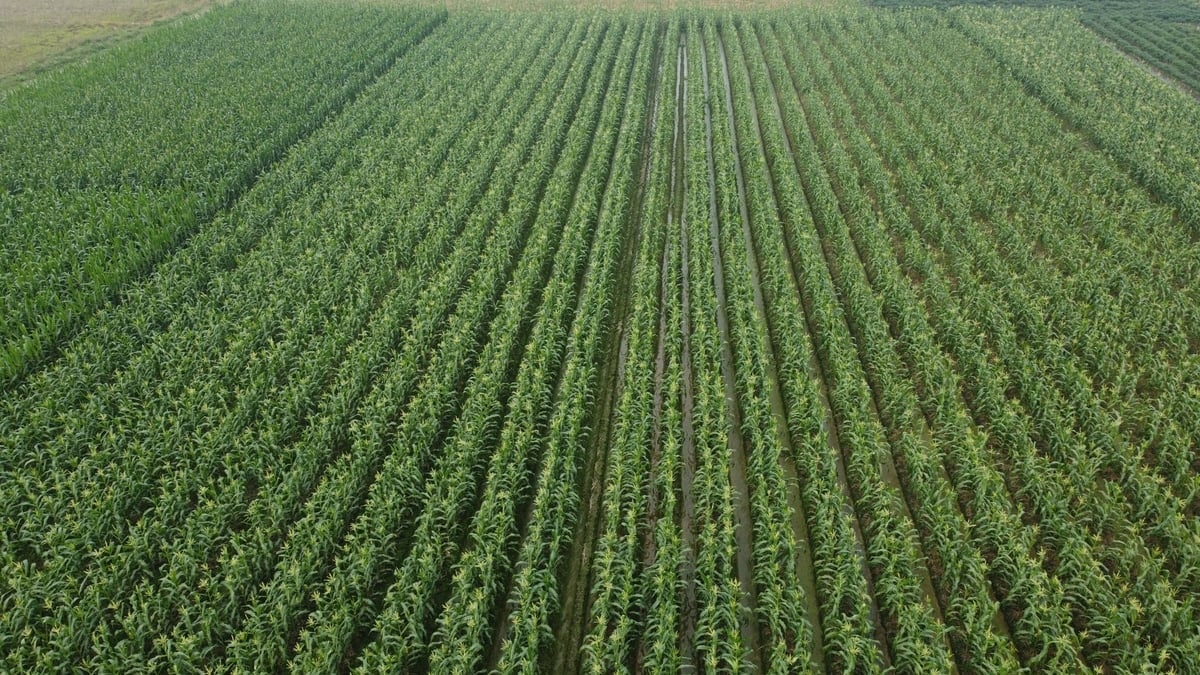
A vast cornfield stretches across Dinh Lien commune. Photo: Thanh Tam.
In particular, Cua Dat Lake has completely transformed the agricultural landscape of Thanh Hoa province. It ensures a stable water supply for irrigating 86,862 hectares, awakening previously dormant fields.
Water from the lake flows through a system of canals and ditches, ensuring irrigation for 86,862 hectares of cultivated land, including 54,031 hectares in the South Chu River region and 32,831 hectares in the North Chu River - South Ma River region.
As a result, farmers can proactively increase crop cycles, switch crops, and apply scientific and technical methods to improve productivity. While previously they struggled with just one rice crop, many localities now have stable production of two crops, and even an additional winter crop on fertile land.
The fields, which once only longed for rain, are now lush green all year round. Fields of melons, peppers, sweet corn, guavas, and other crops stretch endlessly, yielding incomes many times higher than traditional rice cultivation.
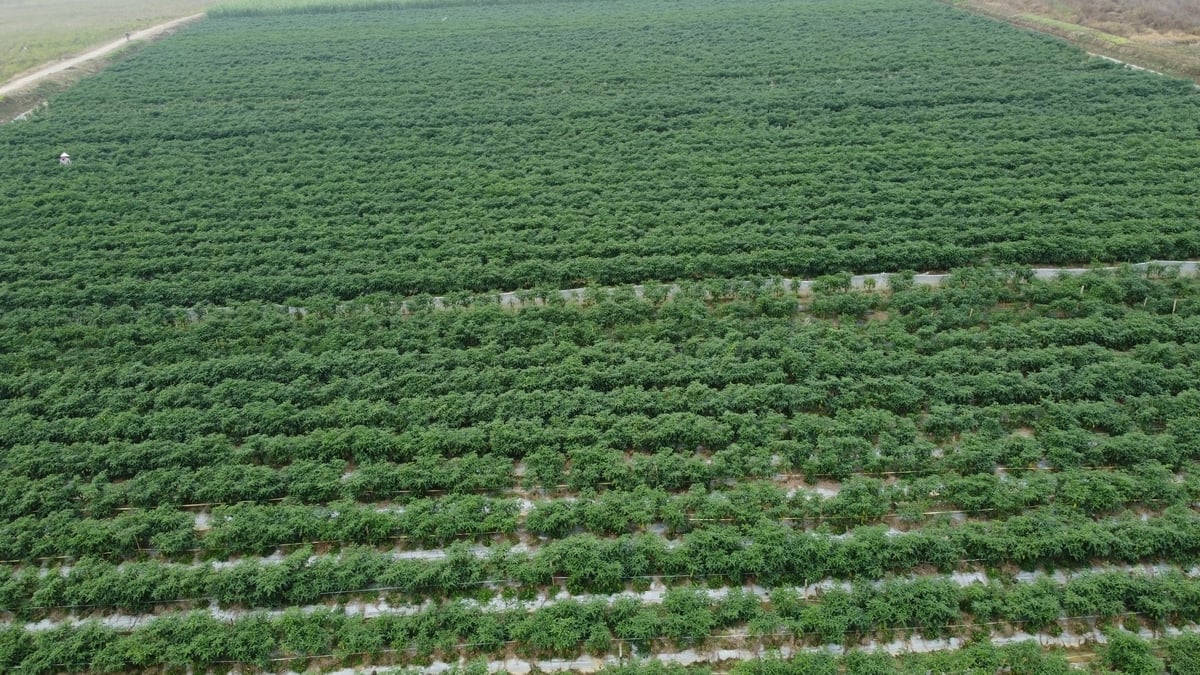
Commercial chili pepper fields yield high value during the winter season in Dinh Lien commune. Photo: Thanh Tam.
"Thanks to the gravity irrigation system, farmers can proactively increase crop cycles, switch crops, and apply scientific and technical methods to improve productivity," Mr. Cuong commented.
The Cua Dat hydroelectric power plant, with a capacity of 88-97 MW, is a proud highlight of the project. Annually, the electricity generated not only contributes to the national power grid but also creates a stable source of revenue, supporting the local budget for reinvestment in infrastructure development and social welfare.
Every dry season, Cua Dat Lake plays a crucial role in releasing 30.42 m³/s of water downstream into the Ma River, helping to push back saltwater intrusion, maintain the ecological environment, and restore natural aquatic vegetation. The land on both sides of the alluvial plain also becomes more fertile. These are sustainable benefits that not every project can provide.
The current of change
When the Cua Dat reservoir became operational, from the upstream areas to the downstream fields, everything seemed to enter a new era. No longer relying on the weather for rain, farmers in Thanh Hoa province began to take control of each harvest.
The gravity-fed irrigation system has helped keep the fields lush and green all year round, significantly increasing the productivity of the province's key crops. Many concentrated production models have been formed, linking farmers with businesses and ensuring stable outlets for products.
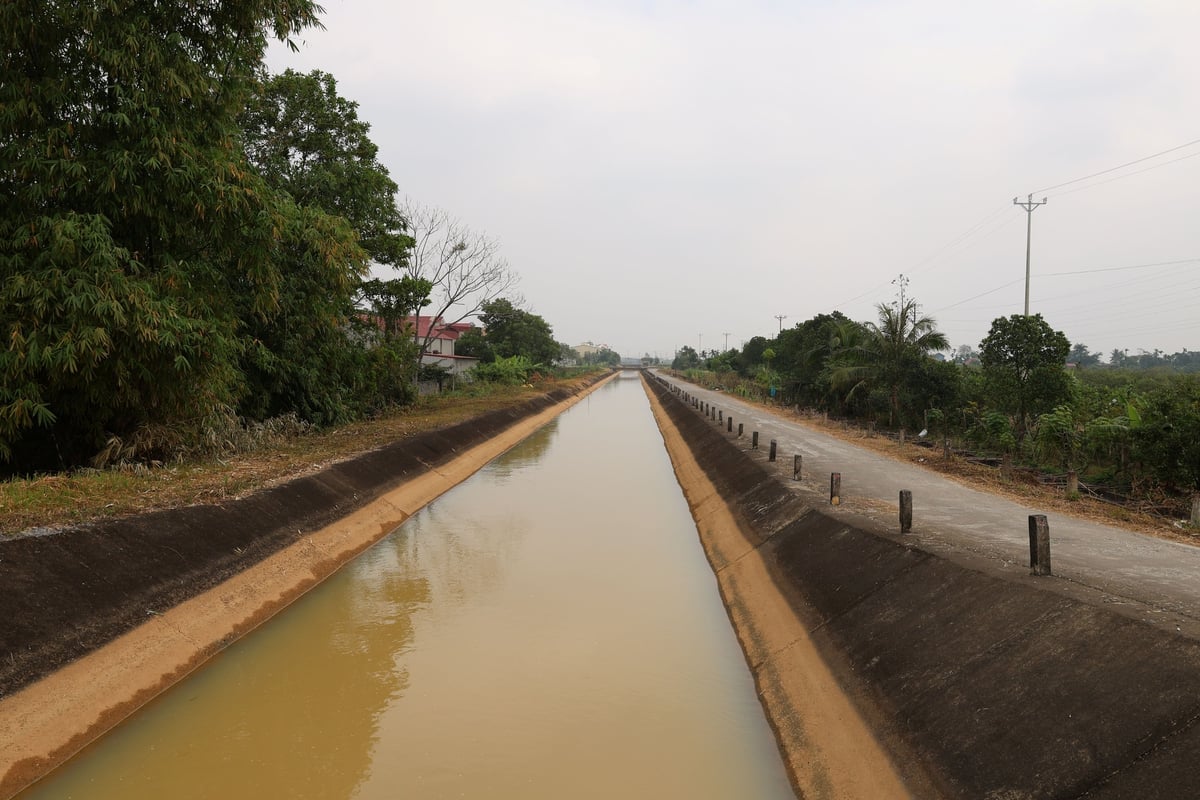
Gravity irrigation systems ensure agricultural production and reduce dependence on weather conditions. Photo: Thanh Tam.
"Cua Dat Lake is a symbol of innovation, bringing sustainable benefits and contributing to economic stability, energy supply, and people's lives," Mr. Cuong shared.
The determination of the Provincial Party Committee and the Provincial People's Committee, along with the coordination of various departments and agencies, and especially the innovative spirit of the farmers, has brought about profound changes. Agricultural extension officers regularly visit the grassroots level, provide technical guidance, transfer scientific and technological knowledge, and encourage farmers to boldly switch to crops with higher economic value.
The province's total food production averaged 1.56 million tons per year, equivalent to 103.9% of the plan, exceeding the target of maintaining 1.5 million tons per year for many consecutive years.
As a result, inefficient rice fields have been replaced by vegetable plots and guava orchards laden with fruit. People's incomes have increased significantly. Many previously struggling households have now been able to build sturdy houses, invest in production machinery, and create jobs for local workers.
This telling figure clearly demonstrates the importance of Cua Dat Lake not only to the food security of Thanh Hoa province in particular, but also of the entire North Central region.
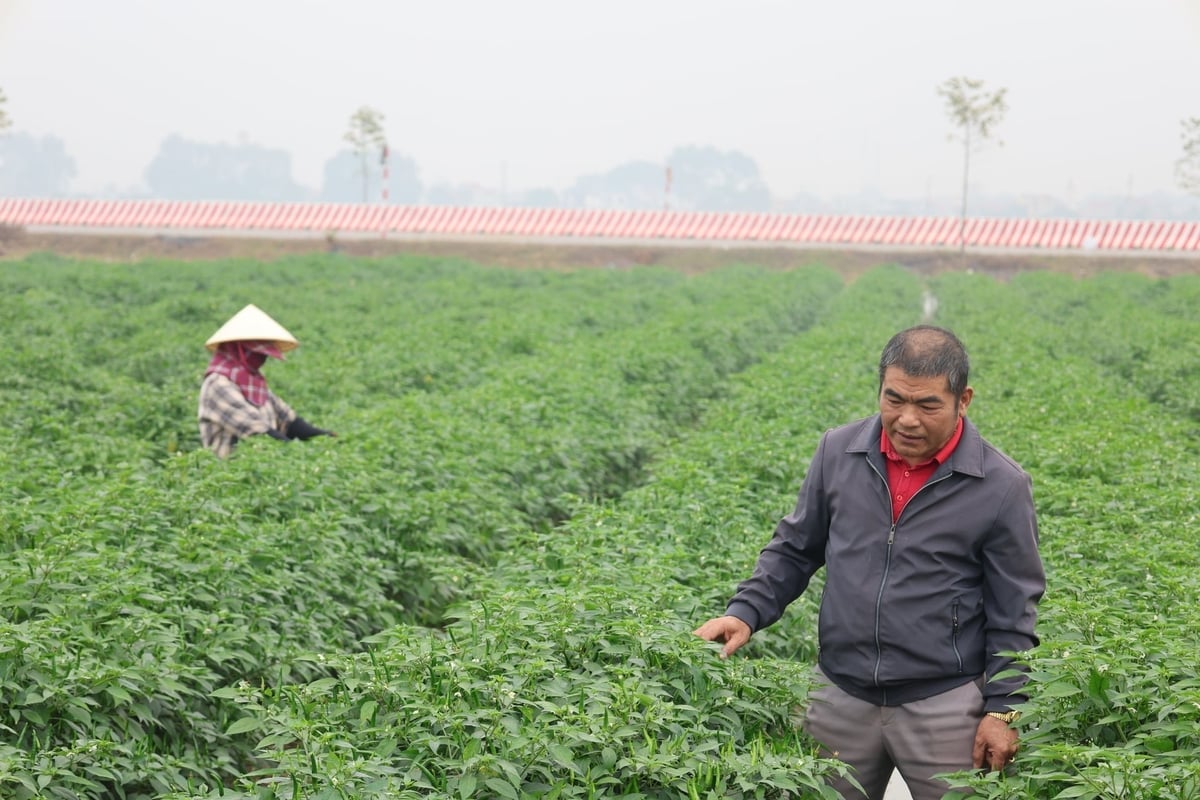
Mr. Luu Tai Sang stands beside his chili field, where the harvest is bountiful and prices are good. Photo: Thanh Tam.
Before the merger, Dinh Lien commune had 300 hectares of agricultural land. Previously, there were 4 pumping stations in operation, but production was largely dependent on the weather. During the winter season, farmers found it difficult to cultivate vegetables due to drought. Since the construction of the Cua Dat reservoir and the gravity irrigation system, Dinh Lien commune now cultivates over 100 hectares of vegetables each winter.
In the winter of 2025, Dinh Lien commune had 30 hectares of land planted with commercial chili peppers. This year, the chili crop was bountiful and prices were good, so the farmers were delighted with the harvest.
"Currently, only one pumping station is operational. 80% of Dinh Lien's agricultural land now uses a gravity-fed irrigation system, saving up to 50% in costs while maintaining high and stable yields," emphasized Mr. Luu Tai Sang, Director of Dinh Lien Agricultural and Service Cooperative.

Farmers have proactively planted high-yield winter vegetables. Photo: Thanh Tam.
Today, standing atop the Cua Dat dam at sunset, the lake's surface is as calm as a mirror. Few realize that beneath this serene beauty lies a strategically important project that contributes to economic stability, ensures energy security, and guarantees water resources for hundreds of thousands of hectares of agricultural land and tens of thousands of households.
Cua Dat Lake is not only the largest irrigation project in North Central Vietnam, but also a symbol of innovation, perseverance, and the spirit of conquering nature to serve the people and promote economic development. The water from Cua Dat has flowed into every field, every factory, and every aspect of life for the people of Thanh Hoa province, creating a new, more developed and sustainable landscape.
"Cua Dat Lake not only retains water but also preserves the hope for bountiful harvests and lush green fields year-round," Mr. Nguyen Duc Cuong affirmed.
Source: https://nongnghiepmoitruong.vn/quyet-sach-lon-phat-trien-nong-nghiep-thanh-hoa-bai-3-dong-nuoc-dai-ngan-d787771.html




![[Infographic] Preventing students from making their own firecrackers: 7 things parents need to know](https://vphoto.vietnam.vn/thumb/402x226/vietnam/resource/IMAGE/2025/12/11/1765466656703_img_0320_20251211183542.jpeg)




![Looking back at the peak month of combating IUU: [Part 3] Synchronizing fisheries infrastructure](https://vphoto.vietnam.vn/thumb/402x226/vietnam/resource/IMAGE/2025/12/13/1765608279533_2109-b32-133759_237.jpeg)







![Anticipating future trends: [Part 1] New livelihoods from floating tank frog farming model](https://vphoto.vietnam.vn/thumb/402x226/vietnam/resource/IMAGE/2025/12/13/1765607984017_dsc06888-210118_726-133559.jpeg)

![Looking back at the peak month of combating IUU: [Part 2] Difficulty in tracing the origin of seafood](https://vphoto.vietnam.vn/thumb/402x226/vietnam/resource/IMAGE/2025/12/12/1765506860686_0454-tsb23-125426_536.jpeg)




























































Comment (0)