

 |
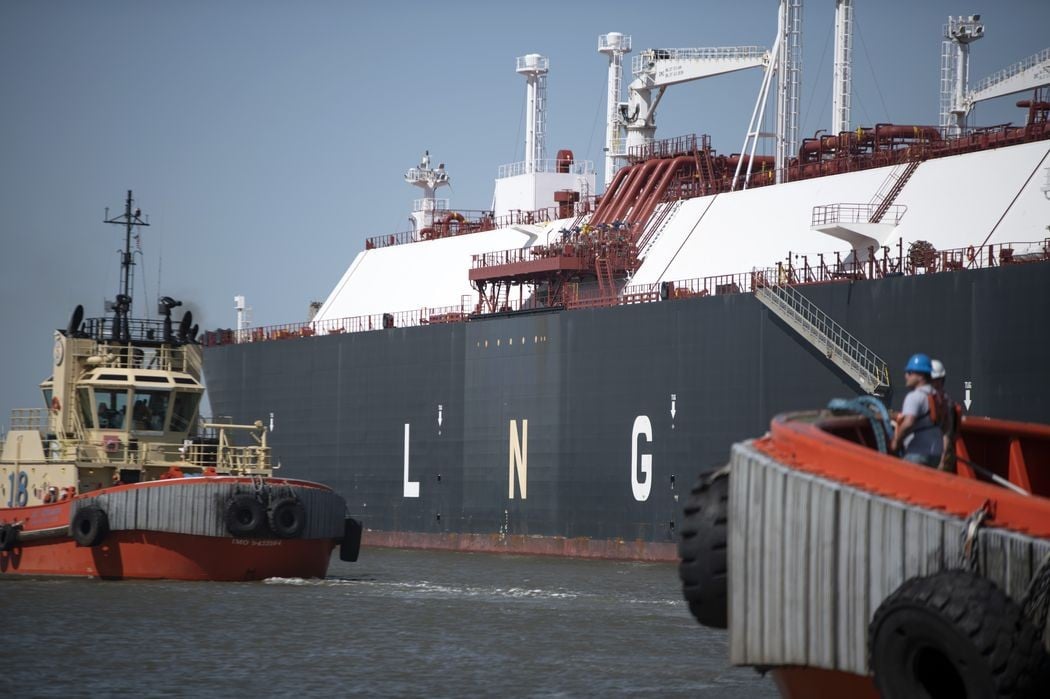
| LNG from the US is also helping European countries build up substantial gas reserves in preparation for the winter of 2023. (Source: WSJ) |
The Russia-Ukraine conflict has highlighted the reality of Europe's dependence on Moscow's gas. Prior to the military campaign, Russian gas flows to the European Union (EU) accounted for approximately 45% of total imports.
Last year, the Kremlin cut gas exports to the EU by 75% as the region entered winter – a time when gas is needed for heating. Market uncertainty drove gasoline prices to unprecedented highs and increased energy costs, putting pressure on European economies and consumers.
Russia has stated that it will not fully resume gas supplies to Europe until the West lifts sanctions against Moscow.
At that time, the EU faced significant challenges in its "divorce" from Russian gas. However, unexpectedly, the situation suddenly changed, largely due to unusually warm winter weather in Europe and a rapid increase in LNG imports, mainly from the United States.
Europe was the primary destination for U.S. LNG exports in 2022, accounting for 64% of total exports. According to the U.S. Department of Energy, France, the United Kingdom, Spain, and the Netherlands were the main customers last year.
Adila McHich, Director of Research and Product Development at CME Group, stated in Forbes that: " The Russia-Ukraine conflict has brought the energy policies of the US and Europe closer together."
Fulfilling the rescue mission
According to Adila McHich, US LNG helped Europe get through the winter of 2022 and strengthened the region's role in ensuring energy security for Western allies.
Immediately after the Russia-Ukraine conflict broke out last year, US President Joe Biden and European Commission President Ursula von der Leyen announced a strategic agreement under which EU companies would increase LNG imports from the US.
Experts estimate that recent shipments of LNG totaling 40 million tons have helped Europe alleviate its supply shortage. LNG from the US has also helped countries in the region build up ample gas reserves, preparing for the winter of 2023.
The LNG industry in the world's largest economy is competitive, privately funded, and driven by entrepreneurship. LNG transactions are typically based on the laws of supply and demand. Unlike in many producing nations, the role of the U.S. government is limited to defining the legal/policy framework and conducting energy diplomacy.
US LNG prices play a crucial role in anchoring natural gas prices and represent a benchmark for competing overseas projects. According to S&P Global Commodity Insights, the world's largest economy contracted approximately 75% of global LNG capacity by 2022.
Adila McHich emphasized: "The energy crisis in Europe has helped the United States achieve several important milestones."
First , to position the United States as a strategic and reliable energy ally. Second, to loosen Russia's control over European gas. Third , to enhance the United States' ability to assert its global energy leadership role.
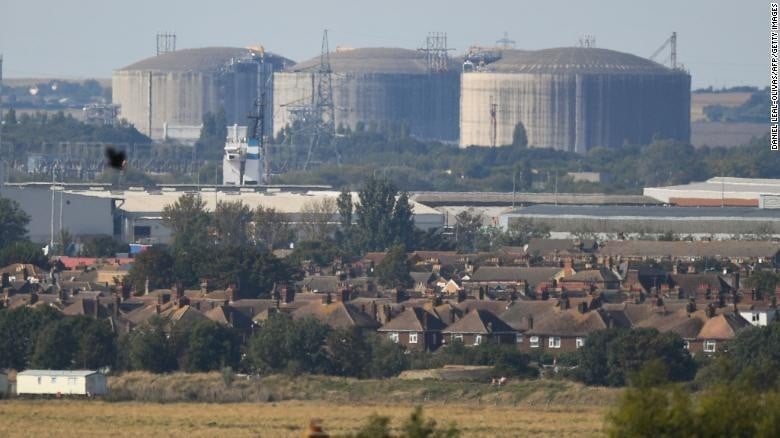 |
| Liquid natural gas (LNG) storage tanks at a train station in southeastern England. (Source: CNN) |
China is also aggressively buying LNG from the US.
China is competing with Europe for long-term supply agreements with US LNG developers and exporters. Recently, US LNG exporter Cheniere signed a contract of over 20 years with China's ENN.
Bloomberg, citing informed sources, also reported that the Chinese government is backing efforts by state-owned companies to sign long-term gas purchase contracts, alongside investing in gas export facilities. This is part of Beijing's strategy to bolster energy security by the middle of this century.
Toby Copson, Global Head of Trading and Advisory at Trident LNG in Shanghai, stated: “Energy security has always been a top priority for China. Having ample supply prepared in advance allows them to manage future energy market volatility. I believe the world’s second-largest economy will continue to move in this direction.”
Efforts to secure gas purchase deals by the world's second-largest economy will support global gas export projects, strengthening the role of this seaborne fuel in the world's energy mix.
As suppliers shift towards attracting Chinese importers, Beijing's influence in the market will increase.
The shortage of coal – the country's primary fuel for electricity production – caused widespread power outages at domestic plants for a short period in 2021, while declining hydropower output led to shortages in 2022, slowing economic growth.
In response to this situation, China announced it would increase coal mining capacity, and coal production has risen to record levels, keeping storage facilities well-stocked and helping to reduce coal imports last year.
Now, Beijing's policymakers want to do the same with natural gas. According to informed sources, Beijing is pushing major domestic energy companies to increase domestic gas production and cut drilling costs to increase self-sufficiency.
Bloomberg stated: "This is a long-term vision for China to avoid a repeat of energy shortages while boosting economic growth."
Will the USD be dethroned by oil?
China made its first LNG purchase in yuan from TotalEnergies, a French multinational oil and gas company, in March 2023. Adila McHich suggests that this transaction is part of Beijing's plan to challenge the dominance of the petrodollar system ( oil-based USD ) , which has been in place since the 1970s.
Using non-USD currencies in LNG transactions is not straightforward. Rejecting the US dollar in oil transactions would expose both parties to additional costs due to exchange rate risk and currency mismatch, as most exporters trade in the dollar.
Adila McHich noted: "It remains to be seen how this will play out in the long term, as China increases its influence as the world's largest LNG buyer."
However, current geopolitical tensions with Ukraine have also accelerated the resumption of cooperation between China and Russia in the energy sector, including LNG.
While the US appears to have the upper hand when considering trade with Europe, the resumption of cooperation between Russia and China and its impact on LNG trade will be interesting to watch in the near future.
Source
























































































Comment (0)