

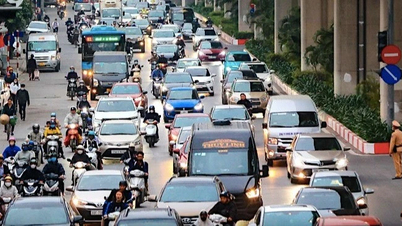
According to World Bank estimates, transportation activities in Vietnam emit about 50 million tons of CO2 each year . This number could increase to 90 million tons by 2030 if there are no fundamental changes. In the context of economic openness up to twice GDP and increasingly tight environmental standards, green logistics is no longer an option but has become a mandatory requirement for all businesses that want to integrate deeply into the global value chain.
To reduce emissions , data is key. Businesses can only demonstrate greenhouse gas reductions when they have transparent, accurate and traceable measurement data. This is where digital transformation becomes the key. Without digital transformation, there can be no truly green transport.
Dr. Nguyen Thi Bach Tuyet from the Institute of Information Technology and Digital Economy, National Economics University, said that every green model starts with numbers. Businesses that want to demonstrate the effectiveness of emission reduction must have data collected automatically and continuously, from vehicle journeys to emissions along each route. The management information system plays a central role, connecting software and databases with IoT devices and artificial intelligence to monitor, analyze and provide data in real time.
Digital transformation - a stepping stone for green development
At Tan Cang-Cat Lai Port, instead of manual operations and fragmented exchanges as before, this national brand enterprise has digitized with the TMS-Transportation Management System, a comprehensive transportation coordination platform: From planning, progress monitoring, fleet management, cost reconciliation with subcontractors, to sending automatic notifications to customers and operating personnel.
Captain Tran Ngoc Tinh, Deputy Director of Tan Cang-Cat Lai Port Control Center, Saigon Newport Corporation, said that only a small group of staff can handle a huge amount of work thanks to automation. Customers who previously had to come directly to do procedures can now sit at home to look up, send requests and pay via bank. Each container reduces an average of 0.02 hours of processing time, significantly saving time and reducing the number of vehicles having to wait, thereby reducing greenhouse gas emissions.
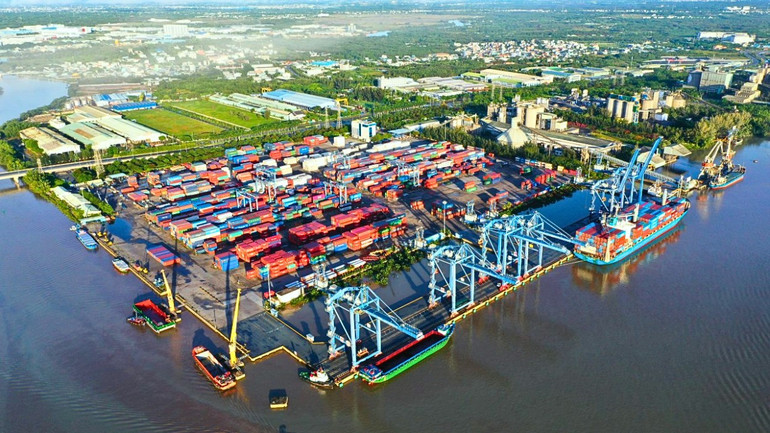
The ePort digital port model and electrification equipment at Tan Cang-Cat Lai port have helped save 2 million USD in fuel each year. (Photo: Provided by the unit)
Mr. Truong Tan Loc, Marketing Director, Saigon Newport Corporation , commented that the company is implementing digital and green solutions at many levels. Two ports in the system have been recognized as green ports in the Asia -Pacific seaport network. The region's strict criteria are gradually being met thanks to the simultaneous digitalization of processes and energy optimization.
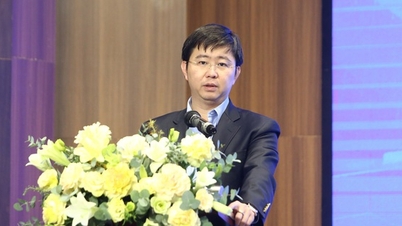
Not only large enterprises, other logistics service units are also transforming strongly. Mr. Vu Ho Ninh, Director of the Northern Region of Con Ong Transport Joint Stock Company, shared that enterprises always prioritize digital transformation and green transformation. The State has set a target of zero net emissions by 2050 and enterprises have identified their responsibility to start from the smallest steps. When each enterprise joins together, the national target will not be too far away.
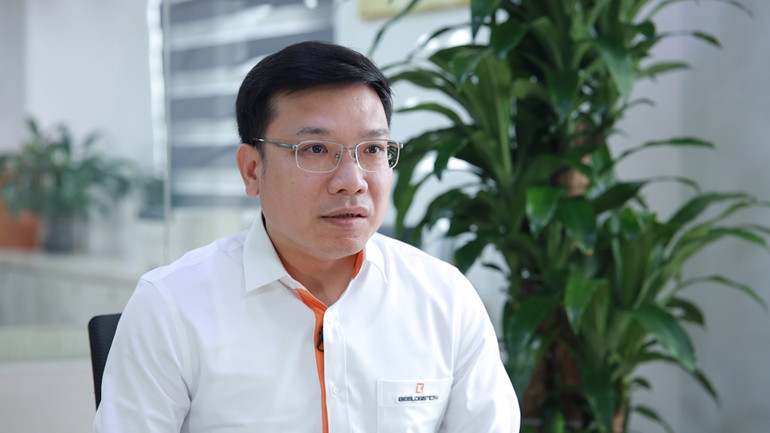
Mr. Vu Ho Ninh, Director of Northern Region of Con Ong Transport Joint Stock Company. (Photo: DO BAO)
These movements are creating a positive ripple effect across the industry. Supply chains are becoming more transparent, data is interconnected, processing speeds are faster, costs are reduced, and businesses are able to demonstrate environmental criteria to reach demanding customers.
Green logistics shaping the competitive future of the digital economy
Green logistics and digitalization are also the foundation for enhancing the national brand. A country with a transparent, modern and green logistics system will have the opportunity to increase export value, expand markets and participate more deeply in the global supply chain. This is the core factor for Vietnam to move from a processing position to a strategic partner in international trade.
Associate Professor, Dr. Bui Quang Tuan, Director of the Vietnam Economic Institute, commented that green transformation and digital transformation are objective trends of the modern economy. From there, the transition to a circular economic model becomes a natural step. However, the circular economy requires very high standards in technology, governance and operating conditions. These are factors that Vietnam still has a large gap with compared to actual requirements.
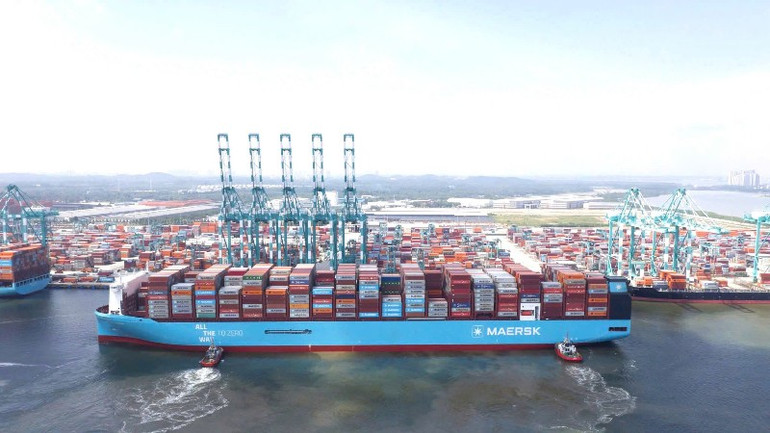
The world logistics industry is transforming rapidly with the goal of greening and digitizing the supply chain.
He believes that to transform the linear model into a cyclical model, it is necessary to start right from the design stage in the industrial park. The production structure must be organized so that the output of one enterprise becomes the input of another. This is only possible when there is a comprehensive and synchronous design, but in reality this is still a major bottleneck in Vietnam today.
At the Vietnam Logistics Forum 2025 held in Da Nang, Prime Minister Pham Minh Chinh emphasized that Vietnam possesses important geopolitical advantages but investment in logistics is still scattered. In the coming time, the country needs to focus on developing green and digital logistics service infrastructure, building smart logistics centers, enhancing data connections between businesses and management agencies, banks, insurance and customs systems. At the same time, it is necessary to develop high-quality human resources and promote capable businesses to reach out to regional and international markets.
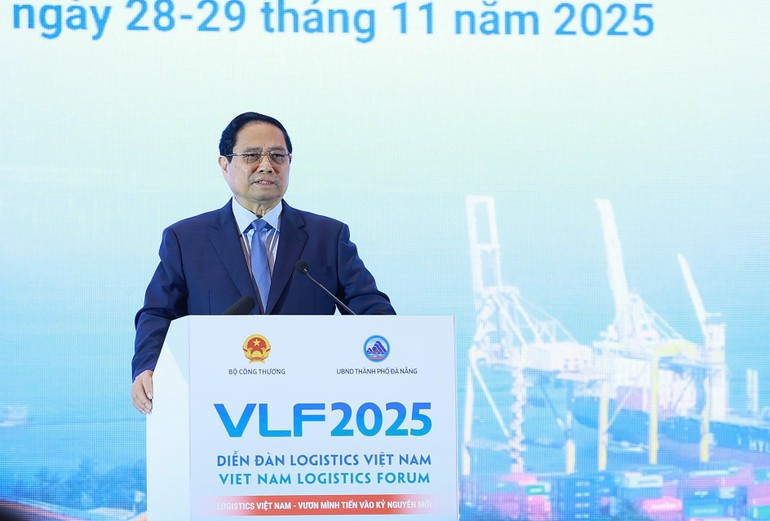
Prime Minister Pham Minh Chinh delivers a speech at the Vietnam Logistics Forum. (Photo: HAI LINH)
When these orientations are implemented synchronously, green logistics will not only be a requirement but will become a core value, a recognition point of Vietnam's national brand in the new decade. A future in which the economy is operated on a smart, energy-saving, emission-reducing and competitive logistics system is opening up. Vietnam has all the conditions to enter a new era of sustainable logistics and affirm its position on the regional economic map.
Do Duc Bao
Source: https://nhandan.vn/so-hoa-xanh-hoa-mo-duong-cho-thuong-hieu-quoc-gia-but-pha-post927958.html
![[Photo] Cat Ba - Green island paradise](/_next/image?url=https%3A%2F%2Fvphoto.vietnam.vn%2Fthumb%2F1200x675%2Fvietnam%2Fresource%2FIMAGE%2F2025%2F12%2F04%2F1764821844074_ndo_br_1-dcbthienduongxanh638-jpg.webp&w=3840&q=75)





































![[VIMC 40 days of lightning speed] Da Nang Port: Unity - Lightning speed - Breakthrough to the finish line](https://vphoto.vietnam.vn/thumb/402x226/vietnam/resource/IMAGE/2025/12/04/1764833540882_cdn_4-12-25.jpeg)

































Comment (0)