

India's highly anticipated Chandrayaan-3 lunar mission is scheduled to launch on July 14, 2023. The Soviet Union, the United States, and China are the only three countries that have previously successfully landed on the Moon.
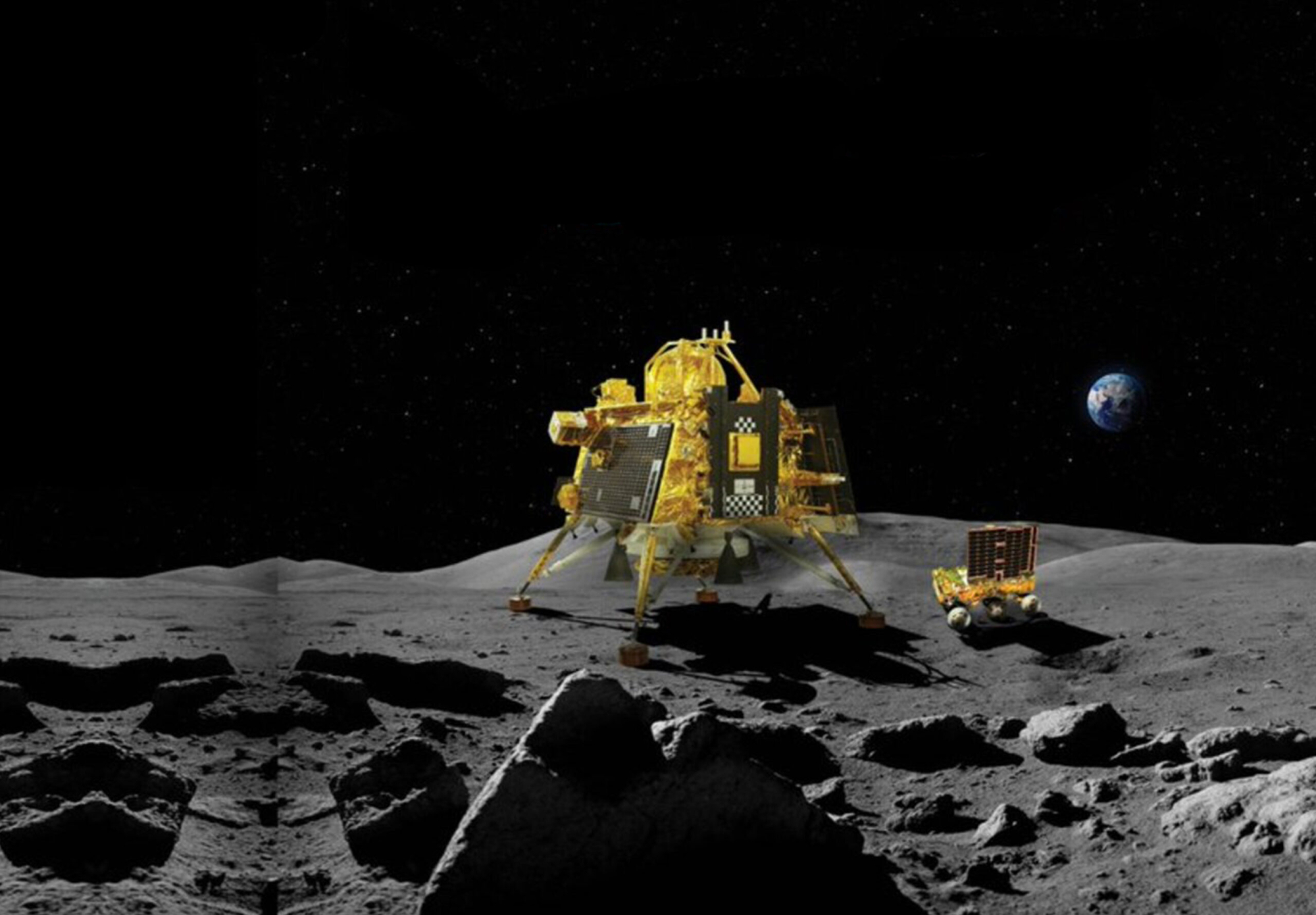
A simulation of the Chandrayaan-3 spacecraft landing on the Moon. Photo: ISRO
Searching for water on the Moon
As early as the 1960s, before the Apollo missions first landed, scientists speculated that water might exist on the Moon. Soil samples that the Apollo crews sent back for analysis in the late 1960s and early 1970s suggested that water may have dried up.
In 2008, researchers at Brown University re-examined those soil samples using new technology and found the element hydrogen inside tiny volcanic glass particles. In 2009, a NASA instrument on the Indian Space Research Organization's Chandrayaan-1 probe detected water on the surface of the Moon.
That same year, another NASA probe reached the south pole and found frozen water beneath the moon's surface. An earlier NASA mission, Lunar Prospector in 1998, had found evidence that the highest concentrations of water ice were in hidden craters at the south pole.
Why is water important on the Moon?
Scientists are interested in ancient ice pockets because they can provide records of volcanoes on the Moon, material brought to Earth by comets and asteroids, and the origins of the oceans.
If enough ice exists, it could be a source of drinking water for lunar exploration and could help cool equipment.
It can also be extracted to produce hydrogen for fuel and oxygen for breathing, supporting mining missions on Mars or the Moon.
The 1967 United Nations Outer Space Treaty prohibits any nation from claiming exclusive ownership of the moon.
A U.S.-led effort to establish a set of principles for the exploration of the Moon and the use of its resources, the Artemis Accords, has 27 signatories. China and Russia have not signed the agreement.
Why is exploring the south pole of the Moon so difficult?
Prior to the successful landing of the Chandrayaan-3 spacecraft, Russia's Luna-25, also scheduled to land at the moon's south pole this week, lost control during the approach and crashed on Sunday.
The Moon's south pole, far from the equator and a target of past missions, is full of craters and trenches, making landing there extremely difficult.
The space agency announced that ISRO's Chandrayaan-3 mission landed successfully on August 23. A previous Indian mission failed in 2019. Both the US and China have also planned missions to the lunar south pole.
Hoang Ton (according to Reuters)
Source


![[Photo] Prime Minister Pham Minh Chinh holds a phone call with the CEO of Russia's Rosatom Corporation.](/_next/image?url=https%3A%2F%2Fvphoto.vietnam.vn%2Fthumb%2F1200x675%2Fvietnam%2Fresource%2FIMAGE%2F2025%2F12%2F11%2F1765464552365_dsc-5295-jpg.webp&w=3840&q=75)





















































































Comment (0)