

Green offices are entering the market.
According to Savills' report, supply in Q2 2024 increased by 2% compared to the previous quarter, bringing the total office floor area to 2.8 million m2 of leasable space from 386 projects. Of these, 3 new projects in the suburban areas continued to drive balanced and sustainable market development across the city. The average office rental price increased by 2% quarter-on-quarter and 8% year-on-year to VND 815,000/m2/month. Occupancy reached 89%, a decrease of 1 percentage point quarter-on-quarter and 2 percentage points year-on-year, mainly due to the low occupancy rate of the new supply.
Specifically in the Grade A office segment, projects outside the city center experienced strong performance, with occupancy rates increasing by 6 percentage points quarter-on-quarter to 84%, the highest among all grades. The average rental price reached VND 1.1 million/m2/month, a 5% increase compared to the previous quarter. The report noted several Grade A projects with good absorption rates, such as The METT, The Hallmark, and The Nexus.
According to Ms. Tu Thi Hong An, Senior Director of Commercial Leasing at Savills Vietnam, the occupancy rate of the entire market remained almost unchanged in the first six months of the year. In other words, this means that net leasing volume is equivalent to new supply.
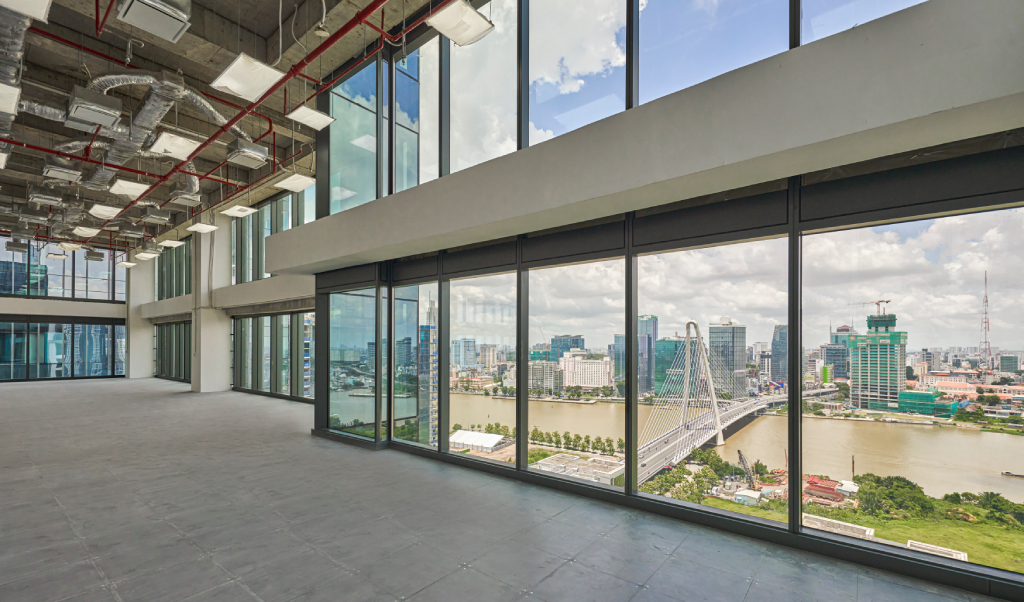
Grade A projects outside the city center recorded rapid occupancy rates in the first half of 2024.
"This trend correlates with strong economic growth and demand exceeding supply, in a market that is witnessing many new trends such as the work-from-home model and the application of technology in the workplace. Therefore, with an absorption rate equivalent to the new supply, we predict that office rental prices in Ho Chi Minh City will begin to stabilize in the next three years," Ms. An analyzed.
The Savills expert also pointed out a noteworthy point: green office projects are becoming increasingly popular, as sustainable office spaces are becoming a mandatory standard for many multinational corporations. In developed markets such as Singapore, Shanghai, and Hong Kong, the proportion of green buildings and leasable floor space is much higher than in Ho Chi Minh City and Hanoi . Meanwhile, this rate in Vietnam's two main cities remains below 25%, and future supply growth is quite limited.
Hanoi and most major markets in the region are currently tenant-driven markets. Conversely, the Ho Chi Minh City market will continue to see landlord dominance. In this market, the vacancy rate for Grade A office space is below 10%, and green building vacancies are lower than before. Most foreign companies will seek out premium office space, thus creating an undeniable advantage for these buildings over older ones. This dynamic will continue to grow in the future thanks to this unique supply-demand relationship.
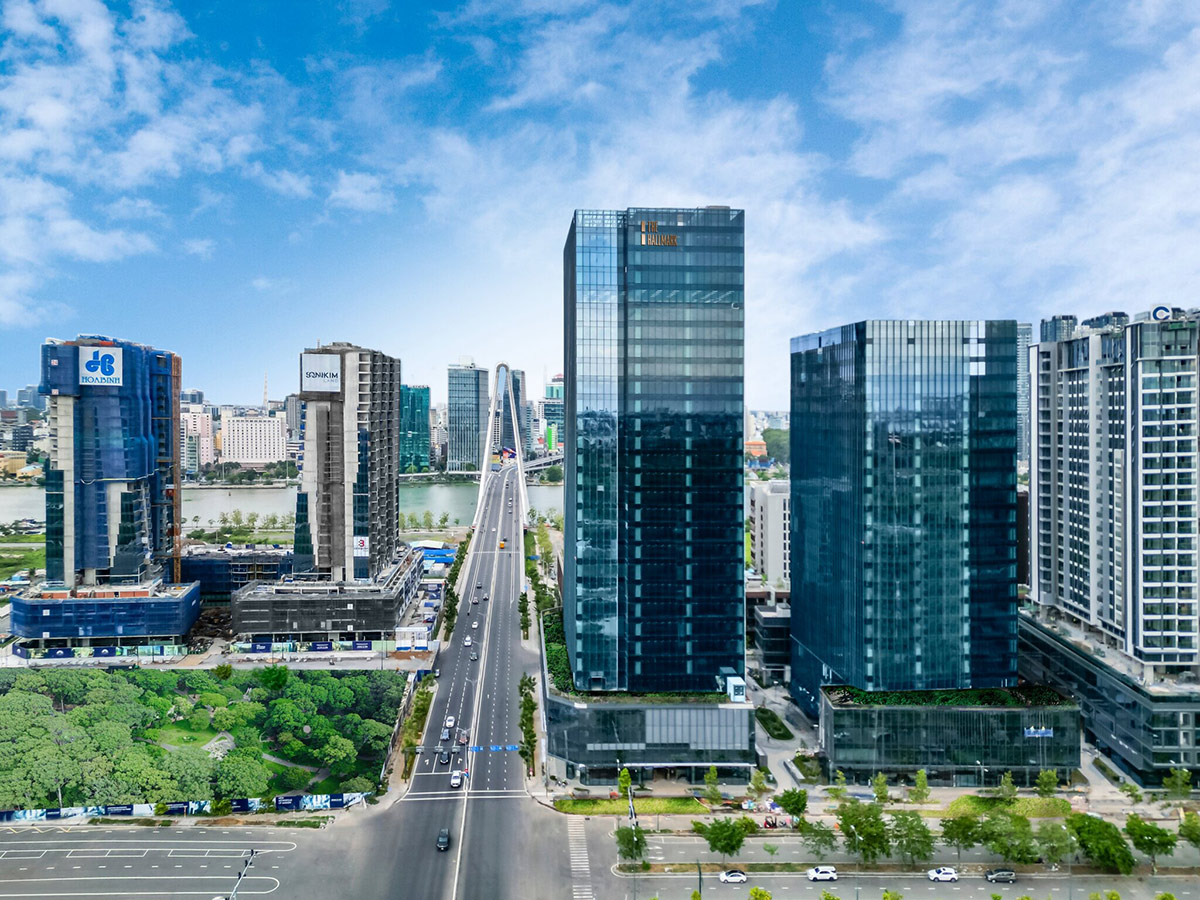
Foreign companies are flocking to find Grade A office spaces.
Retail sector "booms" thanks to domestic economic recovery.
In the retail sector, Ms. Tu Thi Hong An pointed out a prominent trend where F&B tenants are driving expansion demand in Ho Chi Minh City as well as neighboring markets such as Bangkok and Singapore.
"These are changes we can see in practice. Many F&B models in the market, from fast food, cafes, beverages, bars and clubs, from casual to high-end restaurants, are all looking to expand. Therefore, in this playing field, both domestic and international players are becoming increasingly numerous. On a smaller scale, we see quite dynamic features in the sports and health and wellness lifestyle sectors in the market," Ms. An said.
Savills experts also cited Nitori, a Japanese home furnishings and furniture retailer, which recently entered the market with 5 stores and aims for rapid growth similar to Muji. Muji itself plans to open another 100 stores across Southeast Asia, focusing on the Vietnamese market. Miniso, another well-known retailer, also has ambitious plans to open 350 to 400 stores across Southeast Asia, also targeting the Vietnamese market.
Meanwhile, other luxury jewelry, watch, fashion, and fashion retailers are only expanding into a select few locations with stringent standards that neither Hanoi nor Ho Chi Minh City offer in abundance. Therefore, these businesses must be highly innovative in their expansion strategies, such as targeting tourist hotspots, multi-channel approaches, and pop-up store models. Exploring different innovative retail formats will help them enhance their social media visibility and thus improve both their online and physical stores.
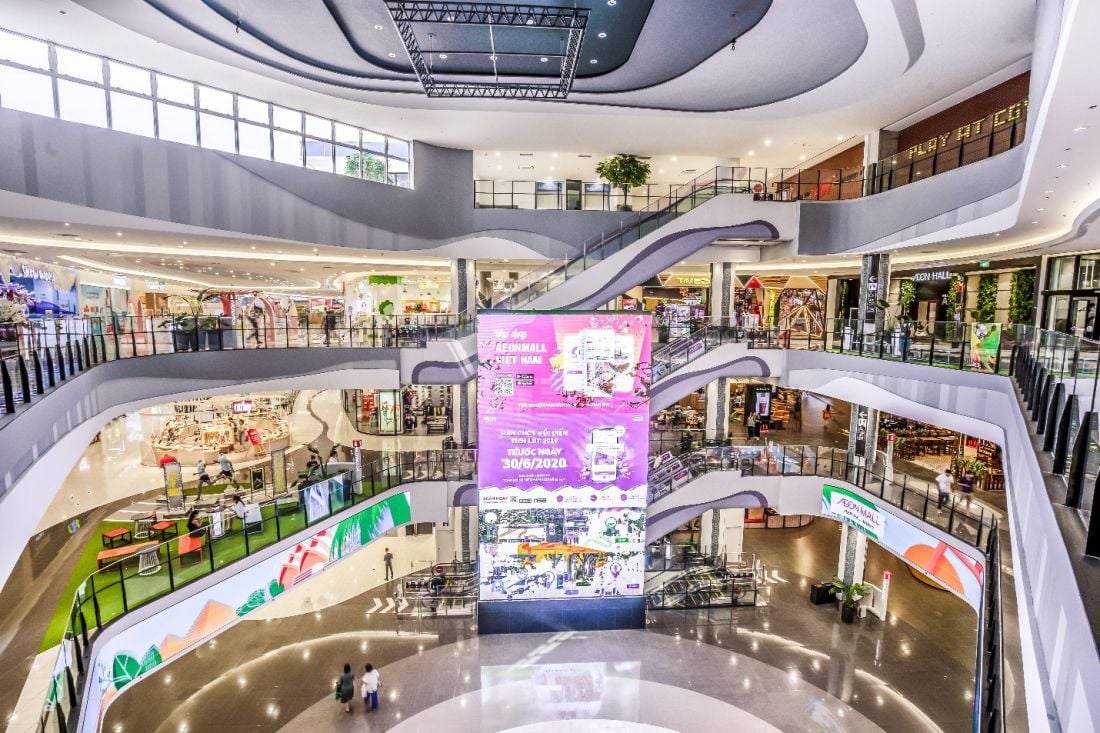
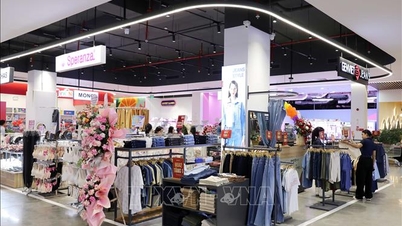
Many international retail brands are also expanding their operations in the Vietnamese market.
Savills' report notes that transactions in the first six months of 2024 averaged 256 m2 of Net Rent-Amount (NLA), a 26% year-on-year increase, as brand chains such as Muji, Poseidon, and Uniqlo expanded. The fashion sector accounted for 35% of leased space, followed by F&B at 30%; home appliances & furniture at 15%; and entertainment at 11%.
From a general market perspective, Ms. Cao Thi Thanh Huong, Senior Research Manager at Savills Ho Chi Minh City, noted that the strong recovery of the domestic economy has boosted the development of the retail sector, attracting new brands to enter the market and continue to expand.
In Ho Chi Minh City, the young population, growing middle class, and increasing wealth will contribute to the expansion of the modern retail market. According to Oxford Economics, consumer spending in Ho Chi Minh City is projected to increase by 8.4% by 2025. Modern retail in this market of over 13 million people will also account for 50% of the retail channel market share by 2025.
In the second quarter, the supply of retail space for lease increased by 1.5 million square meters, a 2% increase following the opening of the Vincom Mega Mall Grand Park project. New retail supply continued to shift to suburban areas, accounting for 75% of the total future supply. The overall market occupancy rate reached 94%, a 2 percentage point increase quarter-on-quarter and a 3 percentage point increase in Q2/2024. Occupancy rates in the central and inner-city areas saw a slight increase of 1 percentage point.
Ground floor rental prices reached VND 1.3 million/m2/month, remaining stable quarter-on-quarter and increasing 3% year-on-year, thanks to 20% of the total supply in Ho Chi Minh City experiencing rental price increases as developers discontinued incentive policies.
Source: https://www.congluan.vn/thi-truong-van-phong-va-ban-le-tai-tp-hcm-ghi-nhan-nhieu-dien-bien-tich-cuc-post303798.html











































































Comment (0)