

From its position as a leading tourist destination
On World Tourism Day, September 27, 2023, the European Union (EU) statistics agency Eurostat announced the world's top tourist destinations, with Greece among the highest-ranking countries.
However, this is not the first time this southeastern European country has held a high position on top travel destination rankings. With millions upon millions of visitors from around the world, Greece truly is a paradise, incredibly attractive for both its natural beauty and its rich cultural and historical depth. Places like Santorini, Mykonos, and Zakynthos attract visitors with their stunning beaches and traditional coastal villages.
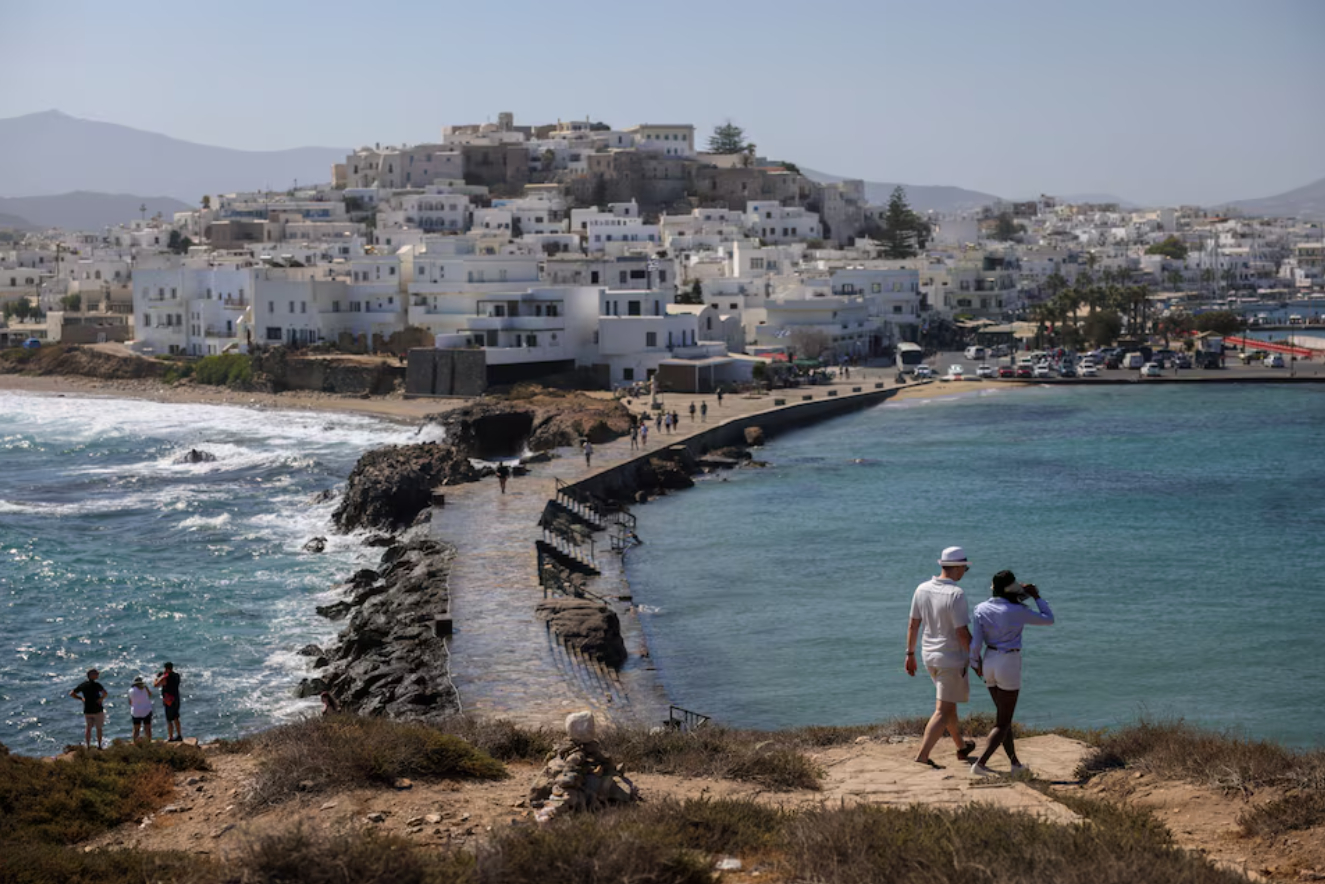
Tourists visit Chora on the island of Naxos, Greece, on June 20, 2024. Photo: Reuters
As the intersection of three continents: Asia, Europe, Africa, Greece is a rare country that crystallizes the most brilliant culture of ancient times, from literature, architecture, sculpture to sports , in which ancient literature occupies a special position with epic poems such as Iliad and Odyssey.
Greek architecture also holds a magical allure for tourists with its splendor and perfection; many temples and public buildings still exist today: the Parthenon, the Acropolis, the temples of Zeus and Hephaestus, the ancient Athenian square, the Theatre and Temple of Apollo, the Odeon of Herodes Atticus, etc. Greece is also home to many unique festivals that are hard to find in any other country: the Jazz Festival in Paxos, the flour-throwing festival in Galaxidi, outdoor music festivals, food festivals, etc. This country is also the birthplace of the Olympic Games.
Because of its numerous attractions, Greece has always been a top destination for tourists worldwide. In 2022, the Greek Minister of Tourism, Vassilis Kikilias, revealed that the country's tourism revenue had increased by 342% compared to 2021. In 2023, the number of visitors to Greece continued to reach a staggering figure, welcoming nearly 33 million tourists. This number surpassed the previous record of 31.3 million visitors in 2019, before the Covid-19 pandemic. As a result, the Greek tourism industry also achieved a record high revenue of nearly 20.5 billion Euros, higher than the 18.15 billion Euros of 2019.
Obsessed with climate change
However, the unpredictable consequences that Greece is suffering from climate change are plunging its tourism industry into a new nightmare. This summer, for example, has been a "scorching" summer, both literally and figuratively, for Greece. For months, this southeastern European nation has been battling dozens of wildfires.
On July 8th, the Greek government announced that the country had to deal with over 1,200 wildfires in June, double the number compared to the same period last year. Greece has doubled the number of firefighters in specialized units to approximately 1,300. Residents and tourists have been forced to evacuate or stay away from areas affected by wildfires or at high risk of wildfires.
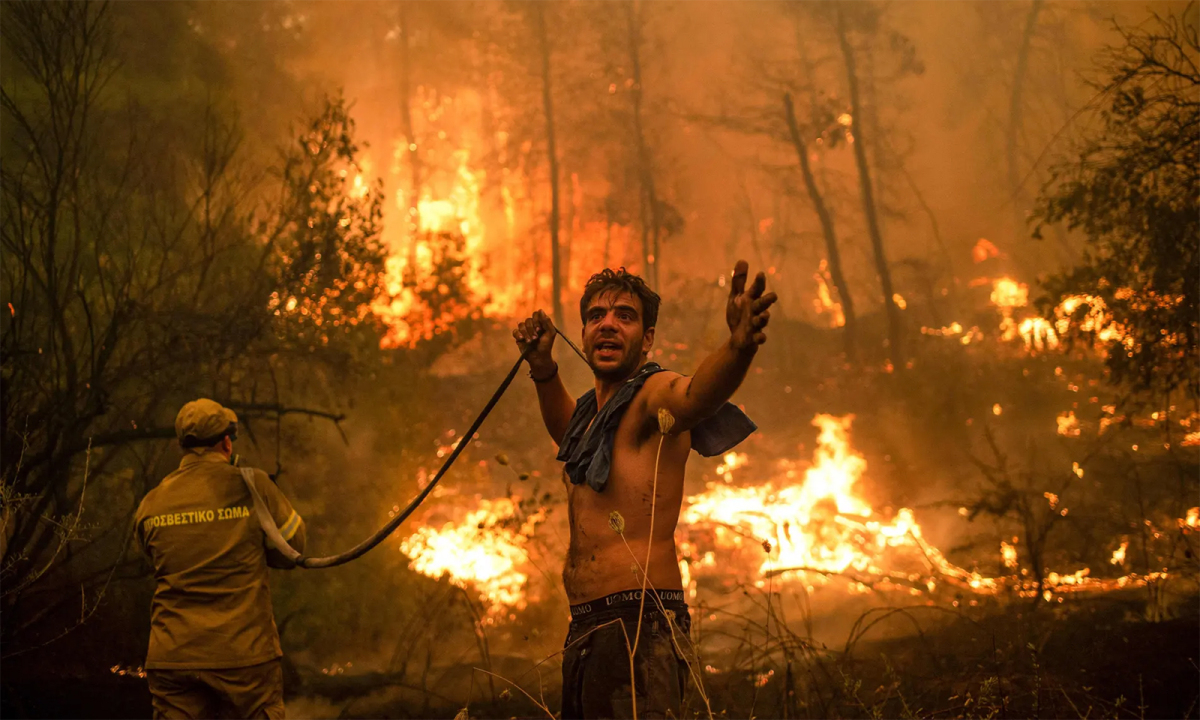
Greece frequently faces devastating wildfires.
Drought and water shortages are also another concern for residents and tourists in Greece. Much of Greece has had little or no rain for months. At the end of June 2024, the largest reservoir on the Greek island of Naxos ran dry.
“There has been a severe rainfall deficit across the Mediterranean and especially in Naxos, our reservoirs have run dry,” said Dimitris Lianos, mayor of Naxos. Authorities in Naxos have deployed mobile desalination units to address the immediate drinking water needs of residents and tourists. On the northern island of Thasos, authorities are also seeking a desalination unit to make seawater potable.
Climate change is not only causing heatwaves, wildfires, and water shortages, but it is also negatively impacting ancient Greek monuments and cultural heritage. For example, according to experts, extreme weather events in recent years, as well as air pollution and acid rain, have caused structural problems on the walls and temples of the Acropolis – one of the best-preserved archaeological sites in Greece.
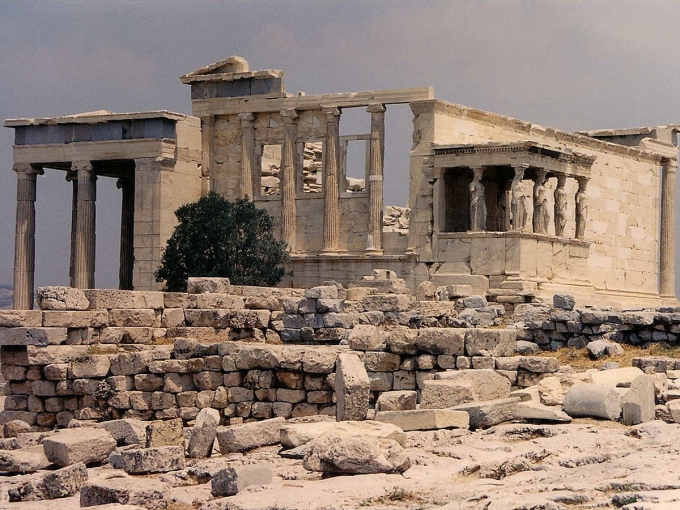
Ancient Greece is believed to have collapsed due to drought.
The challenging war against a new enemy in peacetime.
In 2023, facing the increasingly dire consequences of climate change, Greek Prime Minister Kyriakos Mitsotakis exclaimed that his country was experiencing “a kind of war in peacetime” and that climate change was the new enemy.
But it's not an easy battle, not just for Greece, but for most countries. “We took a roundabout route at COP29,” with many issues remaining unresolved, the most prominent being climate financing, or how wealthy countries finance developing countries to implement climate change adaptation measures and transition to clean energy,” emphasized Simon Stiell, Executive Secretary of the United Nations Framework Convention on Climate Change (UNFCCC).
Of these, "where will the money come from?" remains the most pressing question. In 2009, developed countries agreed to contribute $100 billion per year to help low-income countries invest in clean energy and address the increasingly severe impacts of climate change; however, achieving this goal is now two years behind schedule.
But difficulty doesn't mean giving up; it means accepting the challenge. "The cost of recovering from natural disasters is enormous, but our economy is strong enough to support it. What we have lost, the State and the people will rebuild together," Greek Prime Minister Kyriakos Mitsotakis once declared.
Beyond mere talk, Greece is actively pursuing tangible benefits, particularly from a tourism perspective, in its efforts to combat climate change. Last April, Prime Minister Kyriakos Mitsotakis announced that the country is promoting 21 initiatives worth €780 million to protect marine biodiversity and address coastal pollution. Greece also recently enacted legislation expanding marine protected areas to cover more than 30% of its territorial waters by 2030. As part of these initiatives, Greece plans to establish two marine parks in the Ionian Sea and the Aegean Sea.
Marine conservation is also considered one of the four pillars of Greece's climate change strategy (the first pillar is accelerating the green transition so that Greece gradually meets its electricity needs from natural sources - 60% this year and 80% by 2030; the second pillar is strengthening the country and the state against natural disasters; the third pillar is public order and the built environment).
“Quietly but methodically, Greece is playing a leading role in defending against severe climate change, which is affecting all regions and all activities,” the Greek head of government declared at the Our Ocean conference, hosted by Athens from April 15 to 17, 2024, with the participation of approximately 120 countries.
Ha Anh
Source: https://www.congluan.vn/thien-duong-du-lich-hy-lap-and-noi-am-anh-mang-ten-bien-doi-khi-hau-post303023.html

![[Photo] Closing Ceremony of the 10th Session of the 15th National Assembly](/_next/image?url=https%3A%2F%2Fvphoto.vietnam.vn%2Fthumb%2F1200x675%2Fvietnam%2Fresource%2FIMAGE%2F2025%2F12%2F11%2F1765448959967_image-1437-jpg.webp&w=3840&q=75)


![[Photo] Prime Minister Pham Minh Chinh holds a phone call with the CEO of Russia's Rosatom Corporation.](/_next/image?url=https%3A%2F%2Fvphoto.vietnam.vn%2Fthumb%2F1200x675%2Fvietnam%2Fresource%2FIMAGE%2F2025%2F12%2F11%2F1765464552365_dsc-5295-jpg.webp&w=3840&q=75)

















































![[OFFICIAL] MISA GROUP ANNOUNCES ITS PIONEERING BRAND POSITIONING IN BUILDING AGENTIC AI FOR BUSINESSES, HOUSEHOLDS, AND THE GOVERNMENT](https://vphoto.vietnam.vn/thumb/402x226/vietnam/resource/IMAGE/2025/12/11/1765444754256_agentic-ai_postfb-scaled.png)


















































Comment (0)