

The National Center for Meteorological and Hydrological Forecasting has just released its climate forecast for the period from August 11th to September 10th.
Accordingly, the average temperature during this period in the Northwest of Northern Vietnam, Central and South Central Vietnam is 0.5-1 degree Celsius higher, and in other areas it is about 0.5 degrees higher than the multi-year average.
Notably, total rainfall (TFM) in most areas across the country was 5-15% higher, especially in the North and Central Central regions by 15-25%; while in the Northwest and South Central regions, it was generally at approximately the same level as the average for the same period.

The meteorological agency also warned that 1-2 storms and tropical depressions are likely to form in the East Sea and could affect the northern and central regions of Vietnam.
During this period, localized heatwaves may occur in the Northern region. In the Central region, heatwaves will continue for the first 10 days of the forecast period, with some days experiencing intense heat; after that, the heatwaves are likely to gradually subside from around the end of August.
Meanwhile, the southwest monsoon in the south is likely to continue causing several days of showers and thunderstorms in the Central Highlands and Southern Vietnam, with localized strong thunderstorms and heavy rain on some days, mainly concentrated in the late afternoon and evening.
At the same time, thunderstorms, lightning, and possibly hailstorms continue to occur nationwide.
During the period from now until September 10th, the meteorological agency is paying special attention to the fact that the heatwave in Central Vietnam could cause fires and explosions in residential and production areas due to increased electricity demand, and there is a high risk of forest fires.
Furthermore, the tropical convergence zone continues to be active and has the potential to form tropical depressions/storms in the South China Sea. This convergence zone will cause strong southwest monsoon winds in the southern sea areas, requiring precautions against strong winds and high waves affecting maritime activities and fishing operations.
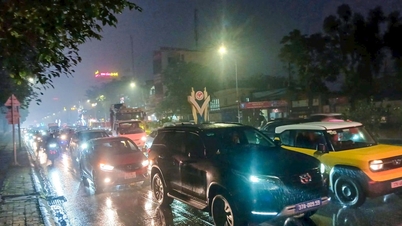
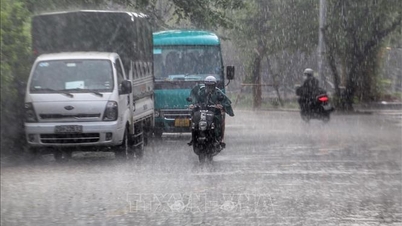
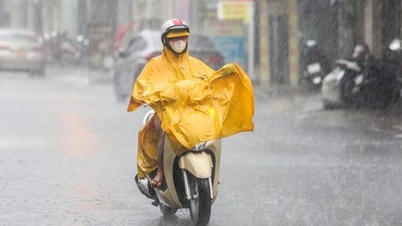
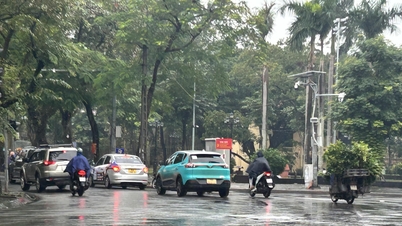
Currently, tonight (August 11th) and tomorrow, there will be rain, moderate rain and thunderstorms in Northern Vietnam and Thanh Hoa , with localized heavy to very heavy rain, with rainfall amounts of 20-40mm, and in some places over 150mm.
Thunderstorms and localized heavy rain in this area are likely to continue until around the night of August 12th.
Rainfall amounts for the day continued to break records.
Regarding the weather situation with continuous thunderstorms in many places over the past month (July 11th - August 10th), the National Center for Hydro-Meteorological Forecasting stated that there have been 4 periods of widespread rain across the country.
Specifically, from July 11-15, July 18-22, and July 28-August 10, rainfall will be concentrated mainly in the North and Central regions, while the Central Highlands and Southern regions will experience several consecutive days of moderate to heavy rain, with some areas experiencing very heavy rain, from July 11 to August 4.
Notably, the period of rain from July 28th to August 10th, due to the influence of a low-pressure trough combined with upper-level wind convergence, brought widespread heavy rain to the Northern and North Central regions, with particularly heavy and continuous rainfall occurring in the Northeast and the Northern Delta from July 30th to August 5th.
Specifically, rainfall in Northern Vietnam ranged from 100-300mm, with mountainous areas receiving 250-500mm, and some places even higher, such as Muong Te with 656.5mm... North Central Vietnam received 70-150mm. During these rain events, some daily rainfall values exceeded historical records for the same period.
According to the meteorological agency, rainfall across the country was unevenly distributed during the period from July 11th to August 10th. Specifically, in the Northern and North Central regions, rainfall was 15-30% higher, mainly concentrated in the midland and mountainous areas; other areas generally experienced 20-40% lower rainfall compared to the average for the same period, with some places experiencing over 50% lower rainfall. The Central Central region, in particular, experienced 50-80% lower rainfall compared to the average for the same period.
In particular, some areas in Quang Binh and Thua Thien Hue have higher rainfall than the average annual rainfall by 50-80%, and in some places over 100%. The Central Highlands and Southern regions have higher rainfall by 40-80%, and in some places over 150%.
Source


![[Photo] Prime Minister Pham Minh Chinh holds a phone call with the CEO of Russia's Rosatom Corporation.](/_next/image?url=https%3A%2F%2Fvphoto.vietnam.vn%2Fthumb%2F1200x675%2Fvietnam%2Fresource%2FIMAGE%2F2025%2F12%2F11%2F1765464552365_dsc-5295-jpg.webp&w=3840&q=75)

![[Photo] Closing Ceremony of the 10th Session of the 15th National Assembly](/_next/image?url=https%3A%2F%2Fvphoto.vietnam.vn%2Fthumb%2F1200x675%2Fvietnam%2Fresource%2FIMAGE%2F2025%2F12%2F11%2F1765448959967_image-1437-jpg.webp&w=3840&q=75)













































![[OFFICIAL] MISA GROUP ANNOUNCES ITS PIONEERING BRAND POSITIONING IN BUILDING AGENTIC AI FOR BUSINESSES, HOUSEHOLDS, AND THE GOVERNMENT](https://vphoto.vietnam.vn/thumb/402x226/vietnam/resource/IMAGE/2025/12/11/1765444754256_agentic-ai_postfb-scaled.png)










































Comment (0)