

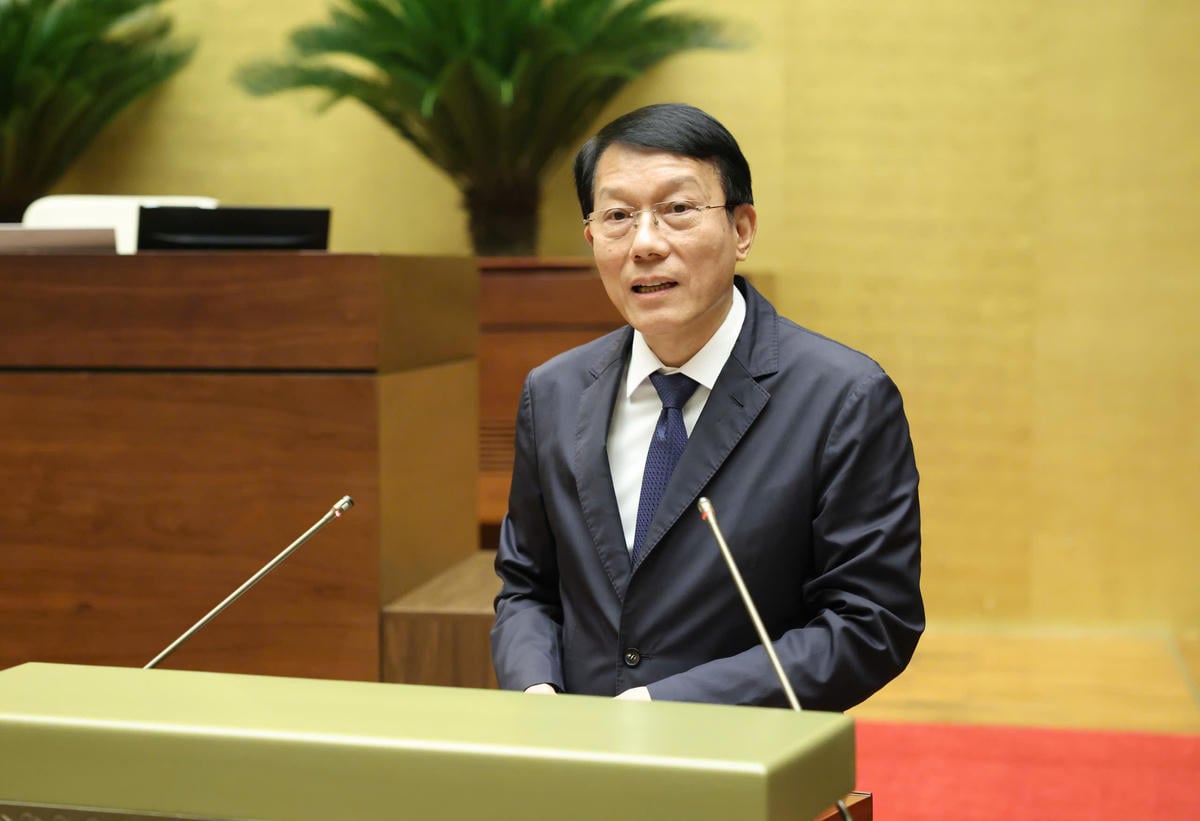
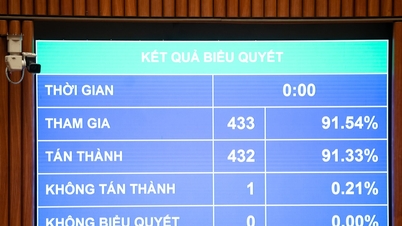
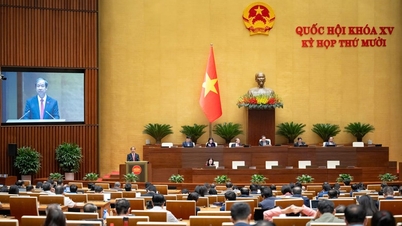
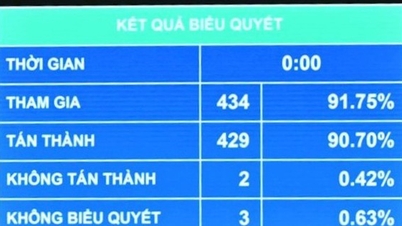
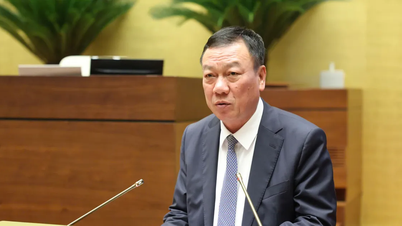
Before voting, the National Assembly listened to Minister of Public Security Luong Tam Quang present a report on receiving, explaining, revising and perfecting the draft Law on Cyber Security.
Regarding the approach to drafting the Law, Minister Luong Tam Quang stated that, incorporating the opinions of National Assembly deputies during the revision process, the drafting agency adhered to the principle that the draft Law on Cybersecurity 2025 is built on the basis of merging the Law on Cybersecurity 2018 and the Law on Network Information Security 2015, without changing the functions and tasks of ministries and agencies, and without creating new policies.
This ensures the correct implementation of the spirit of Resolution 18 of the Central Committee on some issues regarding the continued reform and restructuring of the political system's organizational apparatus to be streamlined, effective, and efficient. Each task is assigned to only one lead agency responsible for it, ensuring clear assignment and delegation of authority, avoiding overlapping functions, responsibilities, and scopes of management, and preventing any areas from being overlooked.
The Law only regulates matters within the National Assembly's jurisdiction, excluding issues falling under the authority of the Government, Ministries, and other agencies. New and constantly changing practical issues are only regulated in a framework of principle, and the Government is tasked with regulating and internalizing international conventions on combating cybercrime.
Taking into account the opinions of National Assembly deputies, the drafting agency reviewed the content and codified the provisions of the Hanoi Convention to be consistent with the scope of the Cybersecurity Law. Accordingly, provisions on international cooperation in preventing and combating cybercrime and measures to protect cybersecurity have been reviewed and supplemented in the draft Law.

Regarding the unification of state management responsibilities for cybersecurity, the Minister of Public Security stated that ensuring cybersecurity and combating cybercrime has become a global challenge. Cyberspace fulfills the mission of connecting humanity, but a lack of common governance globally and nationally will increase security threats in the online environment, profoundly impacting economic development, national security, and social order and safety.
"Currently, no single country can protect its cybersecurity alone because this is a global challenge. Therefore, international cooperation, information sharing, and coordinated action among countries are essential. This is a necessary requirement to protect cybersecurity and enhance the capacity to combat cybercrime," Minister Luong Tam Quang stated.
According to the Minister of Public Security, ensuring cybersecurity is a crucial and ongoing task, both urgent and strategically important in the long term, and is the responsibility of the entire political system and all citizens. No single ministry, locality, individual, organization, or business can protect cybersecurity alone; it requires the shared responsibility and coordination of all ministries, localities, organizations, businesses, and individuals, under the leadership and coordination of a unified central authority.
Accordingly, the draft Law has specifically stipulated the responsibilities of ministries, localities, individuals, organizations and enterprises in ensuring network security and agreed on a focal point to perform the task of presiding over and coordinating the implementation of network security.
The Minister of Public Security said that, taking into account the opinions of the National Assembly Standing Committee at the 51st session, the Government has directed the Presiding Agency to coordinate with the Review Agency and relevant agencies to review the laws that have been and will be passed by the National Assembly at the 10th Session to ensure consistency.
Notably, the draft law has added provisions to protect vulnerable groups in cyberspace, including children, the elderly, and those with cognitive difficulties. The drafting agency also explained and clarified the basis for increasing the minimum budget allocation for cybersecurity from 10% to 15%; and specifically defined the responsibilities of state management in 11 articles of the draft, thereby creating a solid legal framework for national security protection.
Source: https://daidoanket.vn/thong-qua-luat-an-ninh-mang-thong-nhat-dau-moi-quan-ly-bao-ve-nhom-yeu-the-tren-khong-gian-mang.html

![[Photo] The captivating scenery of the fragrant maple forest in Quang Tri](/_next/image?url=https%3A%2F%2Fvphoto.vietnam.vn%2Fthumb%2F1200x675%2Fvietnam%2Fresource%2FIMAGE%2F2025%2F12%2F10%2F1765353233198_lan09046-jpg.webp&w=3840&q=75)
![[Photo] Explore the US Navy's USS Robert Smalls warship](/_next/image?url=https%3A%2F%2Fvphoto.vietnam.vn%2Fthumb%2F1200x675%2Fvietnam%2Fresource%2FIMAGE%2F2025%2F12%2F10%2F1765341533272_11212121-8303-jpg.webp&w=3840&q=75)





















![[Video] The craft of making Dong Ho folk paintings has been inscribed by UNESCO on the List of Crafts in Need of Urgent Safeguarding.](https://vphoto.vietnam.vn/thumb/402x226/vietnam/resource/IMAGE/2025/12/10/1765350246533_tranh-dong-ho-734-jpg.webp)

































































Comment (0)