

NDO - Prime Minister Pham Minh Chinh signed and issued Official Dispatch No. 137/CD-TTg dated December 20, 2024, on promoting economic growth in 2025.
The official dispatch stated: Under the leadership of the Party, directly and regularly by the Politburo and the Secretariat, with the support of the National Assembly, the decisive, timely, and effective direction of the Government and the Prime Minister, and the efforts of ministries, sectors, and localities, the socio-economic situation in 2024 continued to recover positively, with each month better than the previous one, each quarter better than the previous one, macroeconomic stability maintained, inflation controlled, and major balances ensured; annual growth is estimated at over 7%, and it is expected that 15 out of 15 key targets will be met or exceeded as set by the Central Committee and the National Assembly. In particular, many provinces and cities achieved impressive growth results, state budget revenue significantly exceeded the forecast, social security was ensured, and people's living standards continued to improve.
The year 2025 holds special significance, as it is a year of acceleration, breakthroughs, and reaching the finish line. It is the final year of implementing the 2021-2025 five-year socio-economic development plan and a year for preparing and consolidating the foundational elements, creating a premise for our country to confidently enter a new era - an era of national prosperity and strength.
To maximize the achievement of the goals, targets, and tasks of the 2025 socio-economic development plan (especially the GDP growth target) and the 2021-2025 five-year plan, and to create a foundation for double-digit economic growth in the 2026-2030 period, the Prime Minister requests that Ministers, Heads of ministerial-level agencies, government agencies, Chairmen of People's Committees of provinces and centrally-administered cities, and requests that Secretaries of Provincial and City Party Committees and Chairmen of People's Councils of provinces and centrally-administered cities focus on leading and directing the implementation of the following key tasks and solutions:
Implement decisively and effectively the Central Committee's Conclusion No. 97-KL/TW dated October 5, 2024, on socio-economic development for 2024-2025; the Resolutions and Conclusions of the Central Committee, the Politburo, the Secretariat, and key leaders; the National Assembly's Resolution No. 158/2024/QH15 on the socio-economic development plan for 2025; and the Resolutions of the National Assembly and the Government, as well as the Prime Minister's directives on the policies, viewpoints, tasks, and solutions for socio-economic development in 2025 and the 2021-2025 period.
The priority is to strongly promote economic growth while maintaining macroeconomic stability, controlling inflation, ensuring major balances and achieving a high surplus; accelerating and breaking through, striving for a national GDP growth rate of over 8% in 2025 (higher than the target set by the National Assembly).
The Ministry of Planning and Investment, in coordination with other ministries, agencies, and localities, will develop a scenario for national economic growth in 2025 at over 8%, proposing specific targets, tasks, and solutions for each sector, field, ministry, agency, and locality in the draft Government Resolution on key tasks and solutions for implementing the socio-economic development plan and state budget estimates for 2025, ensuring consistency, feasibility, and effectiveness; report at the Government and local authorities' conference summarizing the work of 2024 and implementing the work of 2025 on January 8, 2025; and based on that, assign targets for 2025 to each ministry, sector, and locality.
Provinces and centrally-governed cities should develop their socio-economic development plans for 2025 with decisive and breakthrough targets, tasks, and solutions, leveraging local potential and advantages, seizing opportunities, and overcoming challenges to strive for the highest possible results; in particular, they should aim for a minimum GRDP growth rate of 8-10% in 2025, especially Hanoi, Ho Chi Minh City, and other major cities and growth poles of the country, which need to strive for even higher growth rates to further enhance their leading role in 2025.
The State Bank of Vietnam, in coordination with relevant agencies and localities, will effectively utilize regulatory tools to adjust exchange rates and interest rates in line with macroeconomic developments and set objectives, meeting the capital needs of the economy; maintaining stability in the monetary, foreign exchange, and gold markets, and ensuring the safety of the credit institution system.
Continue directing commercial banks to reduce operating costs, strengthen the application of information technology, and promote digital transformation to lower lending interest rates. Improve credit quality, focus credit on production and business sectors, priority sectors, and economic growth drivers; strictly control credit to sectors with potential risks; effectively implement preferential credit programs (social housing credit package, support for agriculture, forestry, and fisheries...). Continue restructuring credit institutions in conjunction with effectively handling bad debts.
The Ministry of Finance and other ministries, agencies, and localities, according to their assigned functions, tasks, and authority, shall: strengthen financial and budgetary discipline; strictly manage state budget revenue and expenditure; ensure accurate, sufficient, and timely collection of revenue; expand the tax base and combat tax evasion, especially in land use fees and e-commerce business through digital platforms; resolutely implement digital transformation and mandate electronic invoices for all sectors and fields, while simultaneously conducting inspections, audits, and supervision of implementation; strive to achieve state budget revenue in 2025 at least 10% higher than in 2024; thoroughly economize on expenditures, especially recurrent expenditures, to allocate resources for development investment and social welfare. Implement promptly and effectively the policy of reducing value-added tax in the first six months of 2025 as stipulated in Resolution No. 8 of the 15th National Assembly Session. The Ministry of Finance will continue to research and propose policies to exempt, reduce, and extend taxes, fees, charges, and land rent to support people and businesses in developing production and business in 2025.
The Ministry of Construction, in coordination with relevant agencies and localities, will implement comprehensive solutions to overcome difficulties and obstacles in the implementation of real estate and social housing projects, and promote the safe, healthy, and sustainable development of the real estate market; effectively implement the 145 trillion VND credit package for social housing; and is determined to build 100,000 social housing units by the end of 2025.
To revitalize traditional growth drivers, regarding investment: ministries, agencies, and localities should focus on accelerating the disbursement of public investment capital from the beginning of 2025, especially for nationally important programs, projects, and works, and national target programs; using public investment to lead private investment and strengthening public-private partnerships. Emphasize the responsibility of leaders, overcome limitations and shortcomings, and decisively resolve difficulties and obstacles for each project. Implement strict and timely sanctions against acts of corruption and negativity that hinder or slow down the disbursement of public investment capital. Focus on developing a medium-term public investment plan for the 2026-2030 period; allocate capital in a focused and prioritized manner, resolutely avoiding fragmentation and ensuring that the total number of projects funded by the central budget for the 2026-2030 period does not exceed 3,000 projects (including both transitional and new projects). Actively implement investment preparation for nationally important projects and key projects.
The Ministry of Planning and Investment, in coordination with other ministries, agencies, and localities, will develop effective mechanisms to attract selective foreign investment, focusing on promoting and attracting large-scale, high-tech FDI projects; promptly identify and address difficulties and obstacles faced by FDI enterprises, especially administrative procedures, to accelerate the progress of projects in Vietnam.
Regarding consumption: The Ministry of Industry and Trade, along with other ministries, agencies, and localities, will effectively implement solutions to stimulate consumer demand in each locality and nationwide, promoting the "Vietnamese people use Vietnamese goods" campaign, the OCOP program, e-commerce, and online payments; strengthening the organization of concentrated promotional programs; promoting production and ensuring sufficient supply to meet demand, preventing shortages and disruptions in supply, especially for essential goods; linking production, distribution, and consumption; improving the quality of services, especially food and beverage services, accommodation, and domestic tourism; and strengthening promotion to attract international tourists (striving to attract over 20 million international tourists in 2025).
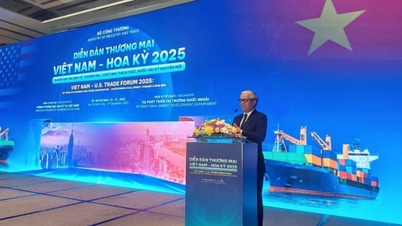
Regarding exports: The Ministry of Industry and Trade, along with other ministries, agencies, and localities, will strengthen trade promotion, diversify export markets, and build high-quality Vietnamese product brands; effectively utilize the 17 signed free trade agreements and negotiate new ones; expand and effectively exploit new markets, especially Halal markets, the Middle East, Latin America, and Africa; support businesses in meeting new export market standards; enhance trade defense capabilities and combat origin fraud; and focus on providing market information and legal support in international trade and investment.
Promoting and creating breakthroughs for new growth drivers: The Ministry of Information and Communications, in coordination with other agencies and localities, will accelerate the national digital transformation in a comprehensive, profound, and groundbreaking manner, especially in building a transparent digital institution, modern digital infrastructure, a widespread digital economy, and ensuring network security and safety.
The Ministry of Planning and Investment, in coordination with relevant agencies, will urgently finalize the Decree on the pilot mechanism for developing a circular economy and submit it to the Government in the first quarter of 2025; strengthen investment attraction into new, high-tech industries and fields such as semiconductors, artificial intelligence, cloud computing, and the Internet of Things; and research and develop specific mechanisms, policies, and solutions to effectively support and encourage development. The program for developing human resources in the semiconductor industry until 2030, with a vision to 2050, will be implemented decisively and effectively. The development of the marine economy, urban areas, regional economies, and regional linkages will be promoted.
The Ministry of Natural Resources and Environment and the Ministry of Planning and Investment, in accordance with their assigned functions and tasks, should urgently take the lead and coordinate with relevant agencies to submit to the Prime Minister a national green criteria set, and propose a list of green economic sectors to be integrated into the Vietnamese economic sector classification system, in order to encourage and promote green transformation.
Boosting the development of strategic infrastructure.
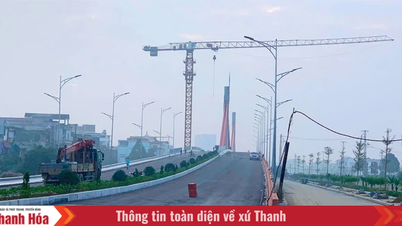
Ministries, agencies, and localities, according to their functions, tasks, and authority, should focus on completing key national infrastructure systems; urgently connect expressways with airports and seaports; and implement high-speed rail and urban rail systems such as the North-South high-speed rail, railway lines connecting with China, and urban rail systems in Hanoi and Ho Chi Minh City; strive to basically complete Long Thanh International Airport by 2025; and be determined to complete at least 3,000 km of expressways by the end of 2025. Focus on resolving difficulties and obstacles in the implementation of large-scale infrastructure projects, especially in compensation, support, and resettlement. Ensure the supply of raw materials, control raw material prices, and manage land use indicators to accelerate progress and ensure the quality of expressway projects. Continue investing in improving agricultural and rural infrastructure, climate change adaptation infrastructure, and energy infrastructure. Expeditiously implement the policies and conclusions of competent authorities regarding the restart of the nuclear power plant project, the construction of an international and regional financial center in Ho Chi Minh City and Da Nang, and the establishment of free trade zones in several localities.
The Ministry of Information and Communications, in coordination with other ministries, agencies, and localities, will focus on developing the national digital infrastructure, innovation infrastructure, developing telecommunications satellites, and upgrading the national telecommunications backbone infrastructure; promoting the commercialization of 5G, researching 6G, and applying various satellite services...
Maximizing the mobilization of resources for development.
The Ministry of Planning and Investment and the Ministry of Finance, according to their assigned functions and tasks, shall preside over and coordinate with relevant agencies and localities to implement effective solutions to maximize and diversify resources from the State, people, businesses, direct and indirect investors, and public-private partnerships (PPP) to develop strategic infrastructure systems. They shall research and utilize available public debt, government debt, and budget deficits to mobilize additional resources for development investment. They shall also remove obstacles to facilitate the mobilization and effective use of resources from the stock market and corporate bonds.
The State Capital Management Committee directs state-owned corporations and enterprises to continue improving the efficiency of investment and production and business operations in a comprehensive and sustainable manner, ensuring proportionality with the resources held through management innovation, optimization of production methods, and improvement of human resource quality; focusing on and accelerating investment in large-scale projects with spillover effects, contributing to promoting growth. Developing the private sector to become one of the important driving forces of the economy; building mechanisms to strongly develop large-scale, national-owned enterprises.
Ministries, agencies, and localities, according to their assigned functions, tasks, and authority, should immediately and urgently implement the National Assembly's Resolution on removing difficulties and obstacles for projects and land in some localities. They should enhance the effectiveness of the Steering Committee established under Decision No. 1250/QD-TTg dated October 23, 2024, on removing difficulties for projects; focus on reviewing, classifying, and proposing mechanisms and policies to resolve obstacles, quickly put projects into use, and release resources to contribute to socio-economic development.
Continue to improve institutions, laws, mechanisms, and policies to immediately remove difficulties and obstacles and promote socio-economic development.
Ministries, agencies, and localities should focus on decisively implementing the restructuring of the organizational apparatus to be "Lean-Small-Strong-Efficient-Effective-Efficient" in accordance with the policies and directions of the Central Government and the Government, ensuring progress and quality as required. Strengthen decentralization and delegation of power, coupled with resource allocation, inspection, and supervision, following the principle of "local authorities decide, local authorities act, local authorities are responsible." Resolutely cut down and simplify administrative procedures, reducing costs for citizens and businesses. Timely and effectively implement laws and resolutions passed by the National Assembly at its 8th session so that new regulations are put into practice as quickly as possible.
Ministries and ministerial-level agencies will continue to review regulations in laws that are no longer appropriate, problematic, overlapping, or incomplete, in order to submit them to the National Assembly at the extraordinary session in February 2025; in particular: the Ministry of Planning and Investment will continue to review and propose amendments to the Law on Investment under the Public-Private Partnership method and the Law on Investment (especially regulations on overseas investment); the Ministry of Finance will urgently finalize the draft Law on the management and investment of state capital in enterprises; and the Ministries of Science and Technology and Information and Communications will submit amendments to laws under their management to unlock resources and promote development.
Ministries, agencies, and localities, according to their assigned functions, tasks, and authority, should proactively and flexibly implement comprehensive solutions for cultural development, effectively implement social welfare policies, and achieve sustainable poverty reduction; effectively implement the Targeted Program on Cultural Development for the period 2025-2035. They should proactively prevent and mitigate natural disasters and respond to climate change; resolutely fulfill commitments made at COP26. They should maintain political stability, consolidate and strengthen national defense and security; effectively communicate policies, and continue to promote substantive and effective foreign relations and international integration.
Source: https://nhandan.vn/thu-tuong-chinh-phu-chi-dao-thuc-hien-cac-giai-phap-thuc-day-tang-truong-kinh-te-nam-2025-post851788.html


















![[Photo] Prime Minister Pham Minh Chinh holds a phone call with the CEO of Russia's Rosatom Corporation.](/_next/image?url=https%3A%2F%2Fvphoto.vietnam.vn%2Fthumb%2F1200x675%2Fvietnam%2Fresource%2FIMAGE%2F2025%2F12%2F11%2F1765464552365_dsc-5295-jpg.webp&w=3840&q=75)














































Comment (0)