

In the context of logistics becoming an increasingly important link in the supply chain and e-commerce, many businesses have pioneered the implementation of high-tech solutions, especially free door-to-door pickup services even for a single order.
In light of this trend, a reporter from the Industry and Trade Newspaper interviewed Economic Expert Associate Professor Dr. Nguyen Thuong Lang to clarify the benefits, challenges, and risks associated with the modern logistics model, from optimizing costs and operations to enhancing customer experience and business competitiveness.
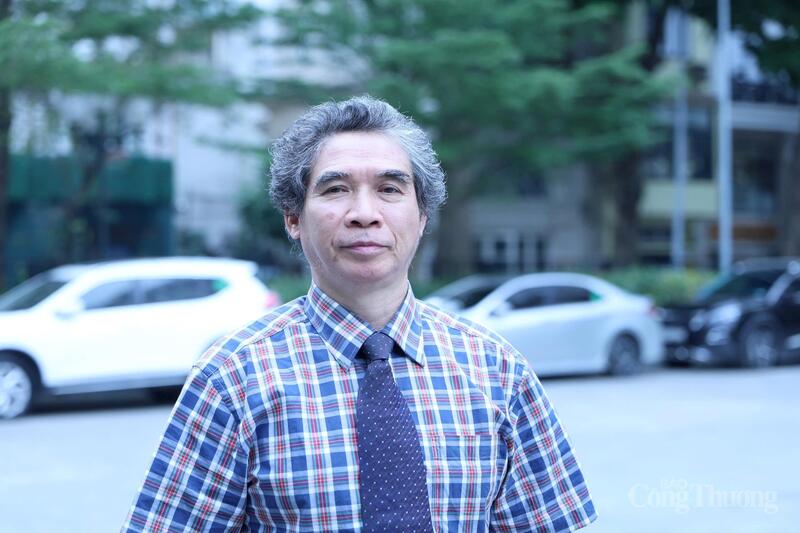
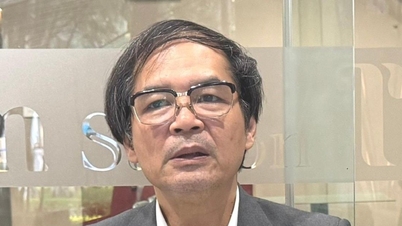
Economist - Assoc. Prof. Dr. Nguyen Thuong Lang.
Benefits of a free pick-up service model
- Sir, what is your assessment of the trend of logistics companies offering free door-to-door pickup services, even for a single order?
Associate Professor Dr. Nguyen Thuong Lang: In my opinion, technological advancements in the field of logistics are a significant step forward. They are closely linked to the need for cost savings, time savings, optimized delivery processes, optimized operations, and even the way businesses interact. With this approach, when technology is announced and embraced by businesses, it will meet real-world needs and will certainly spread throughout the entire logistics industry. Businesses that are ahead will gain advantages in terms of cost, more optimized and faster processes, and improved operational efficiency.
Therefore, with the rapid adoption of technological advancements, their impact will be enormous. Businesses should have a proactive strategy, adopting them promptly, even immediately after research and development is complete, without needing excessive testing time. Boldly seeking customer feedback is also crucial for assessing the extent of service quality improvement.
This approach also provides peace of mind for customers, as their shipments will not be interrupted, stalled, or delayed, thereby increasing the number of orders. This means promoting the transit of goods, thereby improving the operational efficiency of the production chain, supply chain, or economic chain. As a result, logistics companies, service providers, and product suppliers all benefit.
- Is a free order processing policy economically sustainable when compared to the current market's last-mile fee system?
Associate Professor Dr. Nguyen Thuong Lang: Compared to this problem, the fee that customers pay to the final destination in the current market, in my opinion, the concept of last-mile logistics is a very progressive approach and has been widely adopted by logistics companies worldwide . To date, the method of fulfilling two orders but only charging the cost of one order is a promotional tactic to stimulate demand, and at the same time, an effective competitive tool. I believe this is one of the techniques that helps make the market more vibrant and encourages suppliers to find sharper competitive tools.
Conversely, consumers, when using the service, will feel respected and their value enhanced. In other words, the customer is truly king, and service providers strive to offer intelligent models that deliver tangible benefits. As a result, the bond between the two sides is strengthened, the market becomes more dynamic, and competition drives innovation. Innovation, in turn, leads to reduced costs and the development of even smarter models. I believe this is a very good, progressive approach that aligns with the trends of a market economy.
Risks, challenges, and cost optimization problems.
- What do you consider to be the main economic risks of this model?
Associate Professor Dr. Nguyen Thuong Lang: In my opinion, all high-tech application models that are rapidly implemented always come with certain risks. The first risk comes from the customer. For example, a customer might change their mind: someone might place two orders but only take one, or someone might place three orders but only take one… In the context of price competition, this easily leads to predatory pricing. I think this is quite normal.

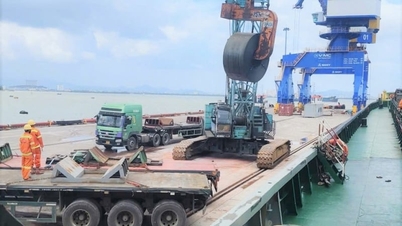
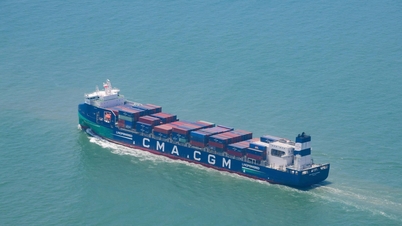
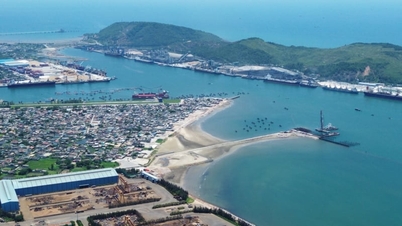
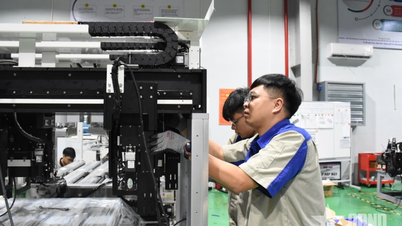
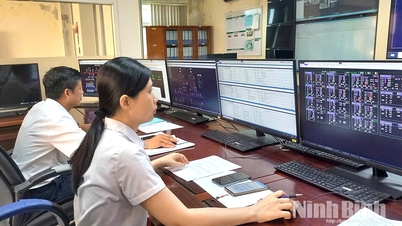
Technological advancements in the field of logistics are a significant step forward. (Illustrative image)
The second risk is technological risk. Corporations that fail to keep up with technological advancements will become obsolete, be pushed out of the market, or even cease to exist. This is part of the process of business formation and development, and this risk is essentially market risk.
The third risk relates to technology, specifically information security. New technologies can lead to the leakage of customer or payment information, especially if security technologies don't keep pace. This can create risks for both parties.
However, I believe that all these risks, once identified, can be addressed promptly. Currently, with technological advancements, innovation, especially in the digital field, and the application of artificial intelligence and fully automated models, I believe these risks will be significantly mitigated.
- In your opinion, in a competitive pricing environment, what are the key factors determining a business's success, and how should businesses balance profitability and scale?
Associate Professor Dr. Nguyen Thuong Lang: In my opinion, that game is essentially still a game; what's called price reduction is really just a race to lower prices and reduce costs. I think that businesses that can maintain an acceptable profit margin, or at the lowest level but sustain it for the longest time, will definitely win.
Some businesses accept losses in anticipation of scaling up. I believe the risks in this case are usually very high, so they must optimize costs and, especially, ensure their profit margins are as low as possible. However, in the long run, if they achieve large scale and attract a large customer base, the initial low profit will be offset by high production volume. I think these two factors must occur simultaneously to produce concrete results. Accepting only one of the two extremes may lead to failure: accepting zero profit but achieving a large scale won't be significant, or a small scale but high profit will result in high prices and lack of competitiveness. Therefore, the current challenge is optimizing the scale of the business.
Thank you, sir!
Modern logistics models, offering free door-to-door pickup even for a single order, represent not only a technological advancement but also a testament to the industry's innovative capabilities. However, for this model to be truly sustainable, businesses need to strike a balance between costs, scale, and profit margins, while simultaneously managing risks related to technology, security, and market. Only by addressing these challenges simultaneously can businesses maintain a competitive advantage, enhance customer experience, and promote the sustainable development of the logistics industry in particular, as well as the supply chain and the digital economy in general.
Source: https://congthuong.vn/tien-bo-cong-nghe-thuc-day-doi-moi-va-hieu-qua-trong-logistics-433191.html
![[Image] Hanoi Police officially crowned champions of V-League 2025/2026](https://vphoto.vietnam.vn/thumb/1200x675/vietnam/resource/IMAGE/2026/05/31/1780244769054_ndo_br_039d561b692be875b13a-jpg.webp)


![[Photo] Solemn bathing ceremony and Buddha procession in Hue](https://vphoto.vietnam.vn/thumb/1200x675/vietnam/resource/IMAGE/2026/05/31/1780228263543_1-jpg.webp)
![[Photo] Admire the coral "masterpiece" amidst the million-year-old heritage of Dak Lak province.](https://vphoto.vietnam.vn/thumb/1200x675/vietnam/resource/IMAGE/2026/05/31/1780221235105_anh-man-hinh-2026-05-31-luc-16-53-27.png)
![[Photo] The General Secretary, President and his wife begin their state visit to the Philippines.](https://vphoto.vietnam.vn/thumb/1200x675/vietnam/resource/IMAGE/2026/05/31/1780230559452_anh-man-hinh-2026-05-31-luc-19-28-11.png)














![[Video] Sunset at Lap An Lagoon – Where the sun sets over the fishing nets](https://vphoto.vietnam.vn/thumb/340x192/vietnam/resource/IMAGE/2026/05/31/1780192137701_beach-landscape-sea-water-nature-grass-745871-pxhere-com.jpeg)




































![[Photo] Admire the coral "masterpiece" amidst the million-year-old heritage of Dak Lak province.](https://vphoto.vietnam.vn/thumb/402x226/vietnam/resource/IMAGE/2026/05/31/1780221235105_anh-man-hinh-2026-05-31-luc-16-53-27.png)































Comment (0)