

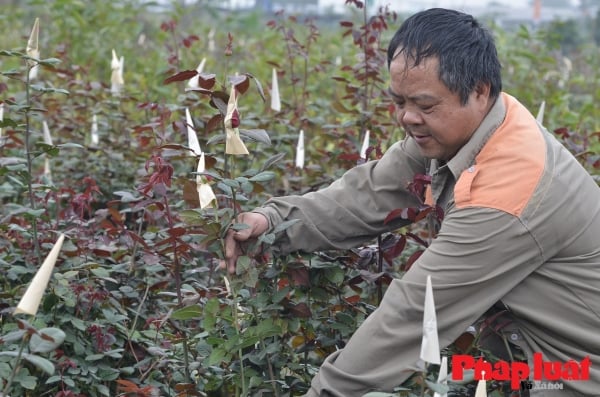
The scale of supply chain financing activities in Vietnam reveals many limitations.
According to Dr. Can Van Luc, a member of the National Financial and Monetary Policy Advisory Council, the total outstanding credit for agriculture, rural areas, and farmers at the end of 2023 was 3.3 trillion VND, accounting for 24.3% of the total outstanding credit for the economy . Loans to agriculture, forestry, and fisheries alone reached 986,000 billion VND at the end of June 2024.
The scale of supply chain financing activities in Vietnam reveals many limitations that have not met development requirements. While import and export turnover has increased significantly (approximately 10% per year during the 2013-2023 period), the scale of supply chain financing activities remains very small. In 2023, commercial banks only financed 20% of total import and export turnover; of which, supply chain financing accounted for only 2%. The main providers are still commercial banks, while finance companies have not participated much.
Supply chain finance (SCF) products face several barriers for farmers to access. Commercial banks often require collateral, while trade finance products such as accounts receivable financing, invoice financing, and shipment financing are less commonly used due to their inherent risks.
According to Dr. Can Van Luc, financial companies have not participated much in the market, leading to a dependence of supply on commercial banks. Businesses, especially small and medium-sized enterprises and agricultural businesses, are still limited in terms of management, finance, and technology capabilities.
In addition, there are not many platforms connecting suppliers, distributors, financial providers, and other support services.
According to Dr. Can Van Luc, to overcome the aforementioned limitations, it is necessary to improve the legal framework and accelerate the development of a legal basis for new business models such as peer-to-peer lending and data sharing mechanisms.
At the same time, it is necessary to summarize the assessment and develop a plan for agricultural insurance. Continue to develop the capital market, especially the corporate bond market. Improve the information and data system for forecasting agricultural product markets and prices to help farmers and businesses orient their production and consumption in a stable manner.
Dr. Can Van Luc believes that Vietnam needs a marketing strategy and market expansion plan for agricultural exports, focusing on brand building, leveraging new-generation FTAs, and resolutely working to resolve the EU's yellow card issue. Provincial and city People's Committees should expedite the issuance of certificates of land use rights and ownership of assets on land (especially assets such as greenhouses, net houses, and fish ponds...).
On the part of supply chain finance providers, it is necessary to design suitable products with greater flexibility regarding collateral. Large commercial banks, with advantages in resources and customer base, can build platforms connecting members in the supply chain, proactively seeking and working with international organizations to secure funding for supply chain financing.
According to Dr. Can Van Luc, agricultural businesses need to proactively learn about supply chain financing solutions and their benefits, enhance information transparency to access supply chain financing products in particular and financial services in general, and proactively research to shift towards green and sustainable agriculture in order to access domestic and foreign capital for this sector.
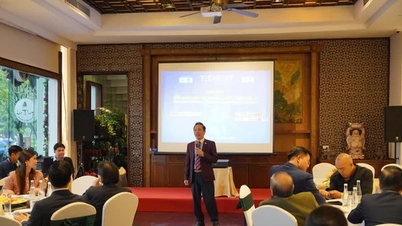
At the forum, Mr. Ngo Sy Dat, Director of the Institute for Agricultural Market and Institutional Research, emphasized the role of cooperatives in agricultural production. Cooperatives have the advantage of a nationwide network, creating valuable agricultural products, providing employment, and increasing income for the people. Cooperatives serve as a central hub for receiving and transferring scientific and technical knowledge, government policies, agricultural extension services, infrastructure projects for production and business, insurance for farmers, and support for disadvantaged areas, mountainous regions, and ethnic minorities.
Currently, there are 2,169 cooperatives nationwide that are the main producers of OCOP products; more than 1,000 cooperatives are involved in community tourism, creating jobs and income for members (average income of 52 million VND/year), contributing to local political and social stability.
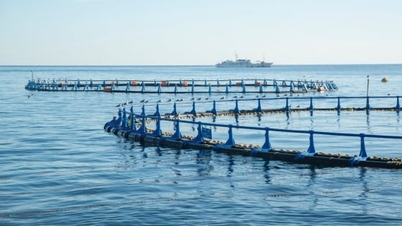
Regarding solutions to promote agricultural value chain linkages, Mr. Ngo Sy Dat suggested that the State should pay more attention to training and developing human resources for cooperatives, continue supporting cooperative startup programs; facilitate access to credit and land... Especially, it should expand the model of cooperatives that both produce and participate in the market (agricultural product trading platforms); cooperatives engaged in marine fisheries; protecting community resources...; and cooperatives producing OCOP products linked to rural tourism.
On the part of agricultural businesses, cooperatives need to proactively explore supply chain financing solutions and their benefits. They should enhance information transparency to access SCF products in particular and financial services in general. They should also proactively research and shift towards green, sustainable agriculture to access domestic and international capital for this sector.
Hanoi is implementing various solutions, focusing on organizing production and linking product consumption.
In Hanoi, a report from the Department of Agriculture and Rural Development shows that Hanoi is one of the localities with a large area of agricultural land, with over 197,000 hectares, of which nearly 160,000 hectares are used for agricultural production. Recently, the Hanoi Department of Agriculture and Rural Development has coordinated with localities to strengthen the application of science and technology in production, implement planting area codes, and ensure traceability, quality, and food safety.
In addition, Hanoi is implementing land consolidation and concentration to develop large-scale, high-tech agricultural production, creating conditions to attract businesses to invest in agricultural production; strengthening linkages between businesses, cooperatives, and households to organize agricultural production according to VietGAP, GlobalGAP, organic standards and models combining agriculture and tourism. As a result, Hanoi's agricultural production value has achieved high growth and has been able to proactively supply a portion of clean and safe agricultural products to consumers in the capital city.
Currently, Hanoi's agricultural production faces many difficulties and challenges. The restructuring of the agricultural economy is slow and not commensurate with the potential and advantages of the capital city. Agricultural production remains small-scale and fragmented, and concentrated production areas with truly leading commodity production characteristics have not yet been formed. Investment attraction in agriculture is low, and the supply chains from production to consumption are only just developing...
To maintain its growth momentum, Hanoi's agricultural sector is implementing various solutions, focusing on organizing production and linking product consumption. According to the Hanoi Department of Agriculture and Rural Development, Hanoi is developing specialized agricultural zones linked to brand building and tourism development, aiming to increase production value.
Hanoi has also chosen to invest systematically in specialized agricultural models, tailored to the local land consolidation capacity. Furthermore, Hanoi has established high-quality seedling areas (fruit trees, ornamental plants, urban trees, etc.), meeting the requirements of green urban development for the capital and neighboring provinces and cities. These agricultural production areas, with investment in technology and finance, will become centers of high-tech and ecological agriculture, fostering sustainable development.
Source: https://kinhtedothi.vn/tim-giai-phap-nang-cao-hieu-qua-san-xuat-thu-nhap-cho-nong-dan.html









![Major policy decisions for agricultural development in Thanh Hoa: [Part 2] Building water reservoirs for the future](https://vphoto.vietnam.vn/thumb/402x226/vietnam/resource/IMAGE/2025/12/14/1765679409826_z7282518628489_e53ef9fd8c182096bda23471d91bbdf1-nongnghiep-172014.jpeg)





































































Comment (0)