

Shining brightly with the qualities of Uncle Ho's soldiers.
In mid-November 2025, the Ba River rose rapidly, causing flooding in several communes in the eastern part of Dak Lak province. Assessing the situation, Colonel Nie Ta, Commander of the Dak Lak Provincial Military Command, reported to the 5th Military Region Command, requesting permission for units to halt exercises and training. Simultaneously, thousands of regular troops and militia, along with hundreds of vehicles, were mobilized to the affected areas to coordinate closely with functional forces in relocating tens of thousands of people from vulnerable areas to safety.
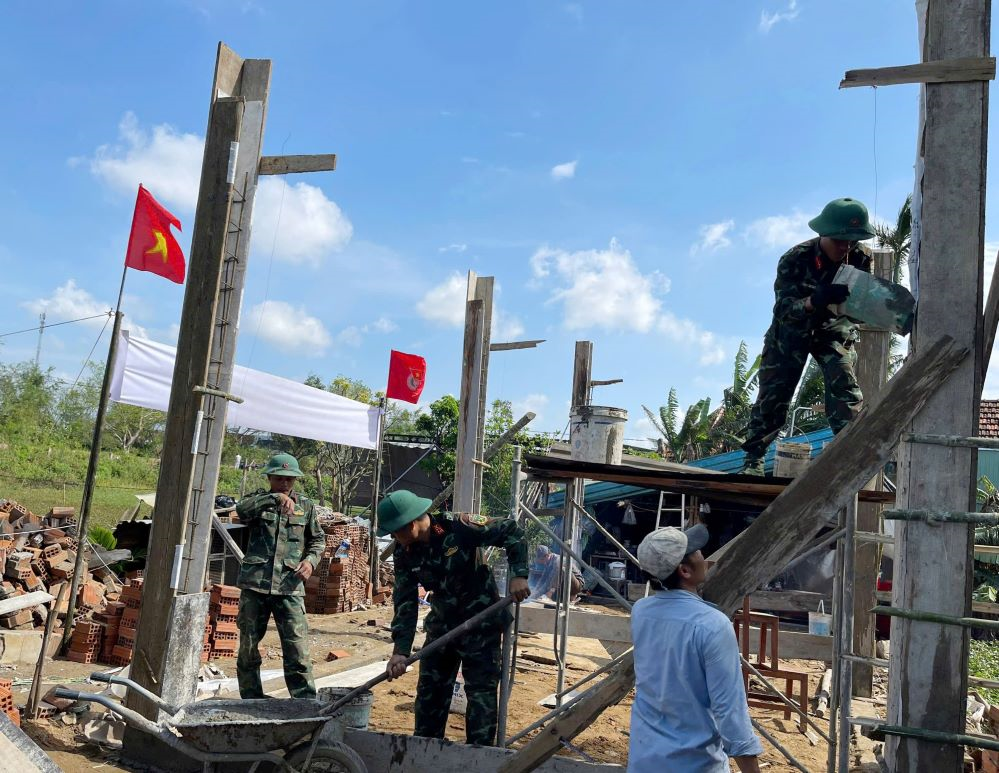 |
| Officers and soldiers of the 34th Army Corps participate in rebuilding flood-affected houses for people in Central Vietnam. Photo: CHUNG NGUYEN |
Comrade Ta Anh Tuan, Chairman of the People's Committee of Dak Lak province, said: “Officers and soldiers of the Army units have overcome hardships and dangers, mobilizing maximum forces and resources, and promptly arriving at critical areas to rescue and protect the lives and property of the people and the State. Without the quick response of the Army units, the damage would have been much greater. The local Party committee and government highly appreciate the proactive spirit and pioneering efforts of the officers and soldiers; the people affected by the natural disaster will never forget the selfless actions of the Ho Chi Minh's Army.”
Besides the historic floods in the South Central provinces, 2025 saw 15 typhoons and 5 tropical depressions entering the East Sea, with 9 typhoons and 3 tropical depressions directly affecting Vietnam. These storms moved quickly, were intense, and unpredictable; heavy rains and floods from upstream caused nearly 20 rivers in the North and Central regions to exceed historical levels, resulting in widespread flooding. Many localities suffered double natural disasters, with typhoons upon typhoons and floods upon floods, causing flash floods, landslides, and serious mudslides. During these most difficult times, officers and soldiers were always present to provide timely assistance to the people.
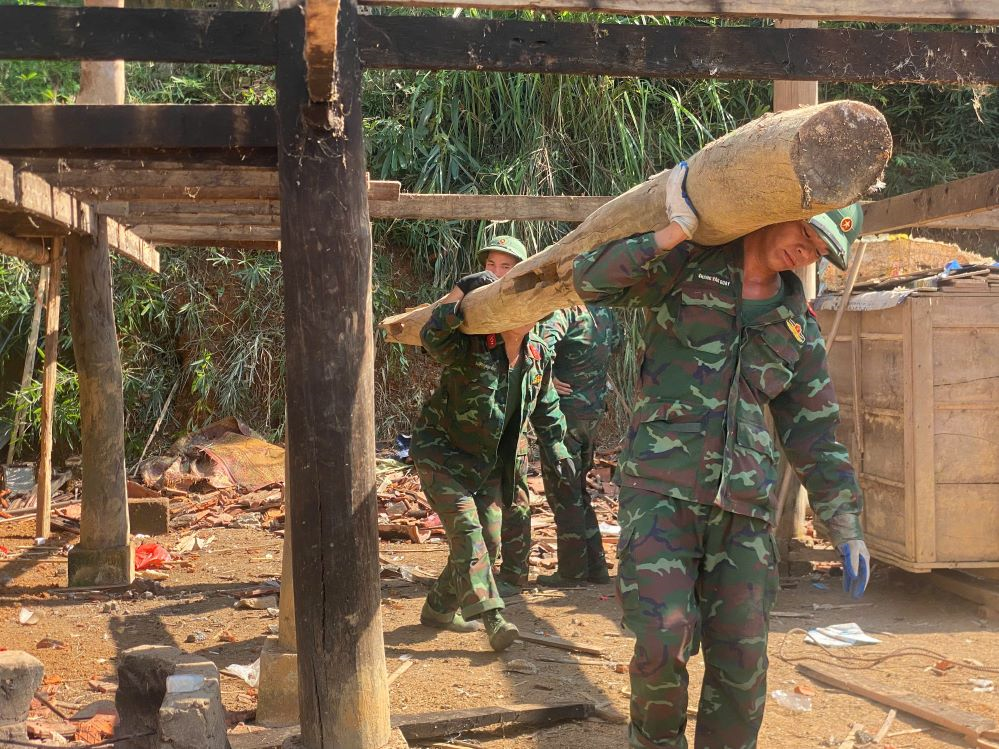 |
| Officers and soldiers of the 316th Division (Military Region 2) help people in Son La rebuild their homes after the historic floods in late July and early August 2025. Photo: VINH PHUC |
Clearly defining disaster prevention, mitigation, and recovery as a combat mission in peacetime, the Central Military Commission, the Ministry of National Defense , the General Staff, and the civil defense steering committees at all levels consistently research, forecast, and assess the situation, promptly issuing documents and directives to guide agencies and units in effectively preventing and responding to natural disasters and incidents, deploying search and rescue operations, and mitigating consequences with the motto "proactive, decisive, prevention and response at the highest level, readiness to respond to the worst-case scenarios"; and effectively promoting the "four on-the-spot" principle.
Party committees and commanders at all levels have consistently done a good job in political education and ideological management, emphasizing the responsibility of officers and soldiers in carrying out combat missions in peacetime; they have prepared forces, equipment, and plans well, coordinating closely with localities in preventing, responding to, and mitigating the consequences of natural disasters and incidents, and handling situations promptly and effectively. In 2025, the Army deployed more than 1 million officers, soldiers, and militia members; nearly 26,000 vehicles; participated in responding to, mitigating the consequences of, and conducting search and rescue operations in nearly 1,800 incidents, rescuing 1,708 people and 130 vehicles; and assisted in relocating more than 325,000 households with nearly 1.2 million people from dangerous areas to safe locations. Information and guidance were provided to nearly 908,000 vehicles carrying almost 4 million people, informing them of the storm and low-pressure system's developments so they could take timely precautions and anchor in safe places.
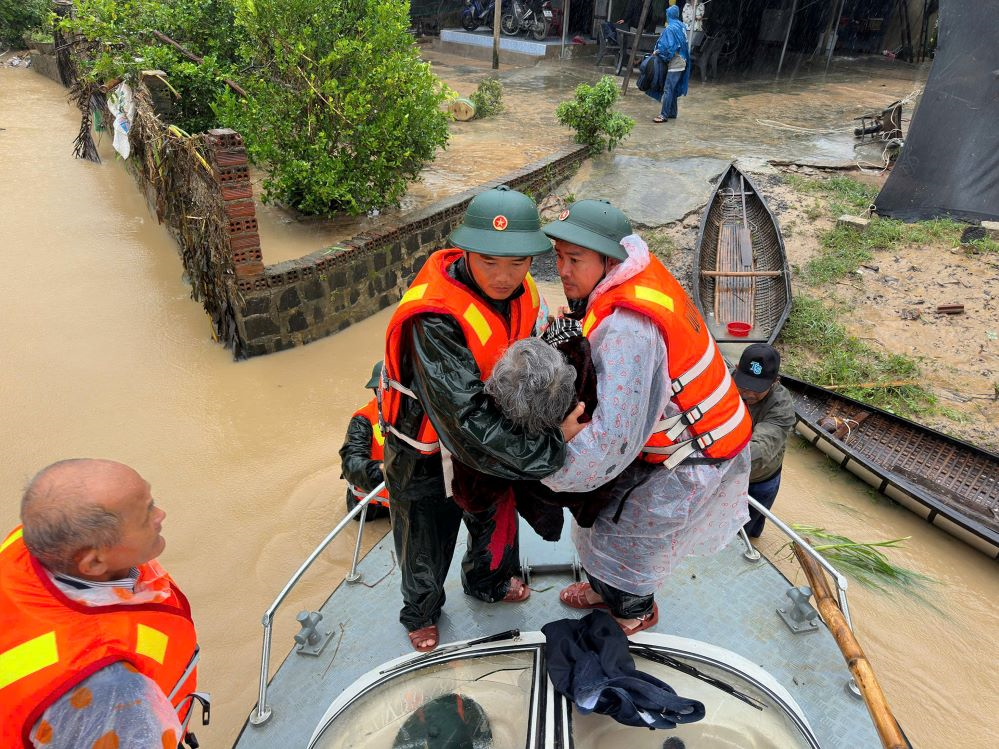 |
| Officers and soldiers of the Dak Lak Provincial Military Command reached isolated areas and promptly rescued people during the historic floods of November 2025. Photo: Hoa Hung |
When the lives and property of the people are threatened, officers and soldiers spare no effort or danger to save, assist, and protect the people. After the storms and floods pass, the army is the last force remaining to help the people overcome the consequences and stabilize their lives. From the rapid assistance to the people of Son La, Dien Bien, and Nghe An provinces in rebuilding their homes after the flash floods and landslides in late July and early August 2025; in recent days, tens of thousands of officers and soldiers have devoted their hearts and efforts to implementing the "Quang Trung Campaign" in Gia Lai, Dak Lak, and Khanh Hoa provinces. Regardless of day or night, rain or shine, the sweat of the soldiers and militia has been poured into rebuilding the homes of the people, imbuing them with the spirit of the military-civilian solidarity.
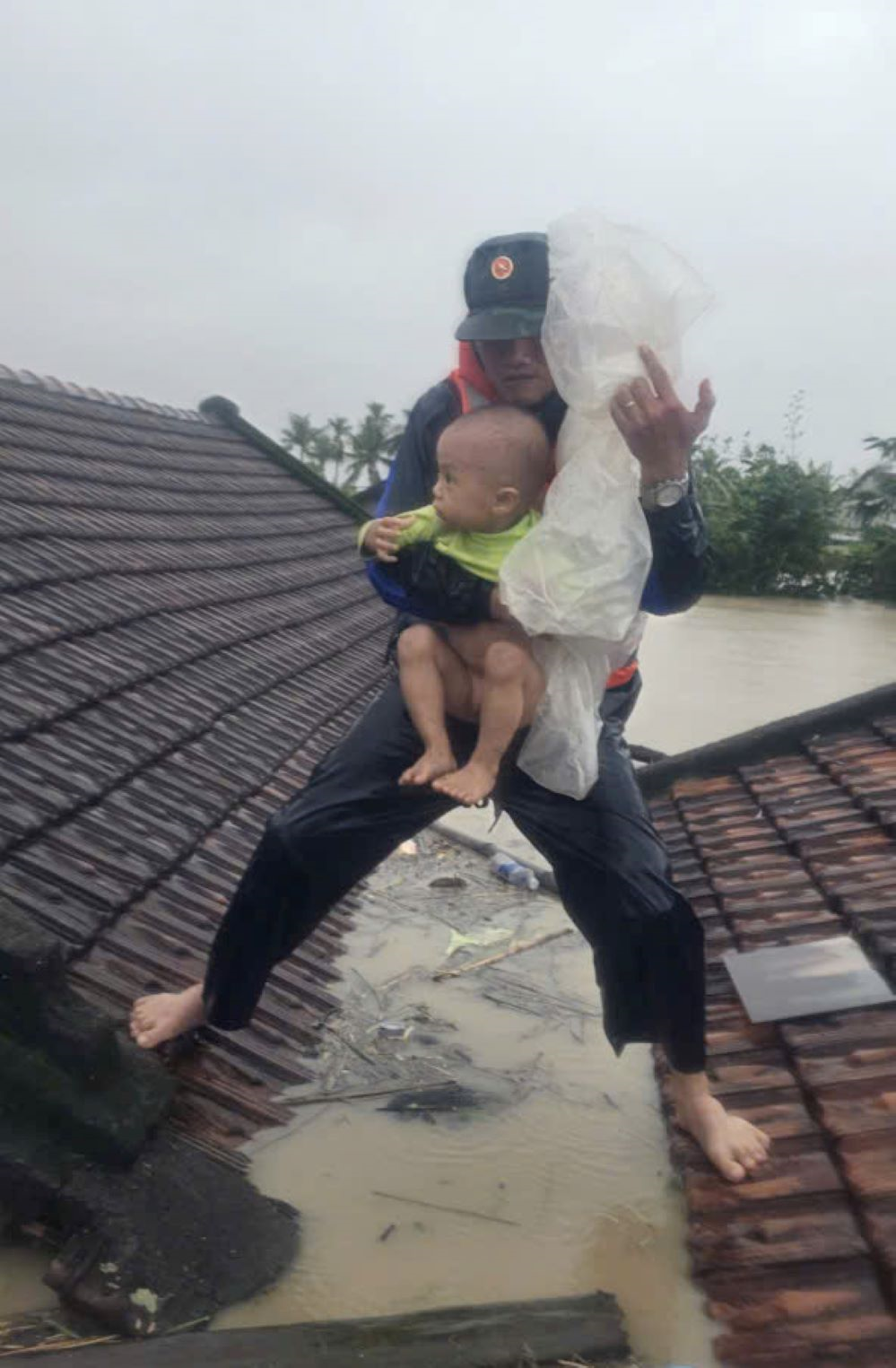 |
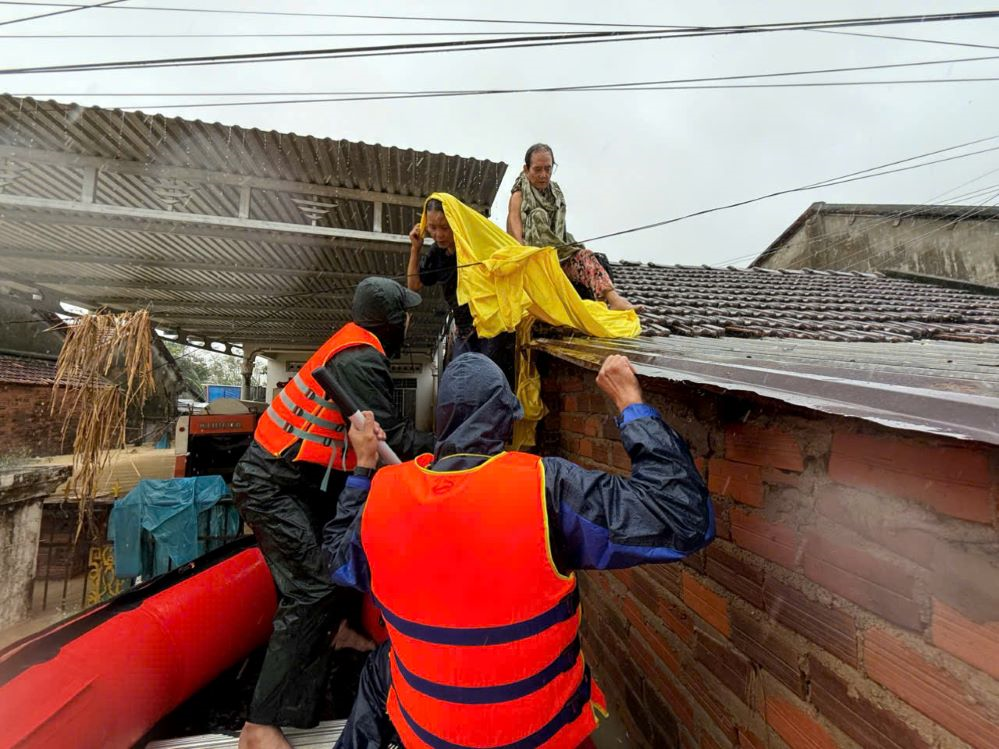 |
| Officers and soldiers of the Dak Lak Provincial Military Command reached isolated areas and promptly rescued people during the historic floods of November 2025. Photo: Hoa Hung |
In particular, during the construction of Phong Chau Bridge (Phu Tho province), the Army, especially Brigade 249 (Engineering Corps) and Army Corps 12, organized "3 shifts," "4 teams," working tirelessly through sun and rain, eating and sleeping quickly to quickly reconnect National Highway 32C to serve socio-economic development and the lives of the people. Speaking at the Phong Chau Bridge inauguration ceremony on September 28th, Prime Minister Pham Minh Chinh affirmed: The construction of Phong Chau Bridge not only exceeded the schedule by several months but also saved 300 billion VND in the budget. The project demonstrated the spirit and will of our Army: a fighting force, a working force, a productive labor force, "completing every task, overcoming every difficulty, and defeating every enemy." In times of hardship and challenge, the qualities of Uncle Ho's soldiers shine even brighter, becoming a solid pillar in the hearts of the people.
Proactive prevention and early, remote response.
In the coming period, weather forecasts predict increasingly complex and unpredictable developments. Based on practical experience in disaster prevention, response, and recovery, agencies and units need to thoroughly understand and strictly implement directives and resolutions from higher authorities regarding disaster prevention, response to incidents and natural disasters, and search and rescue; maintain strict on-call duty at all levels; constantly monitor and keep abreast of the situation, promptly propose and advise on the deployment of forces and resources to respond to and mitigate the consequences of natural disasters and incidents, and conduct search and rescue operations, avoiding passivity and surprise in any situation.
 |
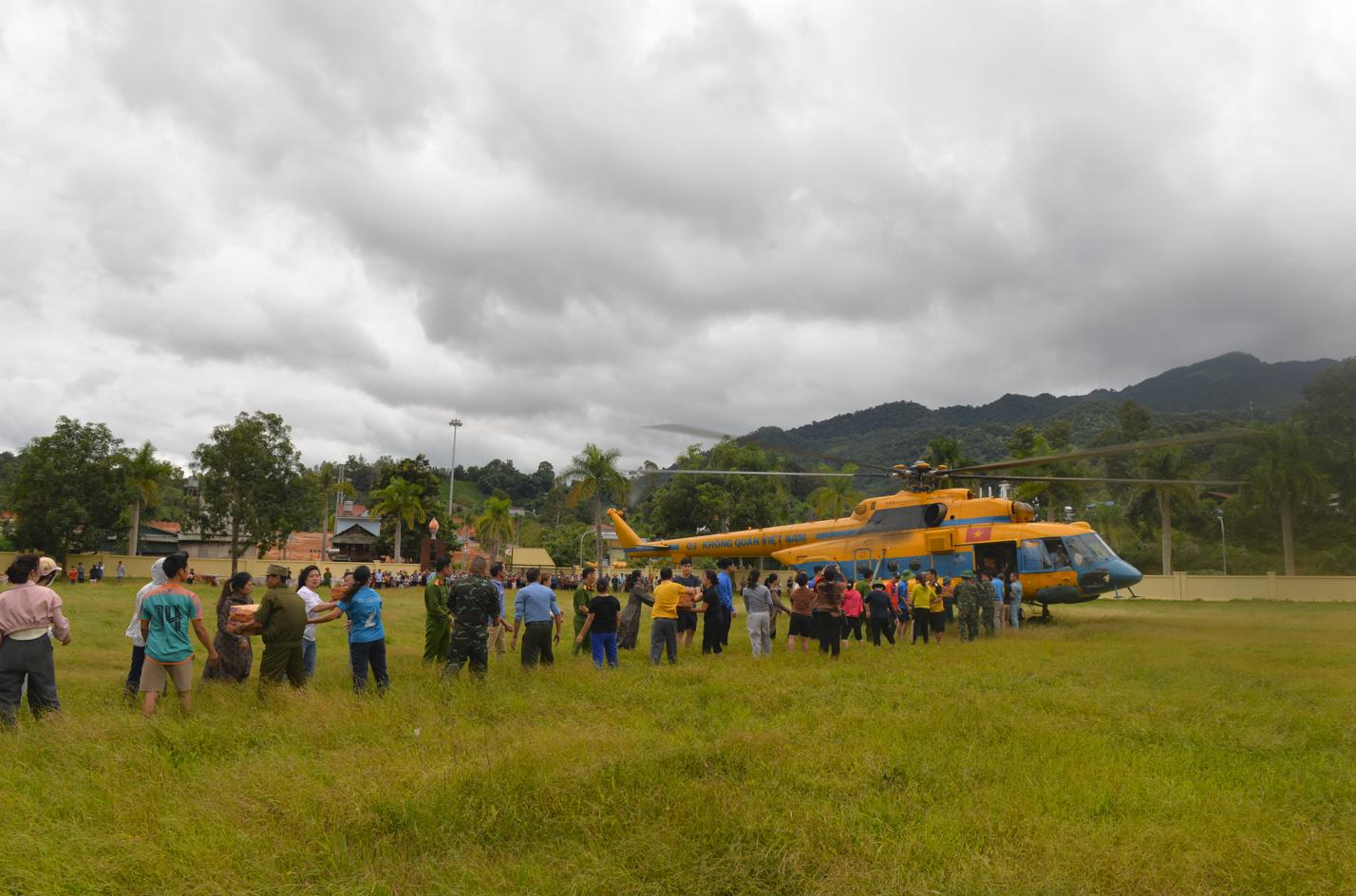 |
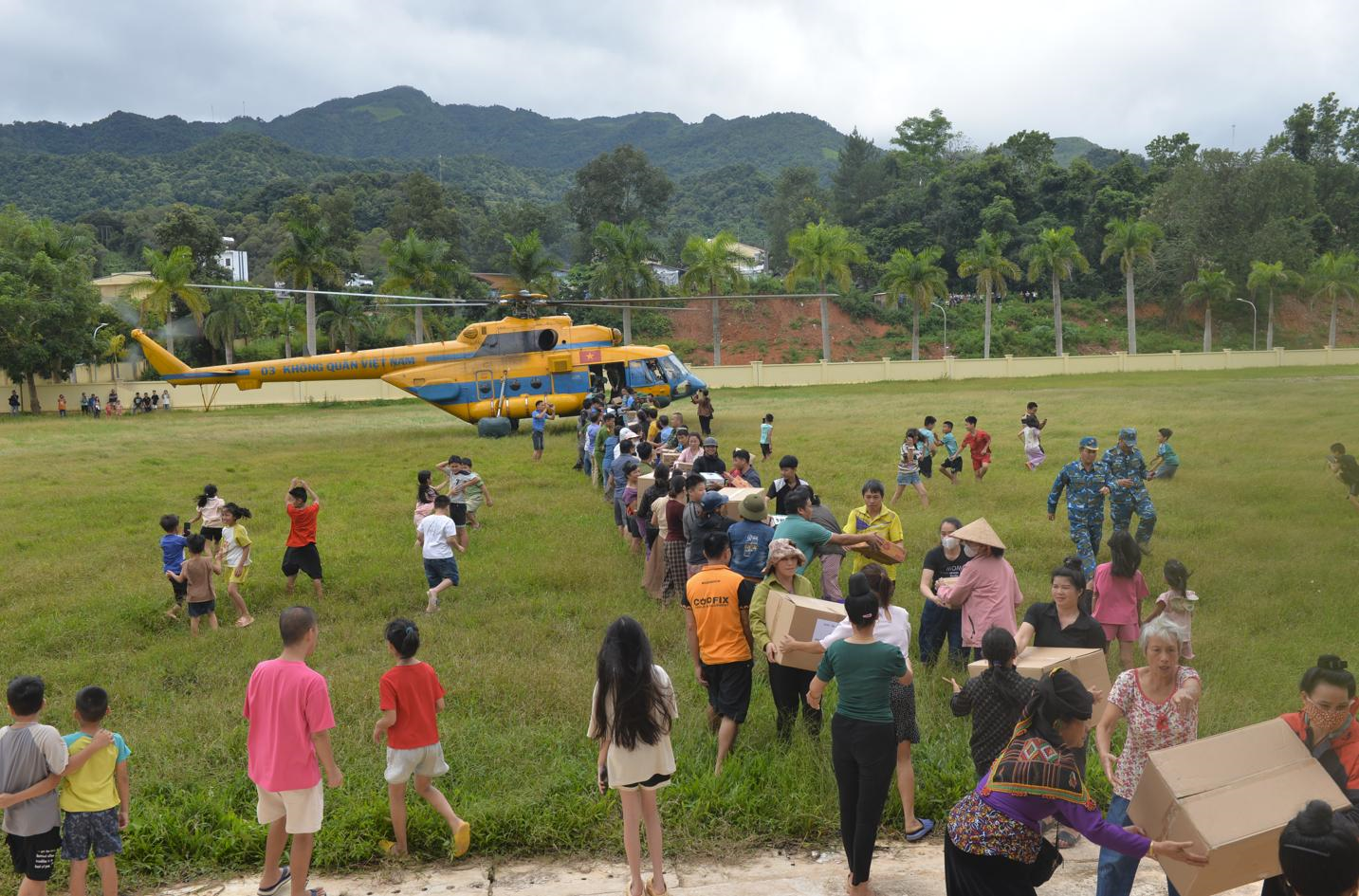
| Helicopters of the 916th Regiment, 371st Division, Air Defense-Air Force Command, transport essential supplies to flood victims in Dien Bien, August 2025. Photo: CHI PHAN |
The disaster prevention and control command at all levels must be strengthened, with strict operating regulations ensuring clear roles, responsibilities, and accountability for agencies, organizations, and units. Along with the effective use of existing forces and resources, it is necessary to research and invest in equipment and ensure communication for disaster prevention and control, search and rescue, and relief operations. Continue to innovate and improve the quality of education, training, and drills. Renovate and upgrade the training grounds for specialized and multi-tasking agencies, units, and forces. Research and develop realistic scenarios, and add new equipment to training and drills, as a basis for perfecting prevention, response, and mitigation plans.
Strengthen information and communication efforts regarding disaster prevention and control activities. Expand international cooperation and enhance drills to respond to natural disasters, epidemics, and incidents. Pay attention to human resource training, promote scientific research and technology transfer; exchange information on forecasting and warning; and build mechanisms for cooperation, humanitarian assistance, and disaster relief. Conduct thorough inspections, reviews, and summaries of disaster prevention and control, epidemic prevention and control, incident response, and search and rescue operations. Before the rainy season, inspect and review key areas and locations to proactively prevent and develop effective response plans. Focus on retraining for those involved in disaster prevention and control and search and rescue operations, ensuring thoroughness and seriousness.
Source: https://www.qdnd.vn/quoc-phong-an-ninh/xay-dung-quan-doi/toan-quan-hoan-thanh-toan-dien-nhiem-vu-nam-2025-bai-5-vung-vang-tran-tuyen-thoi-binh-1016876





















































































Comment (0)