

The study highlights the increasing urbanization of humanity, with 45% of the world's 8.3 billion people now living in cities, up from just 20% in 1950. These numbers provide important information for policymakers as they plan to respond to the growing pressure on infrastructure, resource management and public services in the coming years, according to Newsweek .
Accordingly, the world's largest city is Jakarta - the capital of Indonesia with 41 million people, while Dhaka in Bangladesh is second with 36.5 million people and Tokyo, 34.5 million people, dropped to third place this year. New Delhi, Shanghai, Guangzhou, Cairo, Manila, Kolkata and Seoul are also in the top 10 largest megacities.
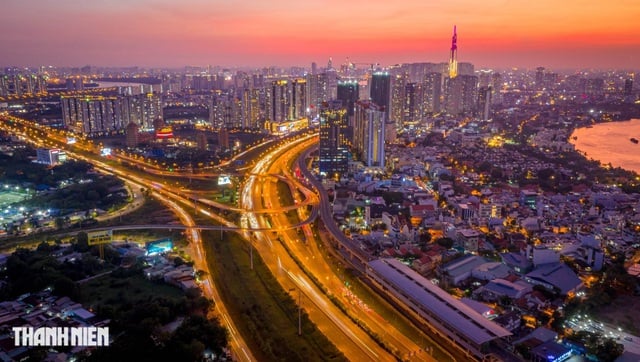
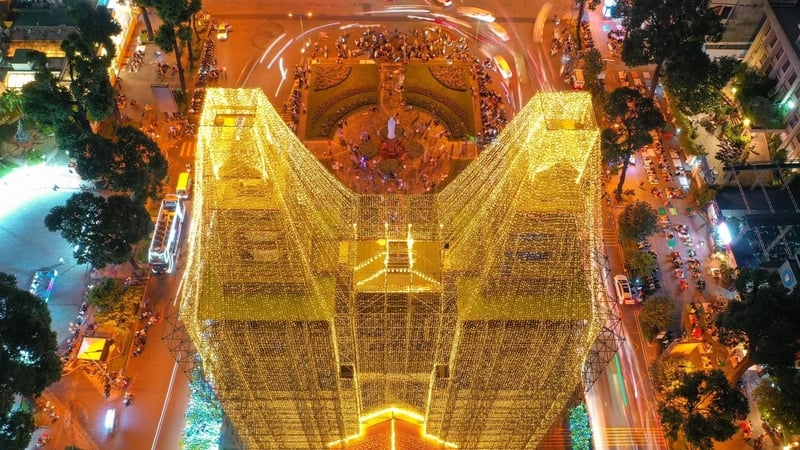
Ho Chi Minh City in the top 20 largest cities in the world by population
PHOTO: BUI VAN HAI
The two largest cities in Vietnam ranked in the list are Ho Chi Minh City at 20th place with 14.053 million people; while Hanoi with 5.068 million people, ranked 81st. In Southeast Asia, besides Jakarta at number 1, there is Manila at 8th place with 24.7 million people; Bangkok at 14th place with 18 million people...
US cities do not make the top 10, with New York ranked 22nd with 13.92 million people, a million more than in 1975, according to the United Nations' definition of a metropolitan area. New York's population is projected to fall to 13.23 million by 2050. Los Angeles ranked 27th, with an estimated 12.74 million people, up from 12 million five decades ago. UN demographers predict America's second-largest city will surpass New York by mid-century, reaching 13.86 million.
These figures are based on the United Nations' own methodology and reflect the population within each city's wider urbanized area, often far beyond the city's official boundaries.
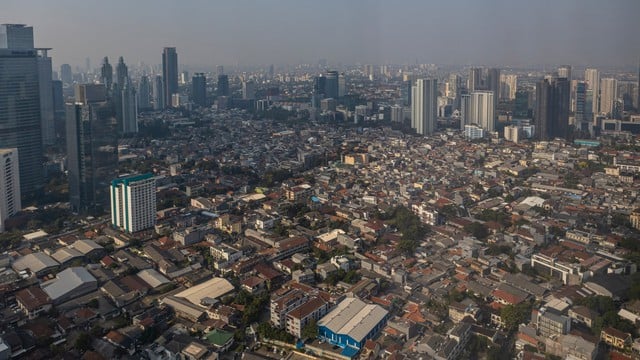
Jakarta's crowded urban area
PHOTO: NYT
“Urbanization is a defining force of our time. When managed holistically and strategically, it can open transformative pathways for climate action, economic growth and social equity. To achieve balanced territorial development, countries must adopt integrated national policies that regulate housing, land use, mobility and public services across urban and rural areas,” said the UN Under-Secretary-General for Economic and Social Affairs.
Source: https://thanhnien.vn/tphcm-va-ha-noi-xep-thu-may-trong-top-100-thanh-pho-lon-nhat-the-gioi-185251205212608514.htm


![[Photo] 60th Anniversary of the Founding of the Vietnam Association of Photographic Artists](/_next/image?url=https%3A%2F%2Fvphoto.vietnam.vn%2Fthumb%2F1200x675%2Fvietnam%2Fresource%2FIMAGE%2F2025%2F12%2F05%2F1764935864512_a1-bnd-0841-9740-jpg.webp&w=3840&q=75)
![[Photo] National Assembly Chairman Tran Thanh Man attends the VinFuture 2025 Award Ceremony](/_next/image?url=https%3A%2F%2Fvphoto.vietnam.vn%2Fthumb%2F1200x675%2Fvietnam%2Fresource%2FIMAGE%2F2025%2F12%2F05%2F1764951162416_2628509768338816493-6995-jpg.webp&w=3840&q=75)














































































Comment (0)