

Proactive measures to prevent and mitigate storm damage.
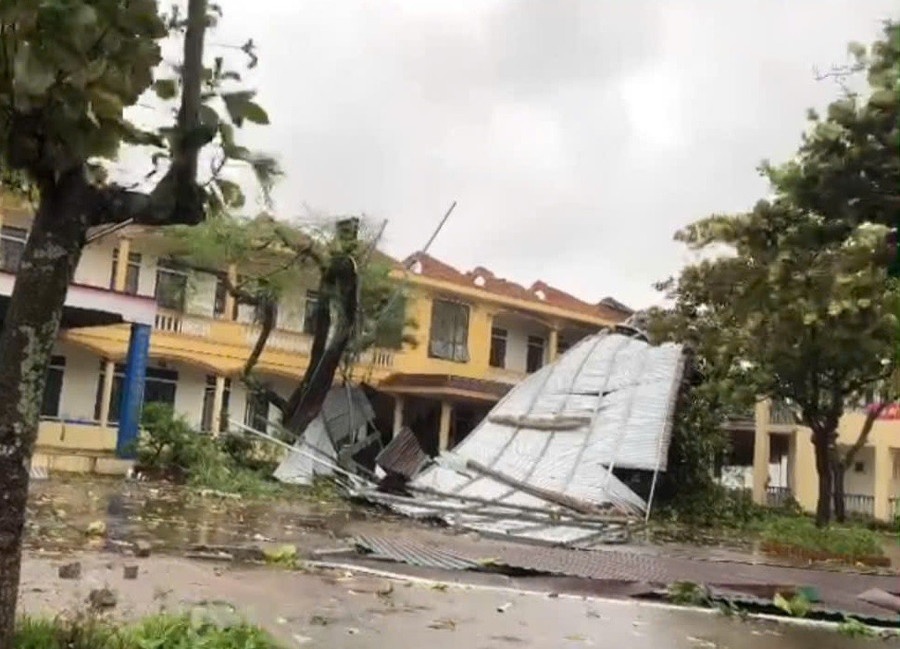
On the afternoon of August 25th, as Typhoon Kajiki approached the mainland, several schools were severely affected. At Dinh Ban Primary School, campus 2 (Thach Khe commune, Ha Tinh province), the entire roof of the second floor of the two-story building with eight classrooms was blown away by the wind. According to local leaders, the school and teachers had proactively reinforced the corrugated iron roof and trimmed trees beforehand. However, the wind was too strong, and the corrugated iron roof could not withstand the force. Fortunately, all documents and equipment were moved in time, so the damage was significantly reduced.
Prior to the forecast of the complex development of Typhoon Kajiki, the Ha Tinh Education Department and schools simultaneously activated response plans, focusing on reinforcing facilities, relocating assets, and preparing to ensure the safety of students and teachers before the start of the new school year.
In a state of urgency, Cam Nhuong Secondary School (Thien Cam commune) mobilized all available teachers and staff to move files, documents, machinery, and teaching equipment from the first floor to the second floor to avoid flooding. Trees around the schoolyard were trimmed and cleared to minimize the risk of falling in strong winds. The school also assigned personnel to be on duty 24/7 to promptly respond to Typhoon Kajiri.
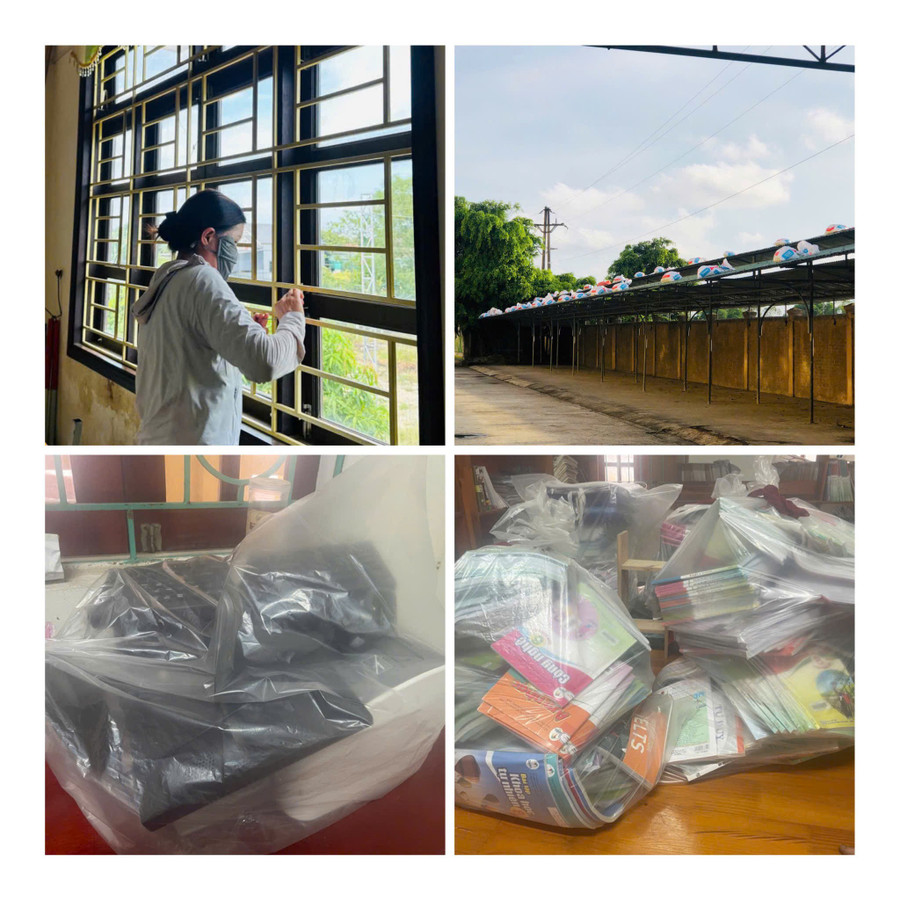
Located in a coastal area, Nguyen Dinh Lien High School (Yen Hoa commune, Ha Tinh province) also proactively implemented measures to respond to the storm. “For school records, books, and teaching materials, we wrapped them in multiple layers of plastic bags before moving them to sturdy, safe classrooms. We reinforced classroom windows with wooden planks and placed sandbags on roofs at risk of being blown off,” shared Principal Hoang Quoc Quyet.
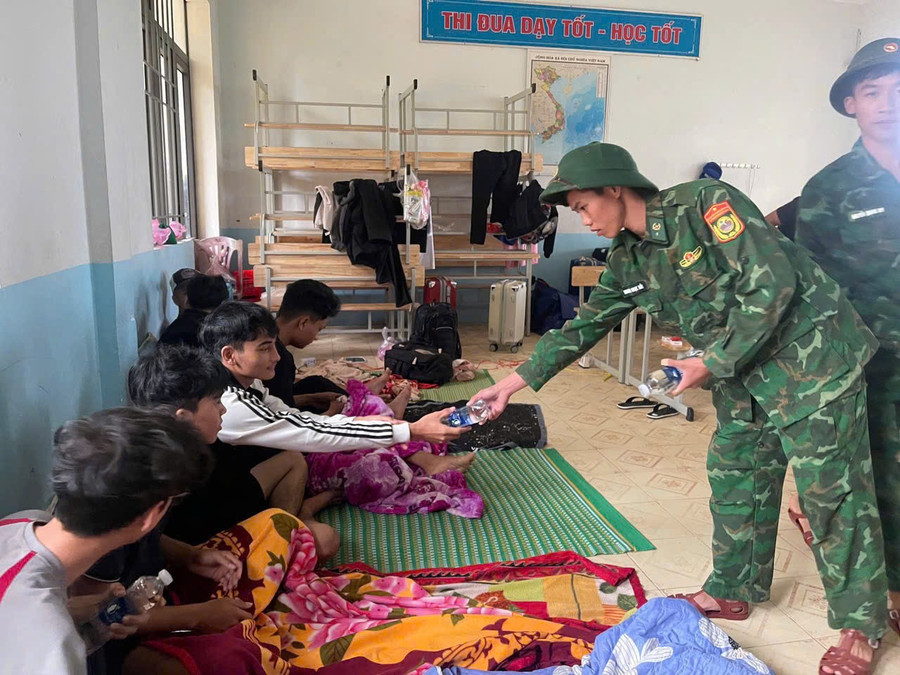
Having grasped information about Typhoon Kajiki's potential impact on the mainland, schools in Quang Tri province proactively implemented storm prevention and response plans. At Cua Tung Kindergarten (Cua Tung commune, Quang Tri), teachers, with the support of officers and soldiers from the Cua Tung Border Guard Post (Quang Tri Border Guard Command), reinforced and secured classroom roofs and protected property safely before the storm.
Dong Le Primary School (Nam Dong Ha ward) also mobilized teachers to move teaching materials to higher ground to avoid damage from flooding. At the same time, they secured doors to limit drafts and prevent damage; and trimmed trees to prevent them from falling and damaging buildings.
The Quang Tri Department of Education and Training requires heads of units and schools to strictly implement storm prevention measures to ensure absolute safety for students, teachers, and staff.
Preschool children, students, and trainees are notified to stay home from the morning of August 25th until the weather returns to normal. Proactive measures should be taken to reinforce classrooms and windows; teaching equipment, records, and documents should be stored in safe locations. Staff, teachers, and employees should be on duty 24/7 to respond promptly to any emergencies.
Four on-site response measures for floods and heavy rains.
At Son Hong Primary and Secondary School (Son Hong commune, Ha Tinh province), the old trees in the school grounds have been trimmed and securely braced; the corrugated iron roofs of the classrooms have been reinforced with additional bracing; and the glass and wooden doors are all tightly closed and carefully locked. This is a border school, nestled in a valley, year-round affected by strong winds, especially in the summer when gusts can tear off the roof. More worryingly, a rainfall of just 500-600 mm poses a significant risk of flash floods.
The school administration has coordinated with local authorities to review areas at risk of landslides, especially near residential areas where students live. A map clearly delineates vulnerable locations so that in the event of an emergency, local forces can evacuate and provide immediate assistance.
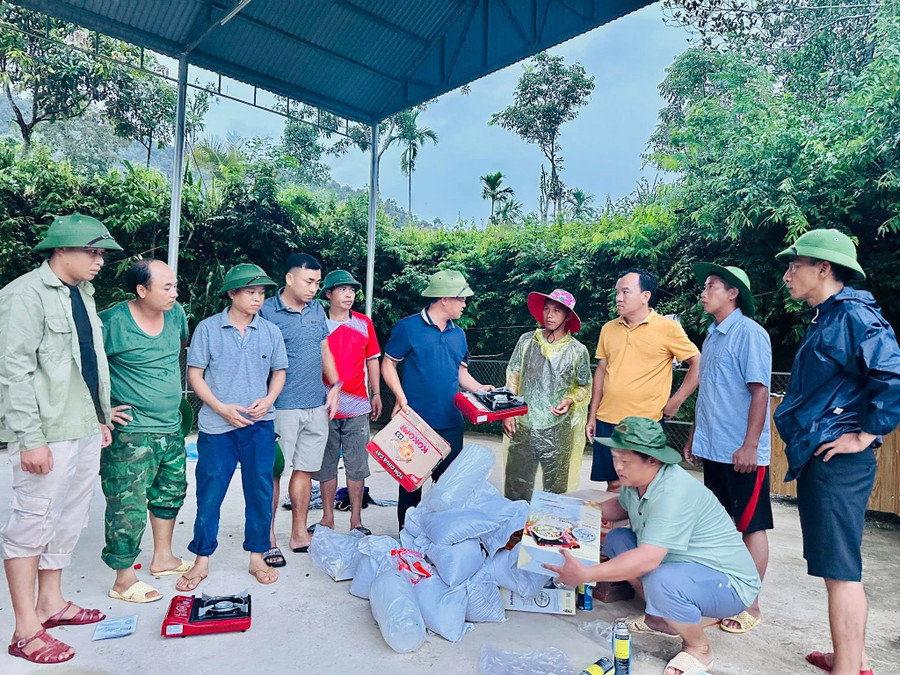
The school and local authorities also requested parents to sign a commitment to cooperate in managing and ensuring the safety of their children during the school closure due to the storm. “Students are our number one priority. Every teacher considers protecting the safety of the students as protecting their own children. We are committed to the ‘four on-site’ principle to avoid being caught off guard in any situation,” affirmed Mr. Nguyen Duc Dan, the school principal.
In mountainous communes of Thanh Hoa province such as Trung Ly, Giao An, Hoa Quy, etc., many schools located in low-lying areas or along rivers and streams have been partially isolated due to prolonged heavy rain.
Mr. Nguyen Dinh Chinh, Principal of Xuan Quy Primary and Secondary School (Hoa Quy commune, Thanh Hoa province), said: "As soon as a high-level storm warning was issued, the school developed a response plan to ensure the safety of students, teachers, and the school's property."
"We maintain a 24/7 storm monitoring system, closely tracking weather developments through official channels and maintaining regular contact within the Steering Committee for Disaster Prevention and Control to promptly handle any emerging situations. After the storm subsides, the school will organize an assessment of the damage, conduct a thorough cleanup, remove fallen trees, and quickly restore learning conditions for students."
At Giao Thien Secondary School (Giao An commune), Principal Trinh Quoc Viet said: “We strictly implement the ‘four on-site’ principle, which includes on-site command, on-site forces, on-site equipment, and on-site logistics. All teachers and staff have inspected and reinforced the electrical system, roofs, and trees in the school grounds, and moved teaching equipment to higher ground.”
In addition, the school collaborates with local authorities and the commune's health station to provide training on disaster prevention and response skills for its staff and teachers. The school's rescue team is assigned specific tasks, such as closing classrooms, evacuating equipment, providing first aid to the injured, and coordinating the transportation of victims to the nearest medical facility.
Schools share community responsibility.
Nhon Mai Ethnic Boarding Junior High School (Nhon Mai commune, Nghe An province) had its facilities ready and planned to open for school and welcome over 200 students from remote villages for boarding from August 25th. However, this plan has been adjusted.
Principal Nguyen Ngoc Tan stated: “Due to the unique characteristics of this mountainous commune, only two villages in the central area are easily accessible to the school. The remaining ten villages have to travel through hills, mountains, rivers, and streams to reach the school, posing many risks during heavy rains. In the current context, ensuring the safety of our students is the school's top priority.”
Along with postponing the start of the school year, the school administration sent an urgent notice to students' families and local residents informing them that they have prepared accommodation, kitchens, and other facilities to safely welcome people seeking shelter from the storm. They requested that those included in the evacuation plan quickly make arrangements and move to the school, and absolutely not stay at home during heavy rain or when there is a risk of flooding or landslides, in order to ensure the safety of lives and property.
"Our school is located on relatively high ground, making it quite safe to serve as an evacuation center for people in landslide-prone areas. The school always stands by and serves the people during difficult times," affirmed the Principal of Nhon Mai Ethnic Boarding Junior High School.
Similarly, Chiêu Lưu 1 Ethnic Boarding Primary School (Chiêu Lưu commune, Nghệ An province) is preparing to serve as a shelter for local residents in case of danger from floods. Previously, due to the impact of Typhoon Wipha, many families of students in the villages were flooded and affected by landslides. The school was used by the local authorities as an emergency evacuation center for the people. After the floodwaters receded, the school also welcomed and provided accommodation for soldiers and charitable groups who came to help the people overcome the consequences of the disaster.
Located in a coastal area, Hai Hoa Secondary School (Cua Lo Ward, Nghe An Province) has reinforced its facilities, protected its assets, and prepared to welcome local residents as shelters in case of strong winds or storms.
In Trung Ly commune, a border area in Thanh Hoa province, 15 villages are located in high-risk zones for flash floods and landslides. Mr. Ngan Van Lon, Vice Chairman of the commune's People's Committee, stated: "When natural disasters occur, households in these dangerous areas will be evacuated to schools, community centers, or other safe locations."
The commune's Disaster Prevention and Control Steering Committee mobilized police, militia, medical personnel, and youth volunteers, along with all necessary rescue equipment and supplies, to be ready for response efforts. Schools in the area developed disaster prevention plans, organized evacuation drills, and were prepared to adjust teaching schedules if necessary.
The Department of Education and Training of Ha Tinh province has issued a directive instructing educational institutions to proactively allow students to take time off from school to respond to the storm. On the morning of August 25th, 67,000 students in grades 1, 9, and 12 in Ha Tinh were given time off from school until the end of Tuesday (August 26th). Schools will issue further announcements depending on weather developments. At the same time, educational institutions need to strengthen the dissemination of disaster risk prevention skills to students and parents.
Source: https://giaoducthoidai.vn/truong-hoc-mien-trung-chu-dong-ung-pho-giam-thieu-thiet-hai-do-bao-post745800.html



















![[Photo] Prime Minister Pham Minh Chinh holds a phone call with the CEO of Russia's Rosatom Corporation.](/_next/image?url=https%3A%2F%2Fvphoto.vietnam.vn%2Fthumb%2F1200x675%2Fvietnam%2Fresource%2FIMAGE%2F2025%2F12%2F11%2F1765464552365_dsc-5295-jpg.webp&w=3840&q=75)













































Comment (0)