

Program standardization, quality control
On the morning of December 12th, a conference was held at Ho Chi Minh City University of Law to review the implementation of the program to strengthen control and improve the quality of undergraduate law training.
Deputy Minister of Education and Training Nguyen Van Phuc emphasized that the issuance of training program standards is a crucial step in improving the quality of legal human resources.
According to Deputy Minister Phuc, the Ministry of Education and Training will issue common standards for all disciplines, with the Law discipline having a higher standard, and will also finalize the system of training program standards to be applied uniformly nationwide.
The Deputy Minister stated that there is a huge societal demand for legal professionals, with a small proportion working in government agencies and the majority in the private sector.
This requires training programs to be substantive, well-structured, and meet the specific demands of the profession.
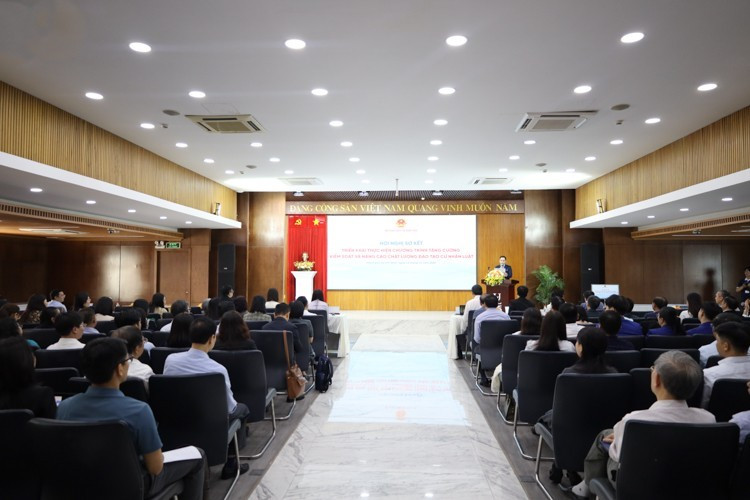
Over the past period, the Ministry of Education and Training has implemented many institutional solutions to improve the quality of legal education, while also directing schools to cooperate in developing curriculum standards.
The Ministry is also building a shared data system among training institutions. Currently, there are nearly 100 universities nationwide offering bachelor's degree programs in law, some of which have proactively reformed, strengthened their faculty, and standardized their curriculum content.
However, Deputy Minister Phuc also pointed out limitations such as some training institutions not meeting the requirements for teaching staff; lack of practical experience; weak scientific research activities; inconsistent quality accreditation; and a shortage of learning materials and textbooks in many places.
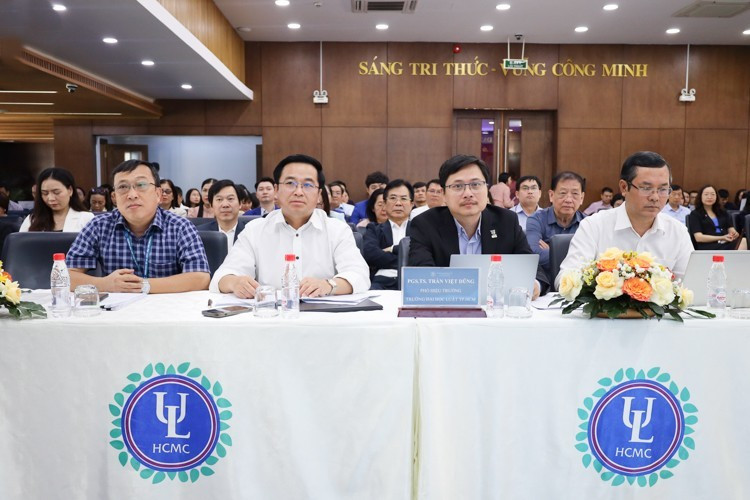
Deputy Minister Phuc emphasized that these are issues that schools need to continue to address in the future.
"The Ministry of Education and Training will continue to improve the institutional framework, legal documents, and concretize sub-legal documents. During the consultation process, the Ministry of Education and Training hopes that training institutions will provide responsible feedback to ensure that the documents are practical and feasible."
"The new training program standards will be applied to undergraduate, master's, and doctoral levels, meeting both societal needs and ensuring quality," Deputy Minister Nguyen Van Phuc said.
The Deputy Minister further noted that setting standards too high would be impractical, but setting them too low would not guarantee quality; therefore, it is necessary to establish reasonable standards.
Besides formal training, other forms of training such as continuing education and distance learning are also on a large scale.
The Ministry of Education and Training requires strict quality control, especially for distance learning, to both meet societal needs and ensure output standards.
The Deputy Minister also mentioned the need to strengthen cooperation in scientific research, especially at the doctoral level in Law, and emphasized the need to clearly define the requirements for international publications for doctoral students.
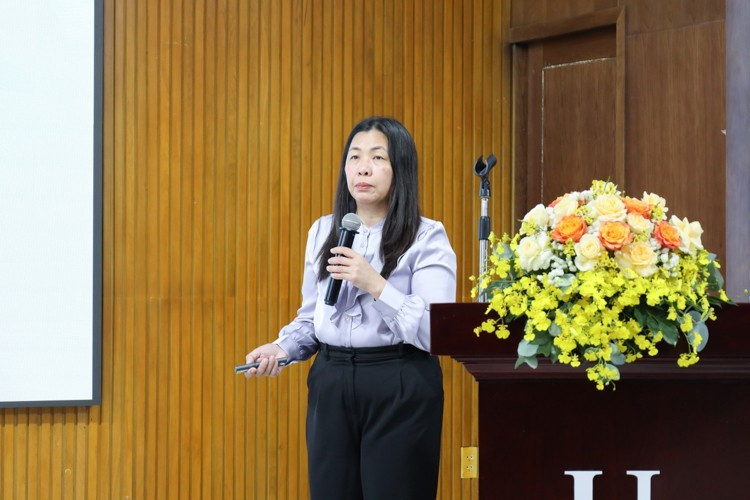
Ms. Nguyen Thi Thu Thuy, Deputy Director of the Higher Education Department (Ministry of Education and Training), stated that the implementation of Program 1056 aims to create a comprehensive legal framework to ensure the quality of Bachelor of Law training, overcoming the situation of quality differentiation and lack of connection with the labor market.
The goal by 2030 is for 100% of training institutions to meet program standards; significantly increase practical skills; improve learning materials, simulation rooms, and mock trial systems; enhance the teaching staff; and promote international integration.
Ms. Thuy also noted several systemic limitations that are directly affecting the quality of law degree training.
In particular, the teaching staff remains a major bottleneck due to weak scientific research activities, very few international publications; limited practical experience; and in some places, full-time lecturers are used to "open new departments" but do not directly teach, or lecturers are overloaded with too many courses.
These limitations make it difficult for many training institutions to meet staffing standards and risk having their enrollment suspended or their programs closed.
According to Ms. Thuy, the cause stems from both objective and subjective factors.
Objectively speaking, the number of law training institutions has increased rapidly over the past 20 years, causing the rate of expansion to exceed the capacity for quality control.
Furthermore, the legal framework has not kept pace with the development of new technologies such as AI, blockchain, and digital intellectual property, making it difficult for schools to update programs or develop new courses.
The gap between legal training and practice also makes it difficult for students to fully meet the requirements of courts, prosecutors, lawyers, notaries, or legal consulting services.
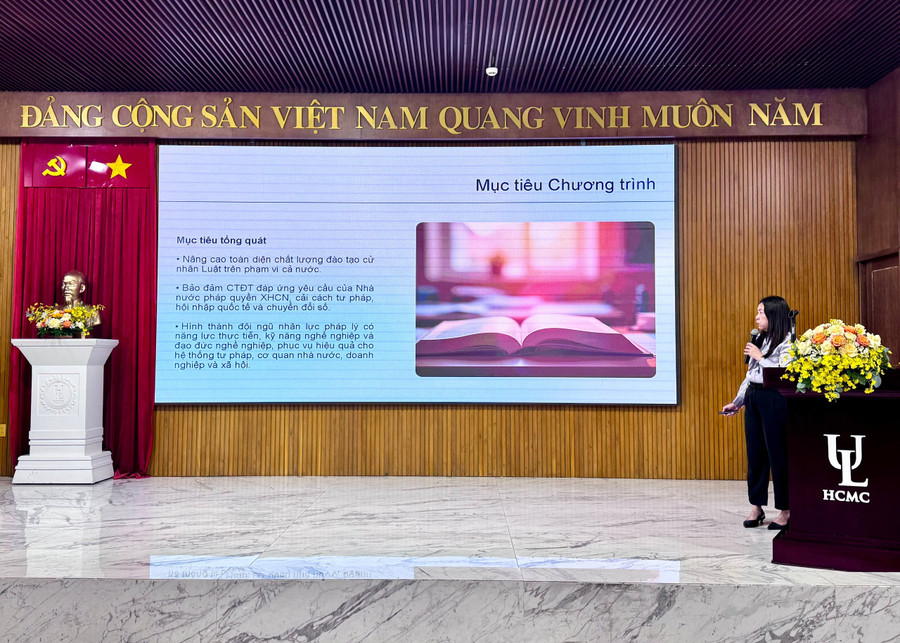
Subjectively, many training institutions have not invested adequately in their teaching staff, failing to meet standards in terms of structure, quality, scientific research, and international publications.
The lack of links with professional practice leads to students having fewer opportunities for practical experience, while the shortage of interdisciplinary law-technology faculty slows down the development of law courses in the context of digital transformation.
Furthermore, the infrastructure is not standardized; many schools lack sufficient funding for mock-up rooms, digital learning materials, or international databases, leading to significant disparities between regions.
Based on these analyses, Ms. Thuy suggested that ministries, departments, and localities strengthen state management of all law training institutions in their areas; conduct periodic surveys of legal workforce needs and provide data to the training network; and coordinate between the Department of Education and Training, the Department of Justice, the Department of Home Affairs, and schools in monitoring employment and evaluating the quality of human resources after graduation.
At the same time, localities need to provide stronger support for practical training and internships within the judicial system and promote career guidance communication in high schools to raise students' awareness of the legal profession and actual recruitment needs.
Promote workforce standardization.
In his presentation at the conference, Associate Professor Tran Viet Dung, Vice Rector of Ho Chi Minh City University of Law, stated that the university is strongly implementing a strategy to improve the quality of its faculty and enhance the quality control of teaching.
One of the major focuses is training and developing a highly qualified faculty.
During the period 2020-2025, the university sent many lecturers to pursue doctoral studies in Switzerland, Hungary, France, Finland, and the Czech Republic; currently, there are 19 doctoral students studying domestically.
The university is also negotiating and developing co-supervision doctoral programs with partners in the UK, Estonia, Hungary, and New Zealand.
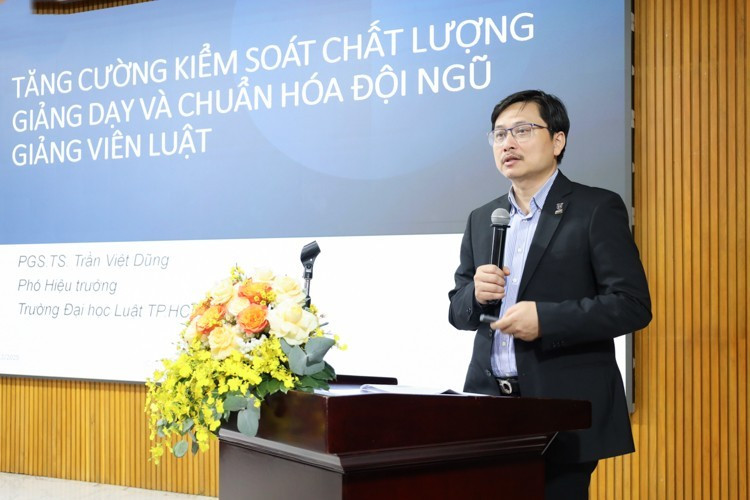
To enhance pedagogical competence, the school regularly organizes training courses on teaching skills, quality assurance knowledge, and professional qualification standards.
By 2025, the university will have 25 lecturers trained to become higher education accreditation officers and 31 lecturers trained to meet professional title standards.
Simultaneously, the school focuses on fostering technological skills, building habits of using AI in teaching, organizing training courses on AI, digital economy, e-commerce, and competitions for innovative AI applications in management and teaching.
In terms of practical training, the school also connects with large businesses such as Coca-Cola, FPT Telecom, HSC, and CT Group to provide students with a rich practical environment.
In addition, mock trials are held regularly, and the school has developed a legal practice center to support students in honing their professional skills.
Associate Professor Tran Viet Dung affirmed that these activities aim to meet the increasingly high demands on law lecturers, promote scientific research, enhance integration capabilities, and strengthen practical skills for students.
This contributes to the overall goals of Program 1056 and the process of standardizing legal training nationwide.
Source: https://giaoducthoidai.vn/nang-chuan-dao-tao-cu-nhan-luat-post760229.html


![[Photo] Prime Minister Pham Minh Chinh holds a phone call with the CEO of Russia's Rosatom Corporation.](/_next/image?url=https%3A%2F%2Fvphoto.vietnam.vn%2Fthumb%2F1200x675%2Fvietnam%2Fresource%2FIMAGE%2F2025%2F12%2F11%2F1765464552365_dsc-5295-jpg.webp&w=3840&q=75)















































































Comment (0)