

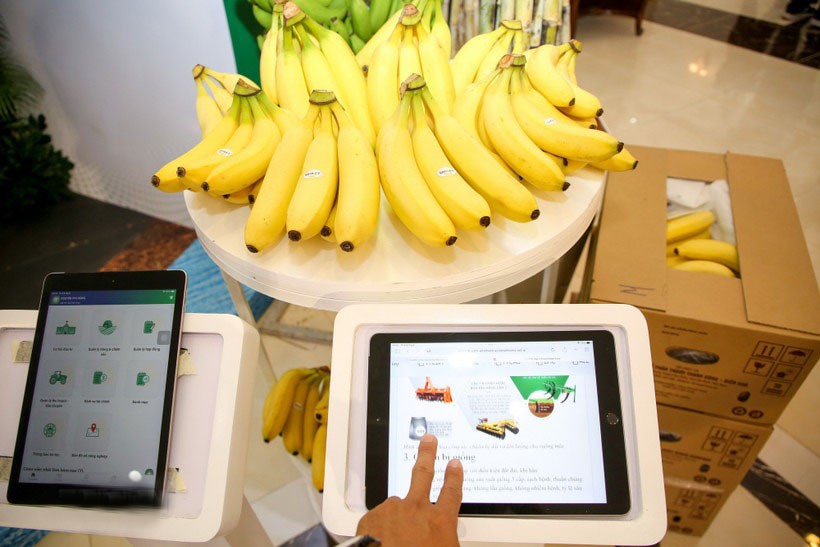
In the context of booming digital commerce, traceability is seen as a "passport" for Vietnamese goods to go further.
But the problem of system standardization and data authentication is still a bottleneck that makes it difficult for businesses to fully exploit the benefits.
Advanced technologies such as Blockchain, Internet of Things (IoT), RFID, big data and QR codes not only digitize product information but also turn each product into a “quality passport” that allows customers, distributors and regulators to track the entire journey from raw materials to consumers.
When each product carries a “digital passport,” businesses not only provide information, but also convey trust, a factor that the digital market today values more than price.
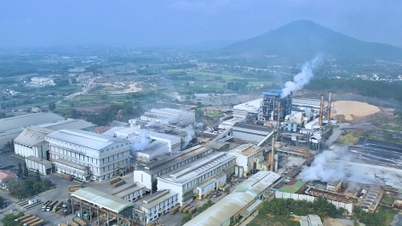
Ms. Nguyen Thi Tinh, General Director of Vietnam Food Industry Joint Stock Company (Vifon) said that Vifon has a separate department specializing in product quality management.
This team performs regular work, always coordinating with units in the company and production workshops to trace the origin of both domestic and export products.
“In order to bring good products to the market, tracing the origin from raw materials to finished products is extremely important to ensure the health of consumers. Therefore, each company needs to be proactive in developing a plan to trace the origin of food, especially when there are currently many fake and poor quality products on the market,” Ms. Nguyen Thi Tinh expressed.
In Dak Lak , agricultural businesses have seen clear results by attaching QR codes to durian, coffee or pepper.
Mr. Le Anh Trung, Chairman of Dak Lak Durian Association, emphasized that in the current context of globalization, traceability is not only a legal requirement but also opens up great opportunities for producers and exporters.
“Consumers are increasingly smart and tend to choose products with clear origins. Proving origin is the key to opening the door to success. This not only enhances brand value but also strengthens relationships with customers, creating favorable conditions for exporting agricultural products to foreign markets,” said Mr. Le Anh Trung.
Thus, traceability is not only an internal or legal requirement, but also a strategic competitive advantage in international trade. Products with transparent origins become "ambassadors" of Vietnamese brands to the world .
According to Ms. Tran Thanh Binh, Head of the Department of Goods Origin - Import-Export Department ( Ministry of Industry and Trade ), Vietnam is currently participating in 19 Free Trade Agreements (FTAs); of which 17 FTAs have come into effect and 2 new FTAs are under negotiation.
To take full advantage of tariff incentives, businesses must fully comply with regulations on origin and traceability of goods, which is considered a "passport" for Vietnamese products to reach out globally.
Notably, the management of goods is divided into two areas: domestic circulation, focusing on identification and traceability, and import and export, requiring identification of origin. These two areas are closely coordinated to both protect domestic consumers and ensure compliance with international commitments.
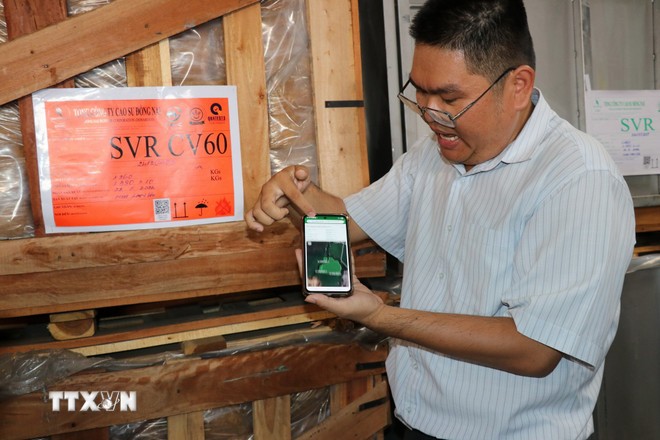
From that perspective, traceability is not just a technical solution, but also a modern governance place where data, legality and responsibility meet.
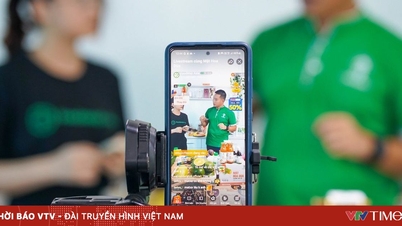
Mr. Nguyen Van Thanh, Head of Policy Department, Department of E-commerce and Digital Economy (Ministry of Industry and Trade) said that Vietnam is the third fastest growing e-commerce market in Southeast Asia, after Indonesia and Thailand.
In 2023, online retail e-commerce revenue will reach about 20.5 billion USD, in 2024 it will be 25 billion USD and is expected to reach 31.5 billion USD in 2025, equivalent to an average growth rate of 25.5%/year.
However, according to Mr. Nguyen Van Thanh, the biggest bottleneck today is the lack of a system to guarantee information on goods.
Consumers see QR codes, but are not sure that the data is authentic; legitimate businesses are unfairly outcompeted by inferior products. Therefore, traceability is not just a technical tool but the ethical foundation of e-commerce.
Therefore, the core solution is to build a unified national traceability system. Currently, each ministry, sector, locality, and even enterprise has its own system; different criteria and data formats, making data uninteroperable, "each doing their own thing."
Some businesses create their own tracking codes without independent verification. When disputes arise, regulators have no basis to compare information, consumers suffer, and market trust is eroded.
Therefore, it is necessary to connect data with the identification database of the Ministry of Public Security and the industry management systems of the Ministry of Industry and Trade so that all transactions and products are associated with a real legal entity.
At that time, sellers cannot remain anonymous, buyers cannot be deceived and management agencies can check and handle violations accurately and quickly.
“This is not only a technical solution, but also a strategic step to build a culture of trust in the digital environment, a prerequisite for a green, transparent and sustainable e-commerce development,” Mr. Nguyen Van Thanh affirmed.
In the context of the Government promoting the development of the digital economy, establishing a unified traceability system on a national scale has become a key step, ending the situation of fragmentation and lack of data connection between ministries, branches and localities.
When data becomes the common language, e-commerce will not only develop rapidly but also become more transparent, fair and responsible. This is the foundation for Vietnamese products to confidently integrate into the global market, while enhancing the reputation of businesses in the eyes of consumers and international partners./.
Source: https://baolaocai.vn/truy-xuat-nguon-goc-san-pham-viet-van-ket-o-nen-du-lieu-post888164.html


![[Photo] Cat Ba - Green island paradise](/_next/image?url=https%3A%2F%2Fvphoto.vietnam.vn%2Fthumb%2F1200x675%2Fvietnam%2Fresource%2FIMAGE%2F2025%2F12%2F04%2F1764821844074_ndo_br_1-dcbthienduongxanh638-jpg.webp&w=3840&q=75)






















































































Comment (0)