

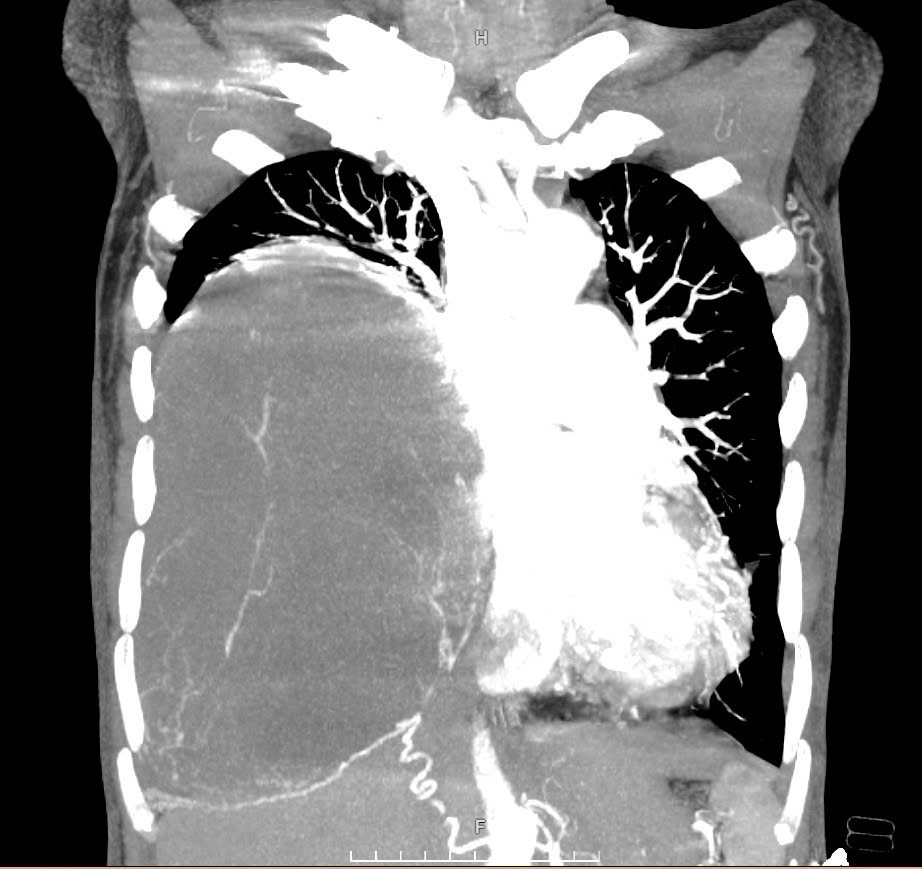
Image showing a tumor occupying the entire chest cavity of the patient - Photo: Provided by the hospital
On September 30th, Hanoi Oncology Hospital announced the successful removal of a tumor measuring up to 20cm, occupying almost the entire chest cavity. It is known that the patient had discovered the tumor a year ago but refused surgery.
Ms. L. (64 years old, from Thai Nguyen ) said that the reason she didn't have surgery a year ago was because the tumor was small and didn't cause any discomfort. Recently, she experienced progressively worsening shortness of breath but hesitated to see a doctor. Only when her health deteriorated significantly and she lost 5kg did she finally go to the hospital.
A CT scan performed at Hanoi Oncology Hospital revealed a solid mass measuring 20cm x 15cm in the right chest cavity compressing the lung and infiltrating the mediastinum and chest wall. A biopsy of the tumor was performed, and the pathology results confirmed it to be a solitary fibroid tumor.
The patient was subsequently scheduled for surgery to treat the tumor; however, the surgical prognosis was difficult due to the patient's frailty, the large size of the tumor occupying almost the entire chest cavity, and the presence of numerous neovascularizations.
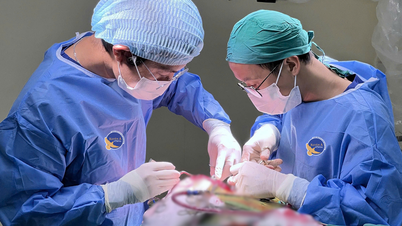
Dr. Phan Le Thang, head of the elective surgery department at Hanoi Oncology Hospital, said the surgical team had to carefully consult and plan before the operation because the surgical procedures had to be performed in an extremely cramped operating room.
Because the tumor is highly vascularized, the surgeon must meticulously dissect it, locate and control the blood supply to ensure the safety of the surgery and minimize blood loss for the patient.
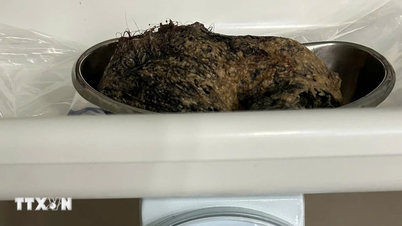
The surgery was successful, and the removed tumor weighed over 2 kg. During the surgery, the patient did not require any additional blood transfusions and recovered well.
According to the doctor's assessment, cases of such large tumors are quite rare. Delaying treatment not only makes surgery more difficult but also increases the risk of the disease becoming malignant, endangering the patient's life. Therefore, when treatment is indicated, patients should not hesitate or miss the "golden time" for treatment.
Dr. Thang further explained that solitary fibrous tumor of the pleura (SFTP) is a rare type of tumor arising from the mesenchymal cells of the pleura. The majority of solitary fibrous tumors of the pleura are benign, however, about 12-22% of cases can become malignant.
Symptoms of solitary pleural fibroma are often subtle and only appear when the tumor is large, causing compressive symptoms such as shortness of breath, chest pain, or persistent cough. Imaging studies play a crucial role in diagnosis; solitary pleural fibroma usually appears as a solitary, opaque mass on chest X-ray or CT scan.
Surgery plays a crucial role in the treatment of solitary pleural fibromas, as it is the only method that completely removes the tumor and reduces the risk of recurrence.
In most cases, radical surgical removal of the tumor provides a good prognosis and a high survival rate for patients.
Source: https://tuoitre.vn/tu-choi-dieu-tri-sau-mot-nam-khoi-u-phat-trien-nang-2kg-de-xep-phoi-20240930150246017.htm


















![[Photo] Prime Minister Pham Minh Chinh holds a phone call with the CEO of Russia's Rosatom Corporation.](/_next/image?url=https%3A%2F%2Fvphoto.vietnam.vn%2Fthumb%2F1200x675%2Fvietnam%2Fresource%2FIMAGE%2F2025%2F12%2F11%2F1765464552365_dsc-5295-jpg.webp&w=3840&q=75)














































Comment (0)