

Shortly after the conflict with Russia erupted, Ukrainian President Volodymyr Zelensky urgently requested that the United States supply long-range weapons, including MGM-140 ATACMS tactical ballistic missiles with a range sufficient for his army to strike Russian rear-line positions.
US President Joe Biden has repeatedly and publicly rejected the possibility of transferring these missiles for fear of escalating conflict, but ultimately relented. The ATACMS has actually reached Ukraine and was first used by Ukrainian soldiers to attack Russian air bases on the southern and eastern fronts last October.
The ATACMS missiles sent to Ukraine are actually an older version, with a range of only 160-180km, which is only half that of the newer version.
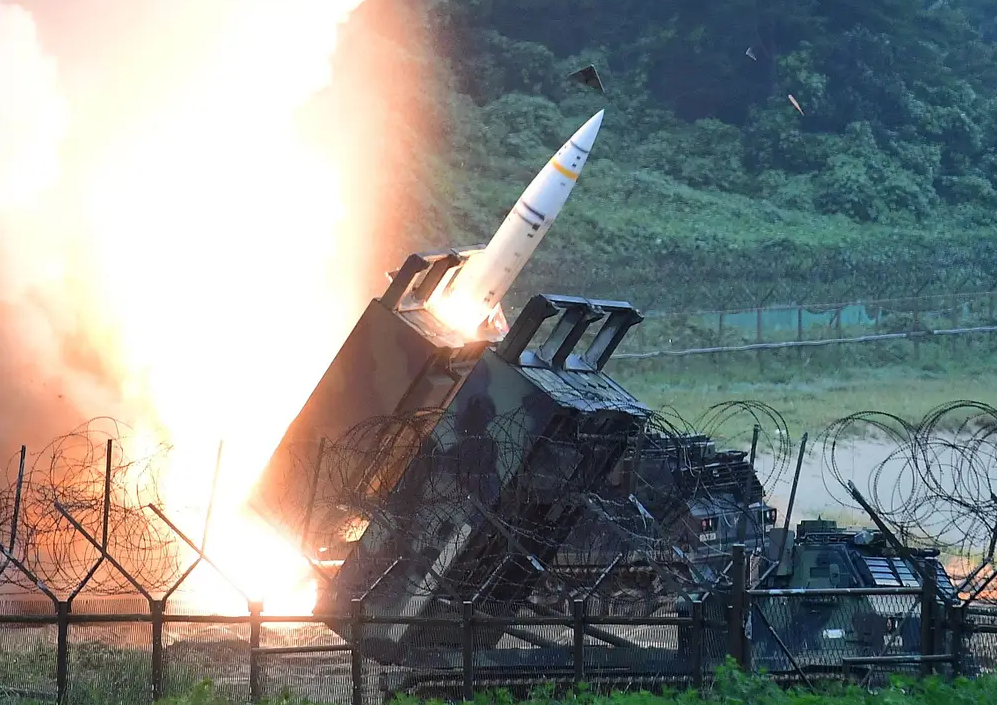
The U.S. Army Tactical Missile System (ATACMS) fires during a joint exercise with South Korea. Photo: Business Insider
Amidst a conflict that has entered its third year with no sign of ending and no breakthroughs yet, the US Department of Defense has issued a surprising statement: The risk of escalation in Ukraine is no longer as high as it once was.
“I sense that the risk of escalation is not as high as it was initially,” Chairman of the Joint Chiefs of Staff Charles Q. Brown Jr. said during a meeting with the Defense Writers Group, an association of defense and national security journalists with 50 member news organizations worldwide, including the Russian state news agency TASS.
General CQ Brown's comments came as he addressed the possibility of transferring ATACMS missiles from the U.S. to Ukraine. The Biden administration has consistently avoided confirming or denying media reports on the subject.
Mr. Brown neither officially confirmed nor denied the information, but the top US general said that Russia's silent response to a series of recent Ukrainian drone attacks inside Russian territory allowed the Pentagon to adjust its analysis of the risk of deploying ATACMS.
“Those are the things we pay attention to. You know, determining what constitutes escalation is based on different possibilities and different actions…,” he said.

Chairman of the Joint Chiefs of Staff Charles Q. Brown Jr. Photo: US Department of Defense website
Ukraine has recently been losing territory, and some experts believe that if the US Congress does not approve an additional $60 billion in aid for Ukraine, Russia could advance further this spring.
General Brown once again urged his Congress to quickly pass the aid package, and said Ukraine would face continued shelling in the near future. But he also said that concerns about a major Russian offensive in the spring might be exaggerated.
“I don’t know if the Russians can pull off a major attack. I mean, if you look at what has happened over the past year, the Russians have really deployed a lot of capabilities, manpower, weapons systems and equipment to achieve what they have achieved.”
The Chairman of the Joint Chiefs of Staff is the highest-ranking military officer in the United States, and also serves as the chief military advisor to the President, the Secretary of Defense, and the National Security Council of the "land of the stars and stripes" .
Minh Duc (According to TASS, Defense One, National Defense Magazine)
Source





















![[Photo] Prime Minister Pham Minh Chinh holds a phone call with the CEO of Russia's Rosatom Corporation.](/_next/image?url=https%3A%2F%2Fvphoto.vietnam.vn%2Fthumb%2F1200x675%2Fvietnam%2Fresource%2FIMAGE%2F2025%2F12%2F11%2F1765464552365_dsc-5295-jpg.webp&w=3840&q=75)












































Comment (0)