

Although there are many other alternative materials, people in the past often used jackfruit wood in making religious statues. Why is that?
Jackfruit wood is considered a precious type of wood in Vietnamese folk culture and beliefs. In the past, people often used jackfruit wood to make religious statues, especially Buddha statues and statues of deities in temples and shrines. This choice was based on factors such as material properties, spiritual value, and cultural importance.
Why did people in the past often use jackfruit wood to make religious statues?
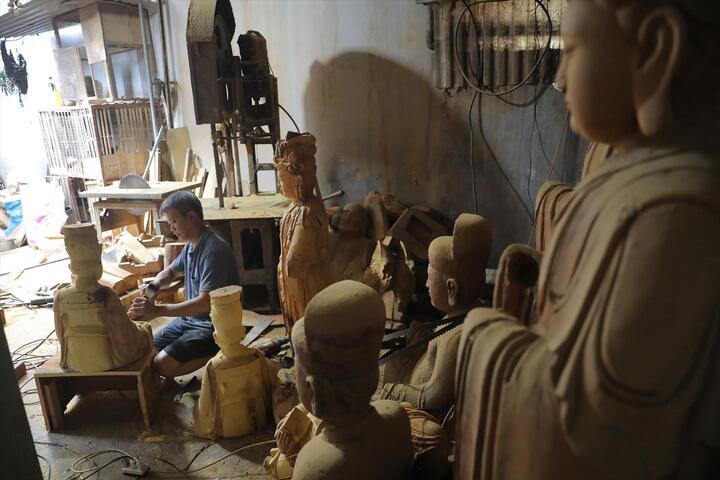
Here are the reasons why, among countless types of precious wood, people in the past often used jackfruit wood to make religious statues.
The material is durable but easy to carve.
Jackfruit wood possesses many superior characteristics that make it an ideal choice for creating religious statues.
Jackfruit wood is durable and resistant to termites and warping. This allows statues crafted from jackfruit wood to last for a long time without damage, preserving their beauty and artistic value. Jackfruit wood can withstand harsh weather conditions, making it suitable for the diverse climates of Vietnam, especially the humid environment of temples and shrines.
Jackfruit wood has a relatively light texture and fine grain, making it easier for artisans to carve intricate details. Therefore, it has become a top choice for creating religious statues with delicate and graceful lines. Carving Buddha or other deities requires a high degree of meticulousness and precision, making jackfruit wood an ideal material.
Jackfruit wood is bright yellow when freshly harvested, then darkens to a deep brown over time. The natural color of jackfruit wood evokes a warm, familiar yet dignified feeling. In particular, the yellow color of jackfruit wood is associated with Buddhism, symbolizing purity and enlightenment. This makes jackfruit wood an ideal material for crafting Buddha statues and religious artifacts.
Concept of spirituality
Besides its material advantages, jackfruit wood also possesses many spiritual values and profound religious meanings, making it a popular choice for creating religious statues.
In many rural areas of Vietnam, jackfruit trees are commonly planted around houses, especially at temples and communal houses. Vietnamese people believe that jackfruit trees bring good fortune, wealth, and peace to the family. Therefore, when using jackfruit wood to carve religious statues, people believe that the statues will absorb the positive energy from the tree, bringing peace and prosperity to those who worship them.
Jackfruit wood has a gentle, pleasant aroma that isn't too strong, helping to create a more solemn and serene atmosphere in worship spaces. In religious ceremonies, purity and solemnity are crucial elements. Therefore, using jackfruit wood, with its mild fragrance, contributes to the sacred atmosphere of religious rituals.
Common and readily available
Another reason why jackfruit wood is a popular choice is that it's relatively easy to find in Vietnam. Jackfruit trees are easy to grow, grow quickly, and are widely available throughout the country. People often plant jackfruit trees in their gardens, not only for the fruit but also for the wood when needed. Therefore, jackfruit wood is readily available and cheaper than other precious woods like rosewood or ebony.
Thanks to its popularity and availability, jackfruit wood has become a familiar material to the Vietnamese people, not only in daily life but also in religious and spiritual activities.
The use of jackfruit wood for making religious statues also reflects the connection between humans and nature. The jackfruit tree is an environmentally friendly species, easy to grow, resistant to pests and diseases, and does not require much care. Using jackfruit wood does not have a significant impact on forest resources, helping to protect the ecological environment.
This reflects the ancient philosophy of life: living in harmony with nature and valuing sustainability in both religion and life.
Source































































Comment (0)