

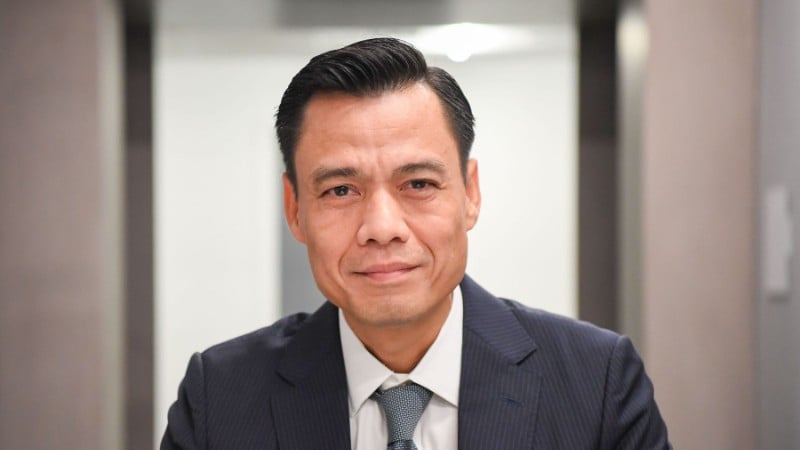
Deputy Minister of Foreign Affairs Dang Hoang Giang. (Photo: Ministry of Foreign Affairs of Vietnam)
Reporter: Could the Deputy Minister please tell us about the results of the ASEAN Summit and the meetings between ASEAN and its partners?
Deputy Minister of Foreign Affairs Dang Hoang Giang: Taking place amidst a world of significant changes and challenges for the globe and the region, the 47th ASEAN Summit and related meetings have just concluded with many important results. Among them, the following highlights stand out:
First, the conference acknowledged the achievements of 10 years of community building through the implementation of the ASEAN Vision 2025, which serves as the foundation for ASEAN's successful implementation of the ASEAN Community Vision (ACV) 2045 and the Strategic Plans on political -security, economic, socio-cultural, and ASEAN connectivity. The conference adopted nearly 70 documents under the three main pillars of political-security, economic, and socio-cultural development, concretizing ASEAN's commitment to the community building process and promoting future partnerships. The admission of Timor-Leste was a memorable milestone, marking ASEAN's second expansion after 30 years (the first beginning with Vietnam in 1995). This timely addition expands the scope for development, creating new momentum and strength for the Association's progress.
Secondly , ASEAN continues to demonstrate its central and leading role in maintaining peace and stability in the region, as evidenced by its support for Cambodia and Thailand in signing a Joint Declaration to implement agreements ensuring peace and normalization of relations at the border, contributing to strengthening the overall security and stability of the region. The countries also highly appreciated the role and efforts of the Malaysian Chair in promoting the implementation of the Five-Point Consensus on Myanmar; agreeing that the Consensus continues to be the main direction for ASEAN's future engagement efforts, prioritizing ceasefires and the cessation of violence, resuming dialogue, and delivering humanitarian aid to the people. The large participation of high-level leaders from partner countries and international organizations such as the US President, the Chinese Premier, the UN Secretary-General, the President of the European Council, etc., also reaffirmed ASEAN's position in the policies of major partner countries and world powers.
Thirdly, the conference reaffirmed ASEAN's position as a growth engine and an indispensable link in global supply chains, trade, and investment connectivity, with a GDP of US$3.8 trillion (2023), foreign investment of US$226 billion (2024), and a network of eight trade agreements covering the entire region. To enhance economic self-reliance and strengthen intra-regional linkages, ASEAN upgraded the Agreement on Trade in Goods (ATIGA), essentially completed the Digital Economy Framework Agreement (DEFA), and promoted the ASEAN Power Grid Connection (APG). ASEAN also agreed on a strategy to capitalize on major trends such as the green economy, digital economy, and artificial intelligence, and to address emerging challenges such as transnational crime, cybercrime, and climate change. The conference demonstrated ASEAN's long-term commitment to multilateralism through the effective implementation of Free Trade Agreements (FTAs) with partners, with a focus on upgrading the ASEAN-China FTA (ACFTA 3.0), promoting the upgrading of the FTA with South Korea, and exploring negotiations for FTAs with the EU and GCC.
On this occasion, Vietnam continued to demonstrate its role as an active and responsible member with two important contributions. Firstly, under Vietnam's coordination, ASEAN and New Zealand issued a Joint Statement upgrading their relationship to a Comprehensive Strategic Partnership and adopted the 2026-2030 Action Plan to implement the newly established framework. Secondly, in its capacity as Chair of the ASEAN Integration Initiative (IAI) Task Force, Vietnam chaired the development of the IAI Work Plan 2026-2030, which was adopted by the Summit. This document aims to narrow the development gap, strengthen solidarity, and prioritize support for Timor-Leste to catch up with ASEAN's overall integration process. Vietnam's role and efforts were thanked and highly appreciated by other countries.
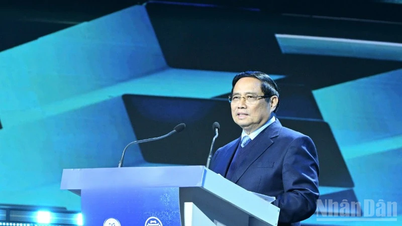
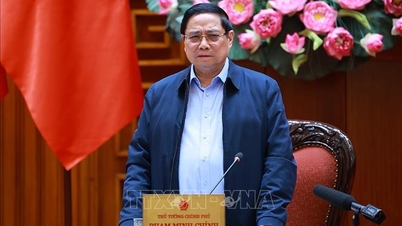
In the overall success, the insightful, sincere, and frank statements of Prime Minister Pham Minh Chinh at the conferences emphasized the importance of peace and stability, stating that this is a prerequisite for development, highlighting the significance of ASEAN solidarity, and affirming Vietnam's commitment to contributing to ASEAN for the vital interests of its people and businesses. The Prime Minister's sharing, especially his proposal for ASEAN to strongly leverage its three strategic resources—the strength of solidarity, dynamism, and the dynamism of innovation—was acknowledged and highly appreciated by member states and partners for its sense of responsibility, the correctness of its content, and the feasibility and effectiveness of its implementation.
Reporter: Could the Deputy Minister please share the main results of the bilateral meetings held by the Vietnamese delegation with other countries and partners on this occasion?
Deputy Minister of Foreign Affairs Dang Hoang Giang: In just three days attending the conference, Prime Minister Pham Minh Chinh held bilateral meetings and contacts with leaders from more than 20 partners, including all ASEAN countries, many leaders of major partner countries, and leaders of international and regional organizations. Although brief, these meetings and exchanges yielded many concrete and substantive results, most notably:
Firstly, political trust between Vietnam and other countries has been strengthened. All countries are eager to enhance relations with Vietnam. The fact that US President Donald Trump, Chinese Premier Li Qiang, newly elected Japanese Prime Minister Takaichi Sanae, Brazilian President Lula da Silva, Canadian Prime Minister Mark Carney, and many other leaders have agreed with Vietnam's proposal to increase high-level exchanges in the coming period shows that these countries recognize and highly value Vietnam's role in the region, support Vietnam's stability and development, and its increasingly important role in ASEAN and on the international stage.
Secondly, Vietnam and its key partners have finalized many important issues reflecting Vietnam's common interests with its partners. Chinese Premier Li Qiang agreed to actively promote the commencement of the Hanoi-Hai Phong-Lao Cai high-speed railway line. Canadian Prime Minister Mark Carney announced that a $20 million project to build a smart coastal city adapted to natural disasters and climate change would be announced soon. World Bank Vice President Carlos Felipe Jaramillo affirmed that the Bank would meet Vietnam's requests for faster and more efficient resource mobilization to support Vietnam's socio-economic development goals. A particularly important highlight of this occasion was the announcement by Vietnam and the United States of a Joint Statement on a Reciprocal, Fair, and Balanced Trade Agreement on October 26, 2025. These are all important steps that contribute to creating a stable and sustainable foundation in Vietnam's relations with key partners, helping to mobilize additional external resources to realize the country's strategic goals, especially the double-digit growth target since the 14th Party Congress.
Thirdly, in these exchanges, it is evident that partners genuinely support and desire Vietnam to play a greater role in ASEAN, in the Asia-Pacific region, and on the international stage. Leaders of many countries and international organizations are very impressed with Vietnam's rapid development over the past few decades. Partners all affirmed their appreciation for Vietnam's role and position, and expressed their desire for Vietnam's support in promoting cooperation between their countries and ASEAN. This shows that countries recognize Vietnam as one of the key member states capable of leading within ASEAN. In the context of Vietnam's accelerated implementation of Resolution 59 of the Politburo on international integration in the new situation and the elevation of multilateral diplomacy, the trust and support of international friends is invaluable political capital for Vietnam to make greater contributions to world politics, the global economy, and human civilization, as the Party and General Secretary To Lam have repeatedly emphasized.
Reporter: Could the Deputy Minister please outline the specific directions for implementing the results of Vietnam's participation in this ASEAN Summit?
Deputy Minister of Foreign Affairs Dang Hoang Giang: This conference concludes ASEAN Year 2025, a pivotal year marking ASEAN's entry into a new phase of development. The results achieved in the meetings and exchanges between the Prime Minister and leaders of countries and organizations also need to be followed up. Therefore, the implementation of these multifaceted results is of particular importance, requiring proactive and coordinated participation from all ministries, sectors, and localities.
Regarding leadership and management, we need to promptly develop a Master Plan and corresponding action programs to implement the ASEAN Community Vision (ACV) 2045, integrating the major orientations of the pillar resolutions issued by the Politburo, thereby implementing ACV 2045 synchronously and comprehensively, together with ASEAN, catching up with major trends and leaping forward in the new era of national development.
The implementation process needs to ensure two criteria: firstly, it should not only focus on quantity but also on quality; and secondly, it should not be solely the responsibility of the agencies in charge of each pillar or specialized sector, but a shared responsibility of the entire political system, aiming to ensure inter-sectoral cohesion domestically and effective coordination across ASEAN pillars. Therefore, it is also necessary to focus on raising awareness among ministries, sectors, and localities about their long-term roles and responsibilities in implementation.
At the same time, ministries and agencies need to proactively plan the implementation of documents that have been or are about to be completed, such as ATIGA, ACFTA 3.0, and DEFA, in order to unlock the potential of commitments and agreements, bringing direct and tangible benefits to businesses and people.
Regarding specific tasks, in the immediate future, we need to actively contribute to building ASEAN solidarity, especially in efforts to resolve the Myanmar issue, implement the peace agreements between Cambodia and Thailand, and contribute to maintaining a peaceful and stable environment in the region, favorable for ASEAN, including Vietnam, to pursue the long-term goals outlined in ACV 2045.
At the same time, it is necessary to focus on supporting Timor-Leste in enhancing its capacity and effectively integrating into ASEAN across all three pillars. As a country that joined early and achieved many successes after 30 years of participation in ASEAN, Vietnam is in a suitable position to share its experience and provide comprehensive support to Timor-Leste in this process. The Ministry of Foreign Affairs is also working to open an embassy in Timor-Leste soon, contributing to the effective implementation of this task.
Finally, it is urgent to implement the agreements and commitments that Vietnam and its partners have reached at bilateral meetings within the framework of the conference, including exchange of delegations, promotion of economic and trade cooperation, food security, energy, and especially the definitive resolution of outstanding issues to lift the EU's IUU yellow card. Ministries, sectors, localities, and businesses need to coordinate closely, actively, and urgently to ensure the synchronized and effective implementation of the results achieved with partners.
Reporter: Thank you very much, Mr. Deputy Minister!
PV
Source: https://nhandan.vn/viet-nam-khang-dinh-cam-ket-dong-gop-cho-asean-vi-loi-ich-thiet-than-cua-nguoi-dan-va-doanh-nghiep-post918756.html

































































Comment (0)