

| India was Vietnam's largest cinnamon export market in the first nine months of 2023. How can we increase the value of cinnamon exports? |
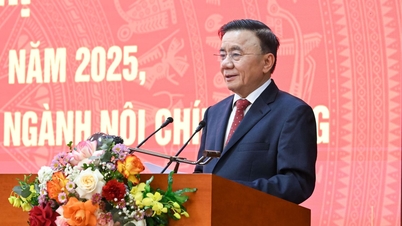
This information was presented at the 2023 Vietnam Cinnamon Industry Sustainable Development Workshop, organized by the Ministry of Agriculture and Rural Development in collaboration with other units on the morning of November 15th.
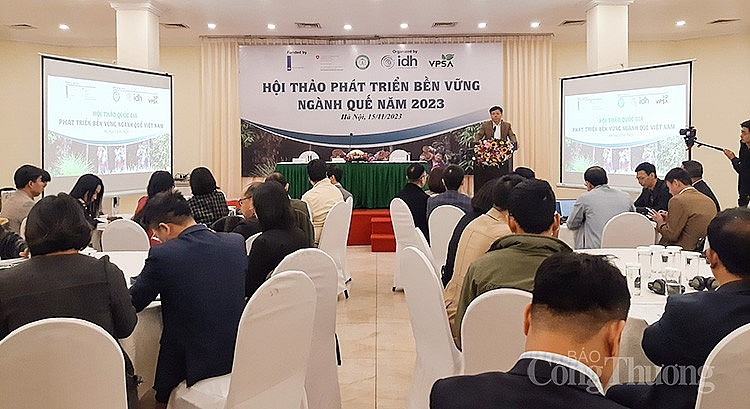 |
In his opening remarks at the workshop, Mr. Trieu Van Luc, Deputy Director of the Forestry Department (Ministry of Agriculture and Rural Development), stated that Vietnam is the third largest producer and exporter of cinnamon in the world, accounting for 17% of the global cinnamon market share, with cinnamon export revenue reaching approximately 300 million USD in 2022.
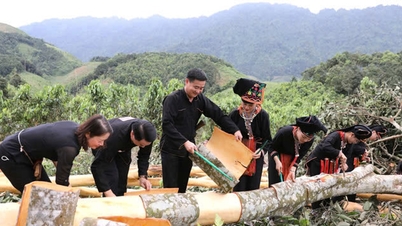
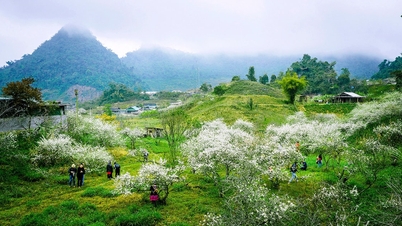
With an area of approximately 180,000 hectares, cinnamon cultivation is currently a livelihood for hundreds of thousands of ethnic minority households in remote provinces, while also contributing to the socio -economic development of many localities. Cinnamon has many uses in production and life, such as being used as a spice, flavoring, medicine, in food processing, for livestock and poultry farming, or as fertilizer…
Besides the achievements, according to Mr. Trieu Van Luc, monitoring shows that the potential advantages of the cinnamon industry have not been fully exploited. The reasons include the lack of organized production and value chain linkages, and weak techniques in planting, caring for, processing, and preserving cinnamon. In addition, there is still a shortage of high-quality cinnamon products.
Besides traditional markets such as the United States, India, China, and Japan, for Vietnamese cinnamon to enter the EU market, its quality must be high and meet the European Commission's (EC) regulations on preventing deforestation. This is something that farmers must pay attention to when organizing cinnamon production.
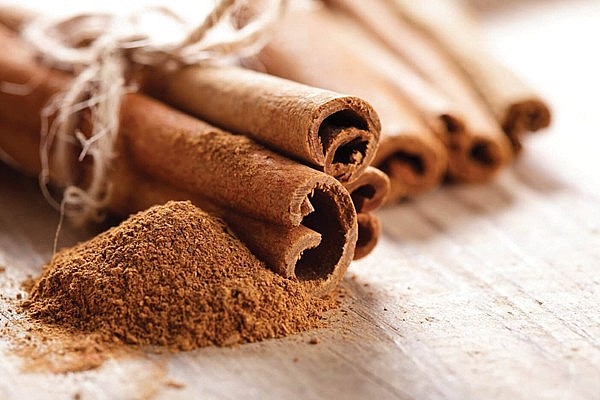 |
| Vietnam is the world's leading exporter of cinnamon. |
Ms. Hoang Thi Lien, President of the Vietnam Pepper and Spice Association (VPSA), shared that in 2022, Vietnam ranked third in the world in cinnamon production, accounting for 17%, and was the world's number one exporter of cinnamon with a turnover of 292.2 million USD. Several businesses have invested in modern cinnamon processing plants, especially some FDI enterprises, but this is still insufficient compared to the entire Vietnamese cinnamon industry. Currently, the main export markets for Vietnamese cinnamon are India, the United States, Bangladesh, Brazil, and Indonesia.
Regarding the challenges facing Vietnam's cinnamon industry, Ms. Hoang Thi Lien stated that Vietnam lacks a national strategic direction for sustainable development; there is a lack of mechanisms to conduct research to promptly respond to market demands; there are residues of glyphosate (found in herbicides) and chlorpyrifos (found in pesticides), as well as high levels of lead and mercury; the quality of seedlings is still lacking, with no research on superior varieties; and there is no central organization to connect various organizations, leading to fragmented and isolated programs.
The linkages between processing and exporting businesses and cinnamon growers are still underdeveloped, despite Vietnam having over 600 companies operating in the spice sector, most of which are primarily engaged in trading. The supply chain has not been effectively organized and implemented, particularly the formation of cooperatives to connect with businesses.
There is a lack of technology and capital for investment in deep processing to enhance product value; the specialized technical capacity of agricultural and forestry extension services does not meet practical requirements, and there is a shortage of experts and documentation. There are no studies evaluating other potentials of cinnamon to promote value-added solutions, for example, regarding the carbon market and the value of cinnamon by-products…
Cinnamon trees are affected by pests and diseases, and there is also an over-exploitation of resources, such as clear-cutting even young cinnamon trees and unscientific pruning. Organic cinnamon cultivation is beginning to develop but remains very small, accounting for less than 7% of the total area, and the products are not yet diverse.
In outlining the development direction for the cinnamon industry, Mr. Trieu Van Luc also suggested that it is necessary to determine land resources and the scale of planting areas; improve institutions, policies, and specific mechanisms for cinnamon; research, select, create, and produce cinnamon tree varieties; develop raw material areas; organize production, develop preliminary processing and processing facilities, and create markets for product consumption.
At the workshop, the Forestry Department read the Decision of the Ministry of Agriculture and Rural Development adjusting the Public-Private Partnership (PPP) Working Group on Pepper to the Public-Private Partnership (PPP) Working Group on Pepper and Spices; and introduced the co-chairs of the PPP sub-committee on cinnamon.
During the workshop, Ms. Laura Shumow – Executive Director of the American Spice Trade Association (ASTA) – provided updates on new regulations related to cinnamon exports to the US market. Representatives from the Sustainable Spices Initiative (SSI) Forum shared useful information on new European requirements for cinnamon imports, such as regulations related to "Due Diligence." In addition, domestic businesses shared various models of farmer linkages in building cinnamon value chains, along with challenges and proposed interventions.
Mr. Jan Gilhuis – Secretary General of the Sustainable Spices Initiative (SSI) Forum – stated that Vietnamese cinnamon is an extremely important raw material for SSI members, and SSI is committed and proud to partner with the public-private partnership group to contribute to the sustainable development of the Vietnamese cinnamon industry.
According to Mr. Huynh Tien Dung, Country Director of IDH in Vietnam, public and private sectors have not only recently begun exchanging views on cooperation and support for the cinnamon industry. Over the past period, with the connection of IDH and several non-governmental organizations, the public and private sectors have coordinated many activities, including dialogues, cooperation in developing training materials for farmers, collaboration with cinnamon companies on sustainable cinnamon production projects, and piloting tools for measuring carbon emissions in the cinnamon supply chain. However, the official decision of the Ministry of Agriculture and Rural Development has elevated the level of public-private cooperation to a new, more comprehensive level.
Source link


































































Comment (0)