

 |
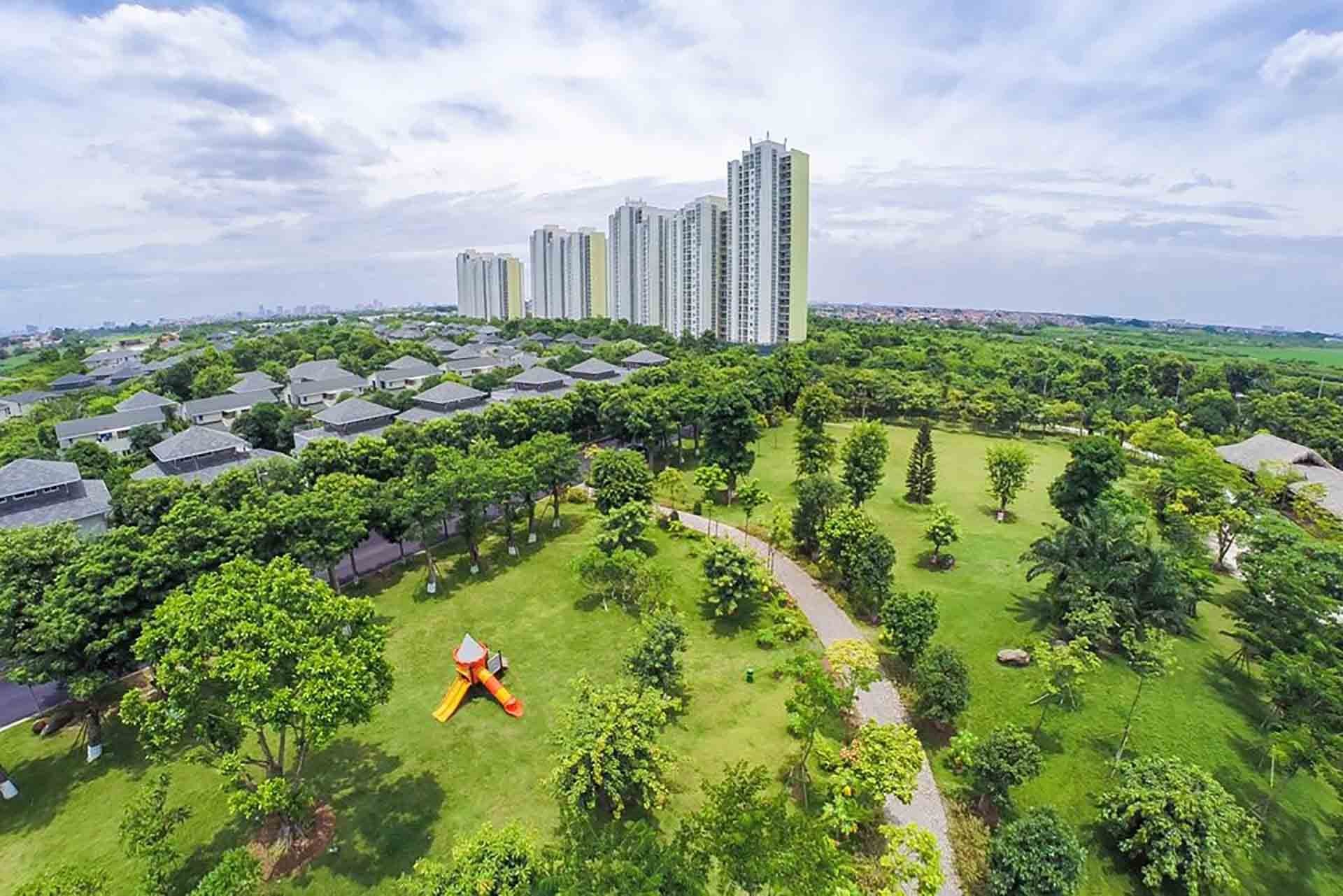
| The COP28 conference will be an opportunity for Vietnam to showcase to other countries its efforts in adapting to climate change and its commitment to green growth. (Source: VGP News) |
At the 26th Conference of Parties to the United Nations Framework Convention on Climate Change (COP 26), Prime Minister Pham Minh Chinh announced Vietnam's strong commitments to responding to climate change. In his speech, the Prime Minister affirmed that, despite being a developing country that has only begun industrialization in the past three decades, Vietnam, with its advantages in renewable energy, will build and implement strong measures to reduce greenhouse gas emissions using its own resources, along with cooperation and financial and technological support from the international community, especially developed countries, including implementing mechanisms under the Paris Agreement, to achieve net emissions of "zero" by 2050.
The Vietnamese Prime Minister's commitment immediately attracted the attention of the public and international media. In an article titled "Vietnam is aiming for carbon neutrality by 2050," Reuters emphasized that Vietnam has "joined the ranks of many other countries committed to halting emissions by the middle of this century or later to prevent global warming."
Immediately after the COP26 Conference, the Prime Minister established the National Steering Committee for the implementation of Vietnam's commitments at COP26, with the Prime Minister as the head of the Steering Committee. Relevant ministries and agencies focused on developing strategies, programs, and action plans to implement the commitments.
Commitment must be accompanied by action.
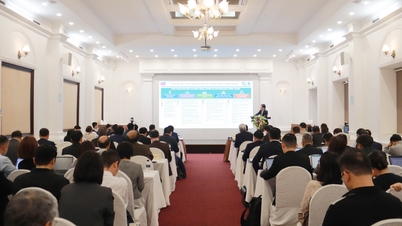
Speaking at the recent "Vietnam Green Vision and Exemplary Stories" seminar in Hanoi, Associate Professor Dr. Tran Dinh Thien, former Director of the Vietnam Institute of Economics, assessed that Vietnam's commitment to achieving Net Zero by 2050 has astonished the entire world, as even stronger countries have only made similar commitments. Countries like India have made cautious commitments, aiming for 2070, while China has committed to 2060.
Green growth is a dominant global trend and a top priority for the world. Vietnam is also under pressure from this trend, and it is a direction for development. Choosing this path has the potential to make Vietnam a leader in the region. Being a leader will be difficult, but it will also be the first to benefit. The benefits will primarily go to the Vietnamese people.
“The world is implementing many national and global green growth strategies. Vietnam has one advantage: no other country is as strongly committed as Vietnam, making commitments to the whole world at the highest level. Such large commitments allow us to face significant challenges. But it also presents opportunities to receive support, policies, and technology… With these factors, Vietnam can catch up,” Mr. Thien emphasized.
According to Mr. Tran Dinh Thien, Vietnam's goal of becoming a developed country with a high average income (greater than $12,000) by 2045 will be a very challenging one, requiring extraordinary development compared to previous periods. If achieved, growth will surpass the economy of relying heavily on cheap labor. In addition, when changing its development model, Vietnam will also have to contend with challenges different from many other countries, namely climate change. Simultaneously, it will face changes in lifestyles and the pressures of urban development. Therefore, the development model must change, with green development being the primary focus.
“To concretize this green growth strategic vision, Vietnam has approved a plan in which the Government has made specific commitments, not just general ones. I see very clearly that the action plan is becoming more specific, with 17 themes, 57 task groups, and 143 specific tasks, while also building an integrated comprehensive green growth index. This is an extremely important indicator; without it, we cannot achieve growth.”
"To achieve this, we have to do a lot, perhaps discard a lot, but at the same time create many new things. In general, resources will be very different, meaning resources will have to change significantly. We may need 200-300 billion USD by 2030, which is a very large cost," Mr. Thien stated.
Associate Professor Tran Dinh Thien noted that, over the years, resources for green growth have become very significant. However, due to a low starting point, the scale is still limited, and many channels for mobilizing resources are not yet fully operational. “Currently, public investment and green credit are very substantial, and the economic structure is increasingly geared towards green development. We are seeing that these resources will expand even further. Technology for green growth will be further developed in the future. In my opinion, capital is only one part, but participation from the government and businesses is crucial for green development. Especially for our society, how can we ensure everyone participates and strives towards green goals? Perhaps we are not yet accustomed to challenging commitments. There is nothing we cannot accomplish; we must act decisively to fulfill this commitment,” said Professor Thien.
Commitment to a green transformation
According to Mr. Tang The Hung, Deputy Director of the Energy Saving and Sustainable Development Department (Ministry of Industry and Trade), Net Zero is a major challenge in the process of economic development. Under the business-as-usual scenario, Vietnam's total emissions by 2030 are projected to reach 932 million tons, of which the energy sector accounts for 680 million tons.
The transition process means structural shifts, increased use of renewable energy, the use of cleaner materials, and the gradual replacement of materials for the 2025 vision. The 2030 vision aims for a high proportion of renewable energy, which presents both challenges and opportunities. “The wind and solar power sectors can attract potential investors, facilitating bank financing as the trend of green capital is very important in the financial industry. Currently, the world highly favors green capital and green finance, and this will be a competitive criterion among banks in the future,” said Mr. Tang The Hung.
The commitment to green transformation comes not only from ministries, localities, and associations contributing to the country's major goals, but many businesses in Vietnam have also begun to prioritize green practices through "reducing brown and increasing green." Many businesses have taken pioneering steps and achieved impressive results.
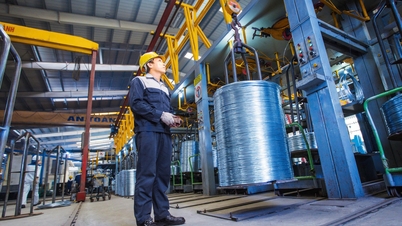
In the industrial manufacturing sector, one of the industries with a large proportion of waste, Hoa Phat Group has introduced a solution for producing "green steel," aiming to reduce greenhouse gas emissions and work towards carbon neutrality in the future. Another example is Duy Tan Recycling Plastic Company, which is also pioneering the application of recycling technology to contribute to achieving net emissions of "zero."
In the transportation sector, Vingroup officially launched GSM, the first all-electric taxi company in Vietnam. In a short time, GSM's achievements in reducing carbon emissions are proof of sustainable development through a green transportation system. Many businesses are also gradually shifting their investment towards renewable energy, such as T&T Group...
In the financial sector, while many organizations remain hesitant to lend to renewable energy projects, several banks have taken the lead in exploring and becoming major financiers of renewable energy projects such as wind and solar power, with pioneers from ACB, HSBC Vietnam, SHB, HDBank, MB, BIDV, Nam A Bank, etc. This is a crucial driving force behind the leap in capacity and electricity generation rate from renewable energy in Vietnam in recent years.
In the real estate and construction sectors, businesses are beginning to shift towards sustainable development strategies, optimizing the "green" index in their products and services. For example, Gamuda Land has a unique strategy of transforming landfills and sewage pits into top-tier green urban areas. Other businesses in the financial and consumer sectors, such as Manulife and Masan Group, are strongly contributing to this commitment through solutions for reduced-emission production processes and a range of environmental protection measures.
Following the success of COP26 and COP27, the COP28 conference, from November 30th to December 12th in Dubai, UAE, will be an opportunity for Vietnam to showcase its efforts in adapting to climate change and its commitment to green growth. Simultaneously, it will continue to mobilize resources and strengthen international cooperation to implement its commitment to achieving net emissions of "zero" in the near future.
Source























































































Comment (0)