

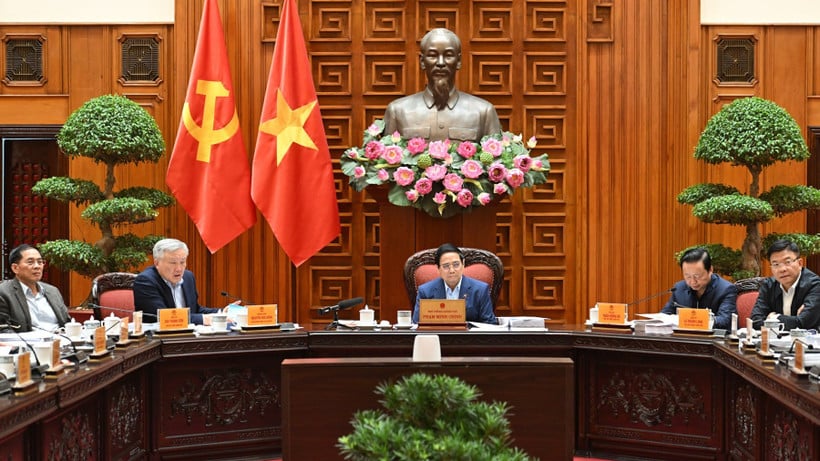
Also attending the meeting were Deputy Prime Ministers , leaders of ministries, branches and government agencies.
Regarding the free trade zone project chaired by the Ministry of Finance , delegates focused on discussing the political basis, legal basis, and practical basis; goals, development orientations, principles, establishment criteria, models, tasks, solutions, legal framework, mechanisms, priority policies, and specific features for free trade zones. According to reports and opinions at the meeting, the 10-year socio-economic development strategy 2021-2030, resolutions and conclusions of the Politburo, the National Assembly's Resolution on local development and development pillars have set out tasks and solutions: Focus on building breakthrough, outstanding, and competitive mechanisms and policies to pilot the construction of free trade zones.
Currently, there are more than 7,000 special economic zones and free trade zones in operation in the world; with increasing importance in the modern economic development strategies of developing and emerging countries. The current free trade zone model has also been expanded into multifunctional zones of industry, urban, service, finance, high technology, innovation, attracting maximum resources for development.
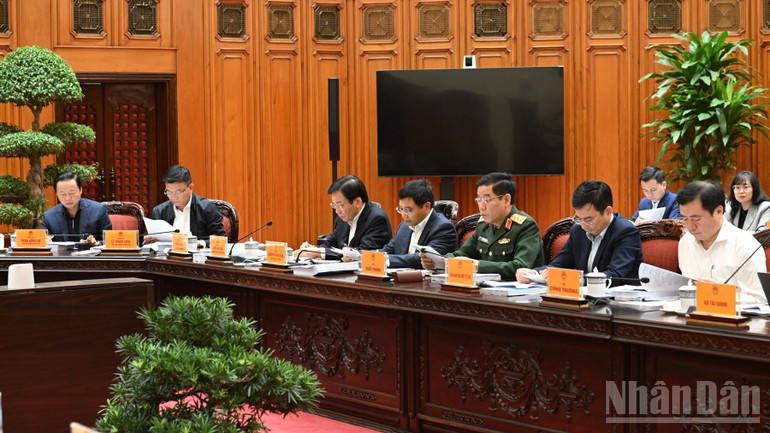
In Vietnam, the general legal system does not have specific regulations on the mechanisms, policies, management and operation of free trade zones. Recently, the National Assembly has issued resolutions on piloting a number of specific mechanisms and policies for the development of Da Nang city and Hai Phong city, including the content of free trade zones. Therefore, the construction of a free trade zone project is urgent and important and needs to be implemented immediately to provide a political basis, towards institutionalizing it into a common legal basis for free trade zones; thereby turning free trade zones into new development drivers, pilot areas for innovation of mechanisms, policies, economic institutions, and business environment of Vietnam according to international standards.
The Ministry of Finance said it is expected that in 2026, free trade zones will be established in Da Nang, Hai Phong, and Ho Chi Minh City; by 2030, the country will have about 6-8 free trade zones and similar models in localities with favorable conditions; by 2045, the country will have 8-10 free trade zones and similar models that meet international standards, compete with countries in the region, and contribute 15-20% of GDP.
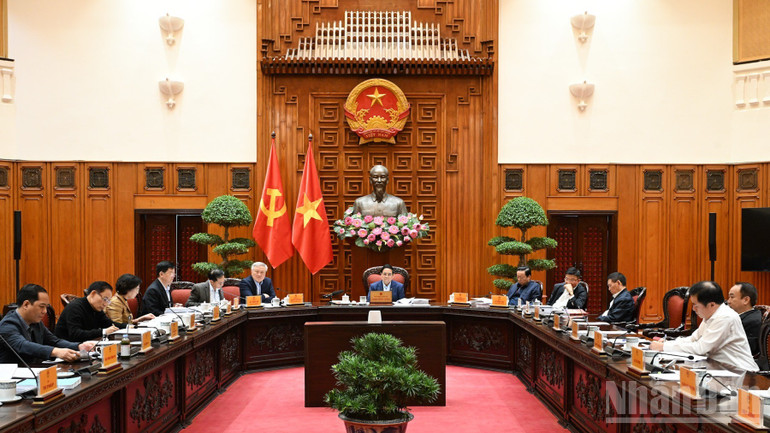
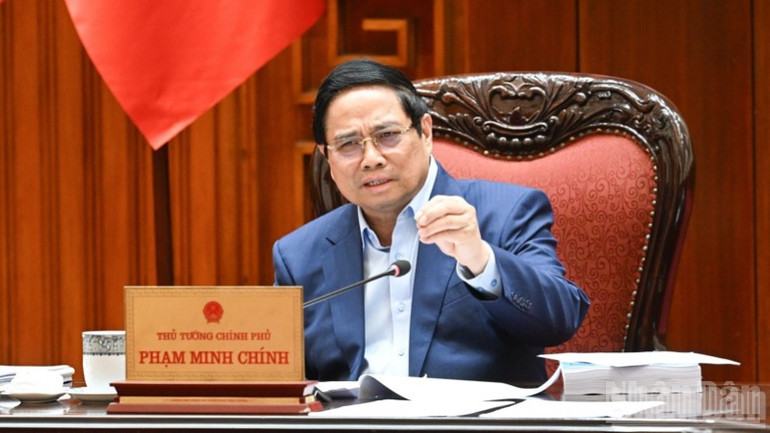
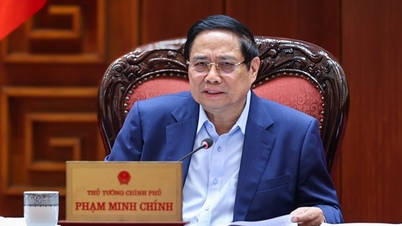
In his concluding remarks, Prime Minister Pham Minh Chinh welcomed and highly appreciated the preparation and project development of the Ministry of Finance, requesting to absorb the opinions at the meeting to continue perfecting the project, submitting it to competent authorities for consideration and decision, with the spirit of doing it quickly, urgently but with quality. Emphasizing some more contents, the Prime Minister stated that this is a new task, the policy must be unified but the implementation must be feasible and effective; the goal is to test the policy and contribute to socio-economic development, meeting the immediate and long-term goals, especially the two 100-year strategic goals.
The Prime Minister noted the need to clarify the concept of free trade zones, their similarities and differences with international trade centers; mechanisms and policies for these two entities have similarities and differences, and it is necessary to flexibly and creatively apply existing regulations.
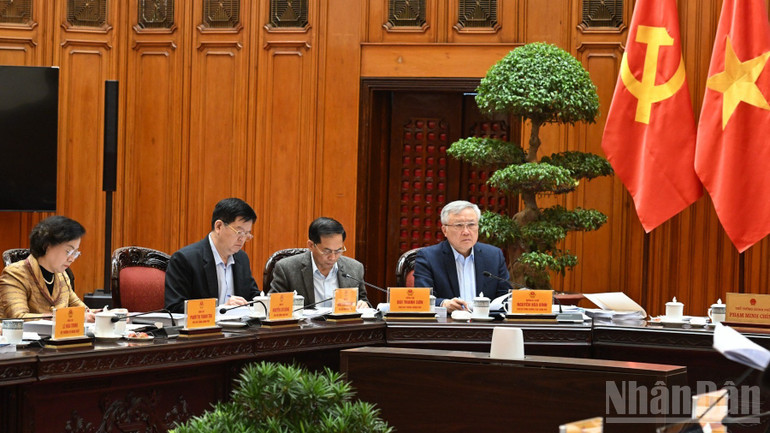
The selection of pilot locations for free trade zones must be appropriate and balanced across regions, in accordance with the pilot spirit (not many in number and with a certain time for evaluation). The Prime Minister requested agencies to refer to international experience, based on Vietnam's conditions to build specific, suitable, superior, competitive, and feasible mechanisms and policies that do not affect the general investment environment too much; policies that have both general regulations and specific characteristics suitable for different zones and localities.
To pilot the free trade zone, the Prime Minister stated that it is necessary to carry out work to turn policies into plans, develop infrastructure, attract resources, develop and apply high technology, smart management, and train human resources; pay attention to population issues, ensure progressive social security, a bright, green, clean, beautiful, civilized, and modern environment; organize a streamlined apparatus, operate effectively and efficiently, strengthen decentralization and delegation of power, increase the initiative of the free trade zone, and strengthen supervision and inspection.
* On the same morning, Prime Minister Pham Minh Chinh chaired a meeting of the Government Standing Committee on proposed mechanisms and policies to promote the development of the national oil and gas refining and energy center in Dung Quat Economic Zone (Quang Ngai).
According to reports and opinions at the meeting, Dung Quat oil refinery is the first oil refinery in Vietnam, located in Dung Quat economic zone. With advantages in strategic location and developed infrastructure system, this economic zone has become an attractive investment destination at home and abroad, planned by the Government to become a multi-sector, multi-sector economic zone, focusing on oil refining, petrochemical, large-scale heavy industry, light industry...
In Resolution No. 26 on socio-economic development and ensuring national defense and security in the North Central and Central Coast regions to 2030, with a vision to 2045, the Politburo set the task of "expanding and building a national refining, petrochemical and energy center in Dung Quat economic zone".
After listening to reports, opinions and concluding remarks, Prime Minister Pham Minh Chinh stated that the Dung Quat oil refinery, invested and implemented by Vietnam, is operating effectively and has a plan to expand phase 2, in line with the country's overall development.
Welcoming the Ministry of Industry and Trade, ministries, branches and Quang Ngai province for developing and proposing policies, the Prime Minister basically agreed with these policies and requested ministries, branches, localities and the National Energy Industry Group (Petrovietnam) to review and clarify existing contents and possibly apply new contents, specific, breakthrough and stronger policies to propose to competent authorities.
Note that policies under the authority of the National Assembly should be reported to the National Assembly for consideration and decision; policies under the authority of the Government should be proposed to the Government for consideration and decision; policies under the authority of ministries, branches and localities should be proactively implemented. The Prime Minister noted that there should be a general project to ensure comprehensive, feasible and effective implementation, thereby developing a national petrochemical and energy center in Dung Quat economic zone, meeting the requirements of rapid and sustainable development, contributing to local socio-economic development, ensuring national energy security and autonomy, developing the petrochemical and energy industry, promoting double-digit growth in the coming years and implementing the country's two 100-year strategic goals.
Source: https://nhandan.vn/xay-dung-chinh-sach-vuot-troi-canh-tranh-de-thi-diem-mot-so-khu-thuong-mai-tu-do-post928243.html
![[Photo] National Assembly Chairman Tran Thanh Man attends the VinFuture 2025 Award Ceremony](/_next/image?url=https%3A%2F%2Fvphoto.vietnam.vn%2Fthumb%2F1200x675%2Fvietnam%2Fresource%2FIMAGE%2F2025%2F12%2F05%2F1764951162416_2628509768338816493-6995-jpg.webp&w=3840&q=75)


![[Photo] 60th Anniversary of the Founding of the Vietnam Association of Photographic Artists](/_next/image?url=https%3A%2F%2Fvphoto.vietnam.vn%2Fthumb%2F1200x675%2Fvietnam%2Fresource%2FIMAGE%2F2025%2F12%2F05%2F1764935864512_a1-bnd-0841-9740-jpg.webp&w=3840&q=75)







![[Photo] National Assembly Chairman Tran Thanh Man attends the VinFuture 2025 Award Ceremony](https://vphoto.vietnam.vn/thumb/402x226/vietnam/resource/IMAGE/2025/12/05/1764951162416_2628509768338816493-6995-jpg.webp)
![[Infographic] Air pollution and recommendations from the Ministry of Health](https://vphoto.vietnam.vn/thumb/402x226/vietnam/resource/IMAGE/2025/12/05/1764950568593_screen-shot-2025-12-05-at-222015-png.webp)


















































Comment (0)