

Official rice exports have surpassed $5 billion. However, the Deputy Director of the Department of Crop Production admitted that stories of broken contracts in trade are still heard, and there is concern that there is still no high-quality Vietnamese rice brand on the international market.
The next step will be "Green, low-emission Vietnamese rice".
At the forum "Solutions for replicating successful pilot models of the Sustainable Development Project for one million hectares of high-quality, low-emission rice cultivation," held on the morning of November 23rd, Mr. Le Thanh Tung, Deputy Director of the Department of Crop Production (Ministry of Agriculture and Rural Development), informed that at the end of November last year, the Prime Minister signed a decision to establish the Sustainable Development Project for one million hectares of high-quality, low-emission rice cultivation in the Mekong Delta. Fifteen days later, the Vietnam Rice Industry Association (VIETRISA) was established.
"The goal is to learn from the models implemented by the Ministry of Agriculture and Rural Development, the National Agricultural Extension Center, and local authorities," Mr. Tung shared. The task of the Department of Crop Production is to summarize the successful models in order to replicate them.
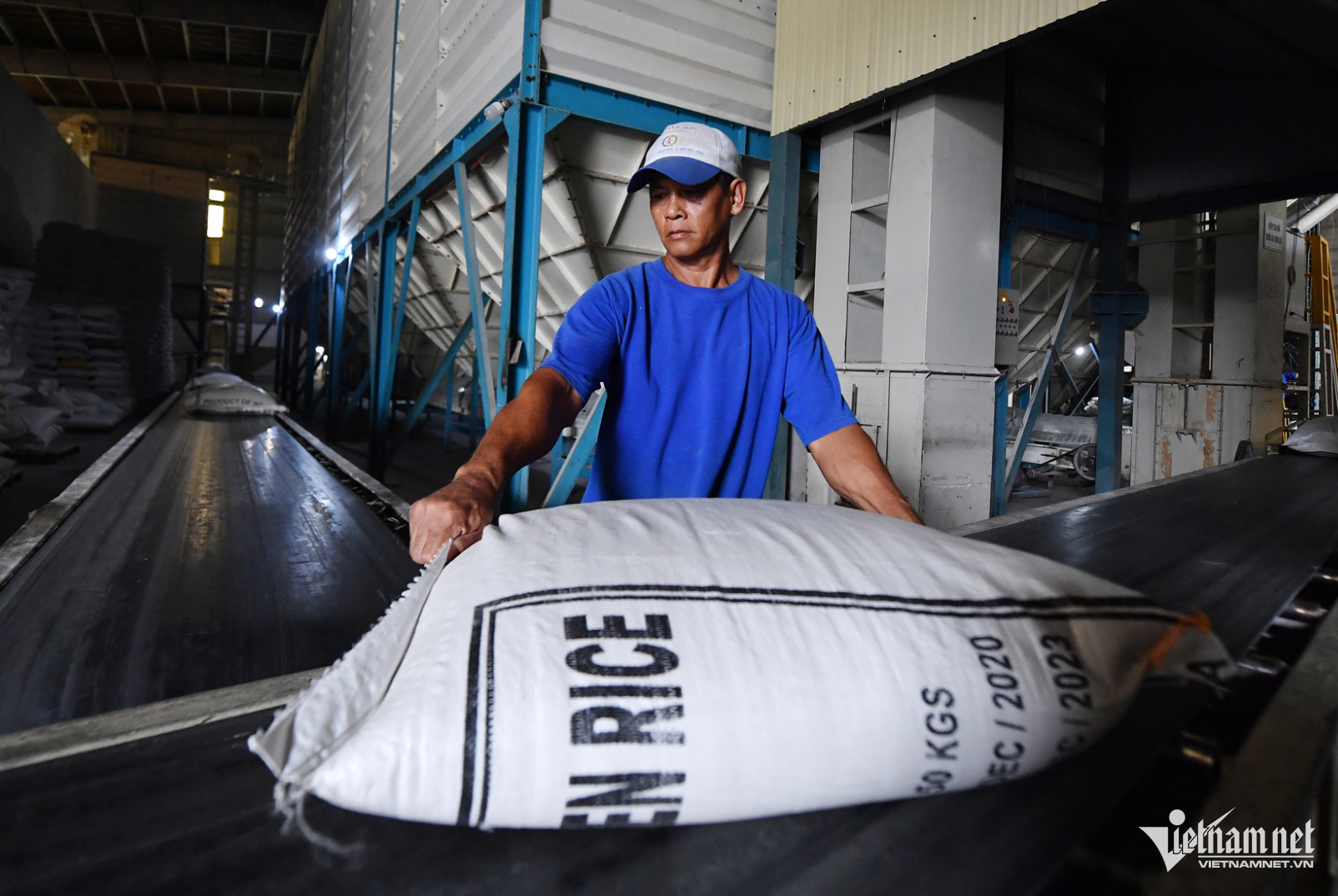
The Deputy Director of the Department of Crop Production frankly admitted that the rice industry still lacks coordination and mutual support to enhance the value of Vietnamese rice. He occasionally hears stories in the media about "breaking deals" in transactions between farmers and businesses. Agricultural officials are also concerned about the lack of a high-quality Vietnamese rice brand in the international market.
Although the quality of Vietnamese rice is comparable to that of any other country, its value has not been significantly increased. In particular, Vietnam's emissions from rice production are only 0.9%, higher than those of the Philippines, Thailand, China, and other leading rice-exporting nations.
However, currently 12 out of 13 provinces and cities in the Mekong Delta are implementing the program to cultivate 1 million hectares of rice in the Mekong Delta. This is also the largest rice granary in our country. Therefore, "Green Vietnamese rice, low emissions" will be the name we aim for in the future, Mr. Tung emphasized.
Recently, seven pilot projects in five provinces, including Dong Thap, Kien Giang, Can Tho, Soc Trang, and Tra Vinh, representing the upper, lower, and middle regions of the Mekong Delta, have yielded harvests as part of the 1 million hectare project. "The active and enthusiastic participation of farmers, along with the cooperation of businesses and government authorities at all levels, is showing many positive signs," he commented.
Accordingly, the project's future objectives will remain to replicate the model along the value chain, focusing on ecological databases, technological development, behavioral change, and capacity building.
The core foundation lies in the cooperative link.
Mr. Hoang Tuyen Phuong, Head of the Crop Production and Forestry Department at the National Agricultural Extension Center, said that the unit is currently connected with more than 30 domestic and international media channels. According to him, this step aims to enhance the capacity of stakeholders in the rice industry chain, build a brand for high-quality, low-emission Vietnamese rice, and create sustainable livelihoods for farmers.
The development of the rice value chain will also focus on transferring technologies for producing high-quality rice, reducing emissions, linking production, and producing rice according to the SRD export standard, he said.
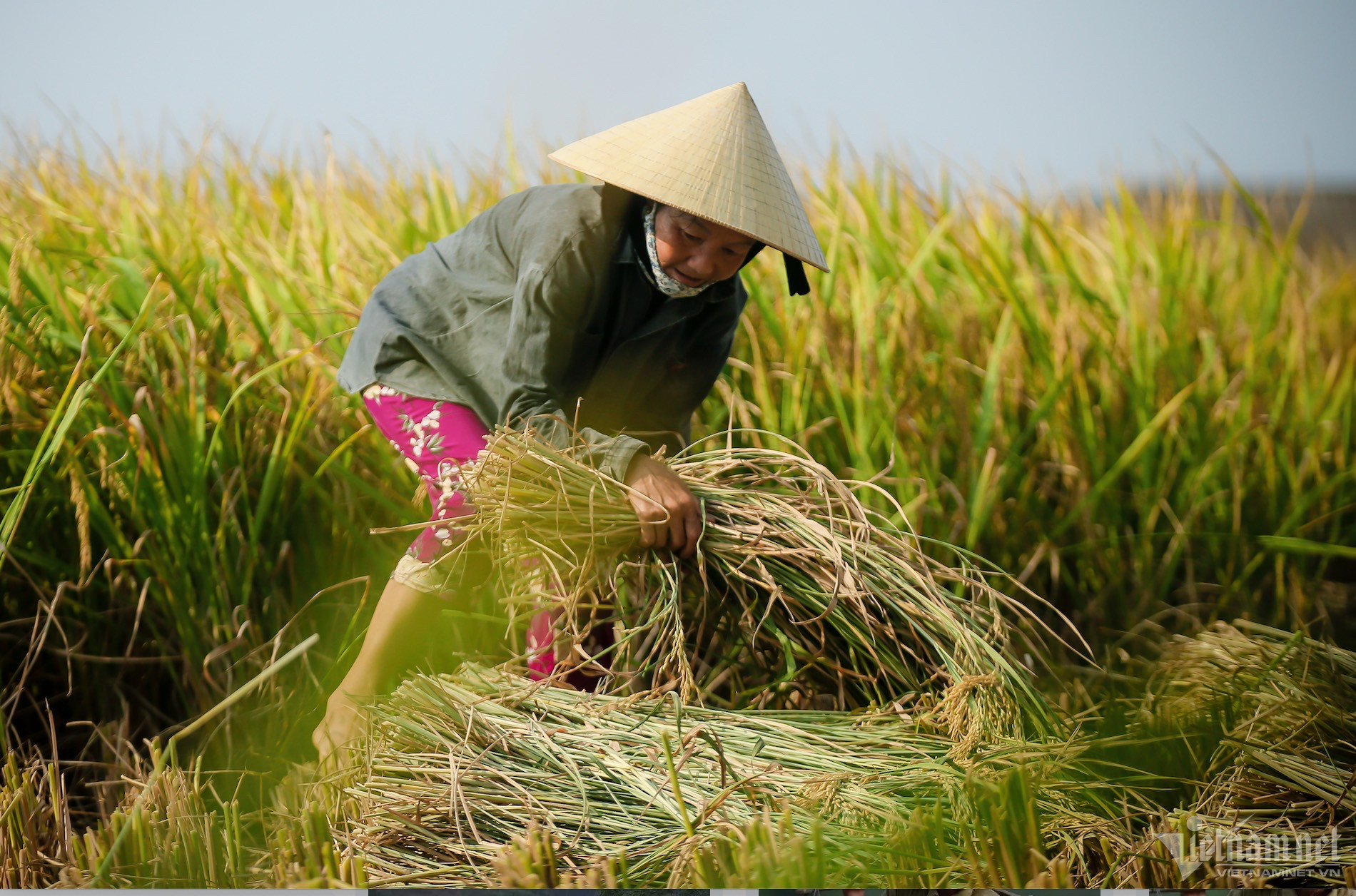
Besides the crucial issue of capital disbursement, Mr. Tran Minh Hai, Deputy Rector of the School of Public Policy and Rural Development (Ministry of Agriculture and Rural Development), emphasized that the development of cooperatives is the core foundation for the successful implementation of the project to cultivate 1 million hectares of high-quality, low-emission rice.
He argued that it is necessary to build strong and capable cooperatives that can jointly purchase and sell with businesses and organize production. The current development trend focuses on increasing the number of members to expand production and strengthen linkages.
In the Mekong Delta, the average cooperative has only 80 members, lower than the national average of 200 members and the average of 1,500 members per cooperative in Thailand.
Regarding business management, he pointed out that models such as Tan Hung, Phu Thanh, and Binh Thanh cooperatives are highly regarded, thanks to their ability to meet the production standards of enterprises and organize services such as harvesting with combine harvesters and transporting rice.
When cooperatives become strong organizations capable of effective management and meeting market demands, they will play a core role in the modern rural economy.
Therefore, there is a need for strong cooperatives to develop the value chain, produce high-quality rice, contribute to improving the lives of members, and enhance the efficiency of agricultural production, Mr. Hai observed.
According to preliminary statistics from the General Department of Customs, as of November 15th this year, Vietnam has exported over 8 million tons of rice, earning 5.05 billion USD – the highest level in history. The average export price of Vietnamese rice in the past 10 months reached US$626 per ton, an increase of 12% compared to the same period last year. Currently, Vietnamese rice varieties with 5% broken grains, 25% broken grains, and 100% broken grains are also the most expensive, far exceeding the prices of similar rice from top exporting countries such as Thailand, India, and Pakistan. |
Source: https://vietnamnet.vn/xuat-khau-vuot-5-ty-usd-van-dau-dau-chua-co-thuong-hieu-gao-viet-chat-luong-cao-2344897.html
































































Comment (0)