


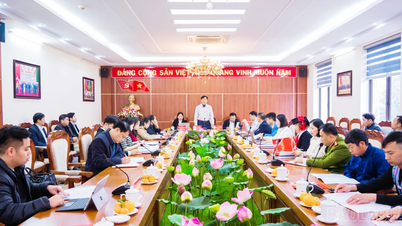
French Ambassador to Vietnam Olivier Brochet introduces the projects that France has implemented to support Vietnam in combating climate change over the past 10 years - Photo: French Embassy
The Paris Agreement on climate change sets a target of keeping global temperature rise below 2°C, aiming to limit it to 1.5°C above pre-industrial levels. This marks the first time that almost all countries in the world have committed to climate action, with nationally determined contributions (INDCs) submitted prior to the conference.
The fateful night of 2015
Ten years ago, on December 11-12, climate negotiators from nearly 200 countries gathered in a windowless room at midnight, in a makeshift conference hall on a strip of land at an airport a few kilometers north of Paris. They assembled once again, exhausted from sleepless nights due to negotiating impasses.
The following morning, a broad coalition of ministers from various countries entered the plenary session. They demanded an ambitious agreement, opposing those who wanted to maintain an economy based on fossil fuels. After last-minute hurdles, the Paris Agreement was finally reached on the afternoon of December 12, 2015.
The 2015 consensus laid the foundation for the global fight against climate change, proving that humanity can unite to address the biggest problems. However, the problem has not disappeared.
"With all the carbon already in the atmosphere and from the above-ground thermal power plants, global temperatures will continue to rise and could potentially reach +1.5°C above pre-industrial levels in the coming years," EU Ambassador to Vietnam Julien Guerrier shared with concern at a press conference on December 11-12 in Hanoi , marking the 10th anniversary of the Paris Agreement.
French Ambassador to Vietnam Olivier Brochet and Brazilian Ambassador to Vietnam Marco Farani – who were also present at the press conference – agreed on the importance of the Paris Agreement as well as the 30th United Nations Climate Change Conference (COP30) held last November in Brazil.
Many initiatives have been proposed, including the need for a roadmap to phase out fossil fuels, but COP30 is taking place at a challenging time internationally. Key countries remain skeptical about the climate agenda and are not yet ready to fully implement the Sustainable Development Goals (SDGs).
The role of international solidarity
The withdrawal of the United States, one of the world's leading emitters of greenhouse gases, had previously led many countries to doubt the future of the Paris Agreement.
"We hope that at some point, another US administration will consider and review the possibility of returning to the Paris Agreement," Brazilian Ambassador Marco Farani expressed in an interview with Tuoi Tre newspaper.
Although the US withdrawal is regrettable, both the French and Brazilian ambassadors emphasized the role of other countries and international solidarity in combating climate change.
"We are a permanent member of the United Nations Security Council and know that climate change is a serious, direct threat to international peace and security, as it exacerbates competition for resources and threatens the very existence of certain territories. This is also a top priority for France, as France itself is a victim of the consequences of climate change," Ambassador Olivier Brochet emphasized.
Along with its EU partners, France is one of the most resolute countries in ensuring the full implementation of the Paris Agreement, guided by two core principles: example and solidarity.
Olivier Brochet stated that France and the EU are fully aware of their historical responsibility, given that the West has emitted more than half of the greenhouse gases currently in the atmosphere. He considered it "fair" for developed countries to support those lacking sufficient resources. The EU ambassador argued that the bloc is proof that reducing emissions does not mean reducing growth.
"We must succeed in increasing the volume of climate finance – despite the withdrawal of the world's leading powers – and this is the main goal of the Paris Agreement. How?", the French ambassador asked.
According to him, there are four ways, which are also four priorities for France: increasing public and private funding for climate goals; preserving forests and oceans – natural carbon sinks; implementing an energy transition, abandoning fossil fuels, especially coal; and finally, strengthening renewable energy storage capacity.
Vietnam is about to announce a new emissions reduction roadmap.
With a commitment to net-zero emissions by 2050, Vietnam has taken several strategic steps demonstrating its seriousness in realizing this goal.
Mr. Tang The Cuong, Director of the Climate Change Department under the Ministry of Agriculture and Environment, said that Vietnam is developing its Nationally Determined Contribution (NDC 3.0) for the period 2026-2035. The NDC is a cornerstone of the Paris Agreement, reflecting the contributions of countries in efforts to limit global temperature increase and move towards net-zero emissions.
Speaking to Tuoi Tre newspaper, Mr. Cuong said that NDC 3.0 will be announced soon, covering all sectors. Each sector will have its own emission reduction targets and specific measures, contributing to the overall commitment.
Source: https://tuoitre.vn/10-nam-thoa-thuan-paris-lam-gi-de-giu-muc-tieu-1-5c-20251212061346438.htm


































































Comment (0)