

An inevitable trend, a self-imposed requirement of businesses.
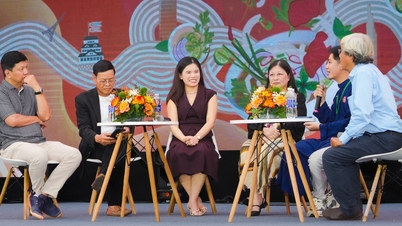
Information presented at the workshop indicated that the circular economy, linked to sustainable development, is a global trend aimed at mitigating and eliminating the negative impacts of climate change on the atmosphere, ecosystems, and quality of life. Recognizing these challenges and fulfilling Vietnam's commitments at the United Nations Climate Change Summit (COP-26), Vietnam has implemented several strong response measures; setting a target of reducing total greenhouse gas emissions by 9% by 2030 using domestic resources and 27% with international support; and achieving net emissions of zero by 2050.
Building and developing eco-industrial parks is one of the solutions contributing to achieving the above goal. Currently, several eco-industrial parks are being piloted nationwide in Ho Chi Minh City, Hai Phong, Da Nang, Can Tho , and Dong Nai.
Representatives from the Foreign Investment Department ( Ministry of Finance ) stated that developing eco-industrial parks is not only an inevitable trend but also a self-driven requirement for businesses to survive in the low-carbon era. Without transformation, businesses risk being excluded from global supply chains, especially in the steel, textile, plastics, chemical, and electronics industries. Early transformation, however, will help businesses maintain export markets, enhance brand value, attract strategic investments, and reduce long-term operating costs.
According to a representative from the HEPZA Environmental Management Department, after the merger, Ho Chi Minh City currently has 59 export processing zones and industrial parks with 5,900 operating businesses. The city and the industrial parks have collaborated with UNIDO to implement a pilot project for the transformation of industrial parks. The Hiep Phuoc Industrial Park has entered phase 2; and similar projects are being implemented in Phu My 3 Industrial Park (formerly Ba Ria - Vung Tau province), Bau Bang Industrial Park (formerly Binh Duong province), and Cay Tram Industrial Park.
According to some opinions, the transition process still faces some difficulties regarding policy, human resources, and capital. The conversion from existing industrial parks (traditional model) to new industrial parks requires investment in technology, infrastructure, and new production processes to reduce emissions and save energy resources, resulting in high initial investment costs; while in reality, the infrastructure serving the industrial parks is not yet fully developed.
"Some regulations regarding industrial parks are inconsistent, merely encouraging rather than practical, and don't specify the level of support or tax reductions, so we are currently confused. Standards for the circular economy and wastewater treatment are also not yet unified by the relevant authorities," a representative from the Environmental Management Department of HEPZA stated.
Representatives from Hiep Phuoc Industrial Park, where the second phase of the eco-industrial park model is being piloted, believe that the transformation is not just a matter of business awareness but also requires several other factors. “We need accompanying technical conditions and hope that, in addition to Decree 35/2022/ND-CP and Circular 05/2025/TT-BKHĐT, there will be more specific guidelines to create a framework, which can be broadly called a set of Vietnamese standards, so that when a business applies them, they can immediately see how effective they are and whether their business meets the criteria for an eco-enterprise,” the Hiep Phuoc Industrial Park representative stated.
The documents and guidelines for implementing the Industrial Park need to be finalized.
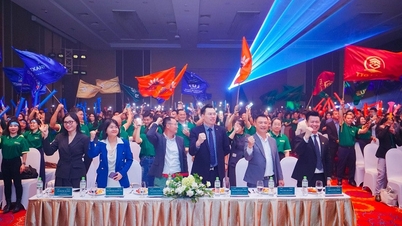
At the workshop, Mr. Andri Meier, Deputy Head of Cooperation, Swiss Embassy in Vietnam, stated that the Swiss Government has funded the Global Innovation Industrial Park Program (GEIPP) in Vietnam, in which Hiep Phuoc Industrial Park is a successful pilot model of an innovation industrial park with positive results in reducing resource use and costs, and reducing carbon emissions.

Mr. Andri Meier suggested that expanding the eco-industrial park model requires a clear and systematic approach; integrating the eco-industrial park model into the city's overall urban planning; strengthening the application of policies and regulations on eco-industrial parks; and attracting private sector investment to expand the eco-industrial park model across multiple industrial parks.
Sharing insights on the policy direction for developing eco-industrial parks in Vietnam, a representative from the Foreign Investment Agency stated that it is necessary to improve the documents and guidelines for implementing eco-industrial parks; strengthen inter-ministerial coordination mechanisms to resolve obstacles related to eco-industrial parks (such as the reuse of solid waste and wastewater, mechanisms for installing and using rooftop solar power); integrate eco-industrial park solutions; and promote technical support activities for industrial parks to complete the conversion to eco-industrial parks, build new eco-industrial parks, and complete the construction of green infrastructure for industry.
Mr. Bui Minh Tri, Head of the HEPZA Board, believes that the significant progress in the transformation of Hiep Phuoc Industrial Park into a sustainable industrial park model, along with contributions from experts in planning and environment, will serve as a basis for the city to continue proposing to the Central Government adjustments to policies and regulations to suit the transformation of existing and future industrial parks towards sustainable, environmentally friendly industrial parks. This will contribute to reducing greenhouse gas emissions, efficiently utilizing natural resources, promoting cleaner production, moving towards a circular economy, protecting the environment, and achieving sustainable development.
Source: https://baophapluat.vn/ban-giai-phap-phat-trien-nhan-rong-mo-hinh-khu-cong-nghiep-sinh-thai-o-tp-hcm.html

































































Comment (0)