

Currently, some educational institutions are still not complying with regulations, excessively collecting parent-student funds or soliciting sponsorships illegally, causing public dissatisfaction.
Many people believe that the "Parents' Representative Committee" or "Parents' Committee" is an "extension of the principal's arm." Some even argue that it was created primarily to collect various funds, and therefore, consideration should be given to abolishing it.
Currently, the activities of the Parent-Teacher Association are regulated by the Charter of the Parent-Teacher Association issued together with Circular 55/2011/TT-BGDĐT dated November 22, 2011, by the Minister of Education and Training.
Accordingly, Article 10 of this Circular clearly stipulates that the Parent-Teacher Association is not allowed to collect donations from students or their families that are not voluntary and that do not directly serve the activities of the Parent-Teacher Association, such as:
- Protect school facilities and ensure school security;
- Supervising students' means of transportation;
- Cleaning classrooms and the school grounds;
- Rewarding school administrators, teachers, and staff;
- Purchasing machinery, equipment, and teaching materials for the school, classrooms, or for school administrators, teachers, and staff;
- Assisting in the management and organization of teaching and educational activities;
- Repair, upgrade, and construct new school facilities.
What kinds of funding are schools asked to raise?
Educational institutions wishing to organize fundraising and social mobilization campaigns must comply with the regulations stipulated in Circular 16/2018/TT-BGDĐT on funding for educational institutions within the national education system.
According to Circular 16, sponsorship must ensure the principles of voluntariness, openness, transparency, and non-coercion. There should be no prescribed average or minimum sponsorship amount, no exploitation of educational sponsorship to coerce contributions, and no consideration of fundraising as a condition for providing educational and training services.
The management and use of grants must adhere to the principles of economy, efficiency, proper purpose, and prevent loss or waste.
Educational institutions are encouraged to solicit and receive donations to implement the following activities:
- Equipping with teaching and learning equipment and supplies; equipment for scientific research; renovating, repairing, and constructing facilities to support educational activities at educational institutions;
- Supporting educational, training, and scientific research activities within educational institutions.
No fundraising is permitted to cover the following expenses: teaching fees; expenses directly related to administrators, teachers, lecturers, and staff; security and protection activities; fees for supervising students' transportation; fees for maintaining classroom and school hygiene; rewards for administrators, teachers, and staff; and expenses supporting the management of the educational institution.

Regarding fundraising, based on the annual school year activity plan and the budget allocated by the state agency, educational institutions shall periodically or unexpectedly develop a fundraising plan and report it to the Department of Education and Training for approval in the case of preschool, primary, and lower secondary schools; and to the Provincial Department of Education and Training for approval in the case of upper secondary schools and other educational institutions under the Provincial Department of Education and Training before organizing any fundraising activities.
For teacher training colleges, teacher training universities, and higher education institutions, fundraising plans must be approved by the School Council or Board of Directors before fundraising can begin, and reported to the immediate superior authority.
However, the Department of Education and Training will review and approve the fundraising plan of the educational institution. If the fundraising plan is found to be inconsistent with procedures and regulations and lacks transparency, the educational institution must be instructed to cease implementing the fundraising plan.
A fundraising plan must clearly define the content, purpose, target beneficiaries, budget estimate, and implementation plan for the activities requiring funding.

How are schools allowed to collect fees for extra classes?
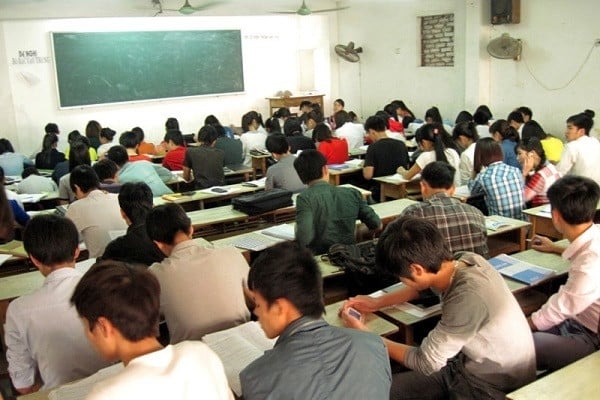
Pressure due to wealthy parents 'manipulating' the class's parent committee.
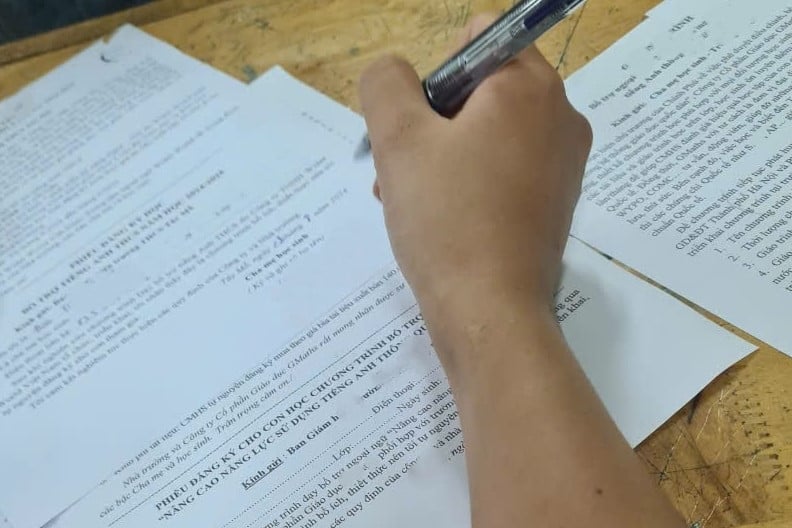
'After two years of being a figurehead head of the parent committee, I made an excuse to resign.'
Source: https://vietnamnet.vn/ban-phu-huynh-duoc-keu-goi-dong-gop-nhung-khoan-tien-gi-de-tranh-viec-lam-thu-2325372.html











































































Comment (0)