

In response to these concerns, Associate Professor Dr. Huynh Quyet Thang, Director of Hanoi University of Science and Technology, said that in recent times, the development of technology and artificial intelligence has changed many professions. However, professions that require high skills and are less dependent on artificial intelligence and automation remain stable.
“The Hanoi University of Science and Technology remains steadfast in its stance on core science and technology – which is indispensable for the country. Therefore, the school’s nearly 55 training programs have covered all the important national technology sectors,” said Mr. Thang.
According to Mr. Thang, instead of chasing after creating new majors, the school focuses on adjusting the program content to better suit the development trends of technology and new technical requirements.
The school focuses on training engineers with interdisciplinary knowledge, such as integrating robotics with AI or fashion textiles with AI...
“This is the best way to respond to technological changes, while learners can quickly apply their knowledge to contribute to the country's development,” said Mr. Thang.
Associate Professor Dr. Huynh Quyet Thang believes that concerns about a certain profession disappearing in the near future are largely speculative and unfounded. According to him, professions do not disappear but only change in nature and working philosophy.
The most obvious example is the field of Computer Science. While in the past, students only focused on learning programming, now the important skill is the ability to test and verify code generated by AI. This shows that the old fields still exist, but the requirements for the students' abilities have changed.
“Therefore, we must accept challenges, be ready to acquire new knowledge and skills, learn and use technology to accompany technological development,” said Associate Professor, Dr. Huynh Quyet Thang.
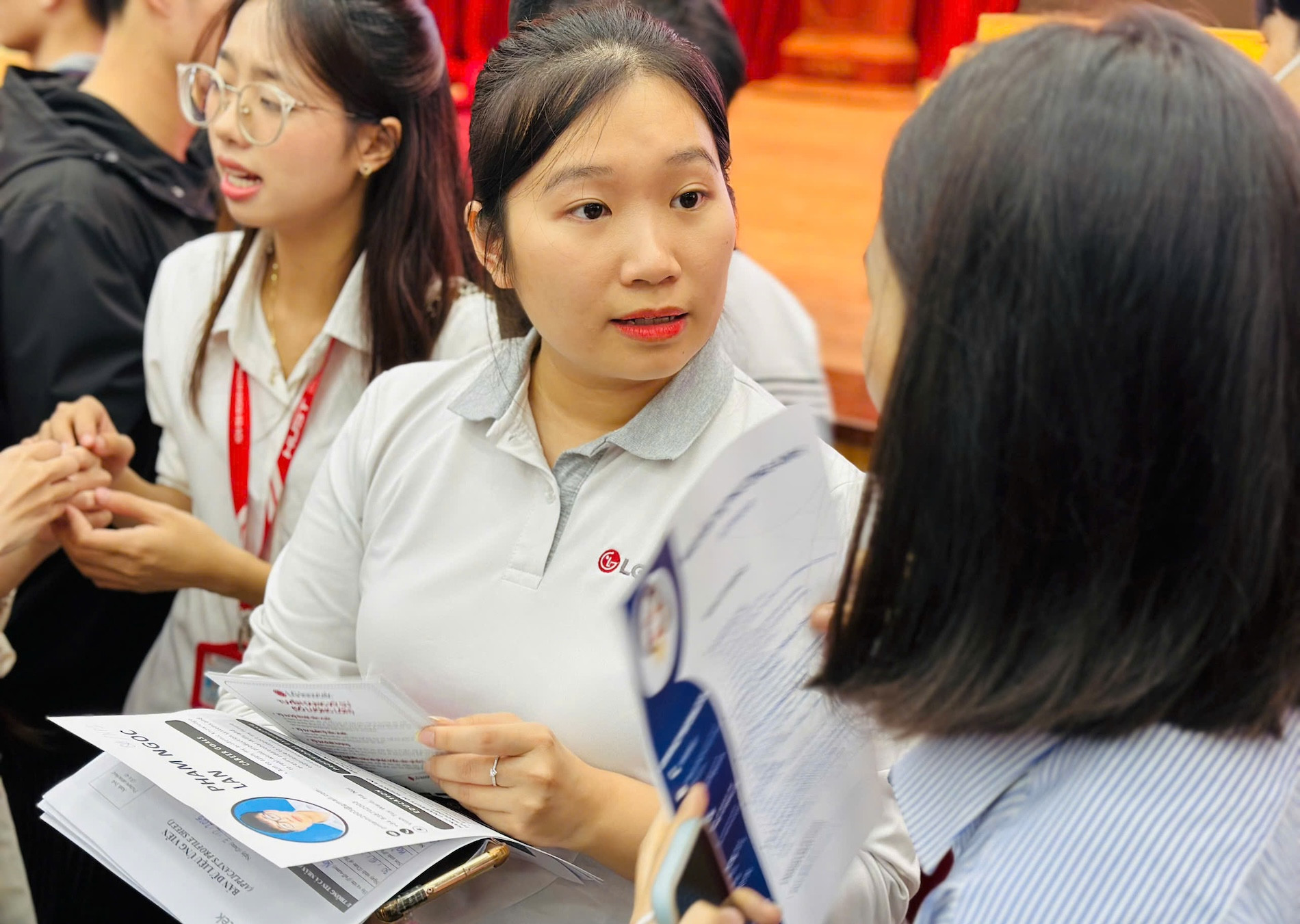
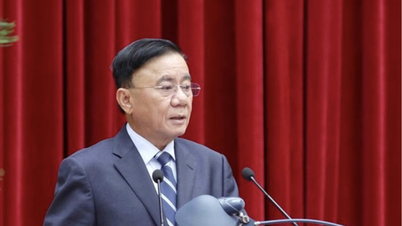
Meanwhile, Associate Professor Dr. Tran Quang Tien, Director of the Vietnam Women's Academy, said that instead of looking for "unemployment-proof" majors, learners should understand the trend pillars that are shaping the global labor market. These pillars are more sustainable than the names of each major and are the key to helping learners stand firm in the face of fluctuations.
Specifically, according to him, the first pillar is digital technology and artificial intelligence . Jobs that have the ability to control, apply, manage or create with technology, from data analysis, programming, operational optimization to digital content production will all be in high demand.
“Despite the rapid pace of automation, technology still creates more new jobs than it eliminates, but it requires workers to constantly update,” he said.
The second pillar is the social and humanities skills training . These are areas where humans do better than machines, including complex thinking, care and support, consultation, community engagement, social policy design, risk management, leadership and working in multicultural environments.
Mr. Tien believes that in the context of expanding technology, soft skills and the ability to understand people become the "safest zone".
The third pillar is economic, legal, and adaptive governance capacity. As cross-border trade, the digital economy, and new business models flourish, people who understand economic structures, corporate governance, laws related to digital transactions, and data protection will be especially needed. The ability to combine economic, legal, and technological knowledge will create a distinct advantage.
From that perspective, Associate Professor Dr. Tran Quang Tien emphasized that "timelessness" belongs to industries that are always renewed, flexible in applying technology, and at the same time maintain human values.
“Besides, which majors will not become obsolete depends on the training method and how students continuously learn, not on the name of the major. If the program is linked to technology, practical social needs and the development of lifelong learning capacity, those will be sustainable majors in the next 10 years,” said Associate Professor Dr. Tran Quang Tien.
Source: https://vietnamnet.vn/nhung-nganh-hoc-it-loi-thoi-khong-so-that-nghiep-trong-5-nam-toi-2470249.html


![[Photo] General Secretary To Lam receives the Director of the Academy of Public Administration and National Economy under the President of the Russian Federation](/_next/image?url=https%3A%2F%2Fvphoto.vietnam.vn%2Fthumb%2F1200x675%2Fvietnam%2Fresource%2FIMAGE%2F2025%2F12%2F08%2F1765200203892_a1-bnd-0933-4198-jpg.webp&w=3840&q=75)




















































































Comment (0)