

Visit the polar bear safari in Churchill, Canada.
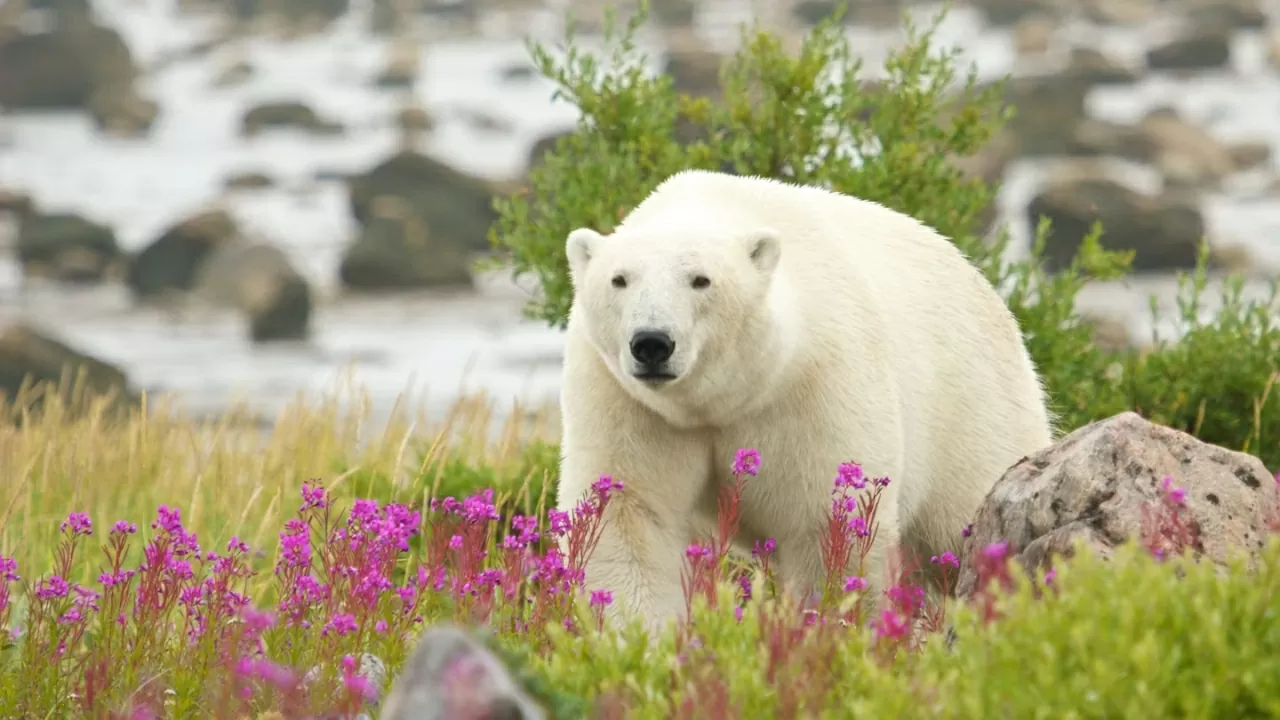 |
| With around 1,000 bears regularly visiting, Churchill has become the "polar bear capital of the world ." (Source: Shutterstock) |
When the first snowflakes fall upon the rugged, majestic Hudson Bay of Manitoba (Canada), it marks the peak of polar bear viewing season.
From mid-October to mid-November, polar bears gather along this icy coastline, waiting for the sea to freeze completely, glistening in the aurora borealis. Throughout the winter, the Arctic sea ice becomes their "stage" for hunting seals.
Approximately 1,000 bears regularly visit the area, making Churchill the "polar bear capital of the world".
The moment a polar bear emerges from the absolute stillness sends chills down your spine. Adult male bears can reach up to 3 meters in height when standing on their hind legs and weigh around 680 kg – the equivalent of a small car. Many companies offer polar bear-watching tours in Churchill, usually transporting visitors in specialized vehicles with heating and viewing platforms.
But if you want to truly get closer to nature, you should choose a walking tour, starting from Nanuk Polar Bear Lodge. Walking along the coast at sunrise, sunset, and during the aurora borealis will make the moment of witnessing polar bears even more magical. Besides bears, visitors can also encounter wolves, moose, Arctic foxes, and snow hares.
Watch the Northern Lights in Iceland
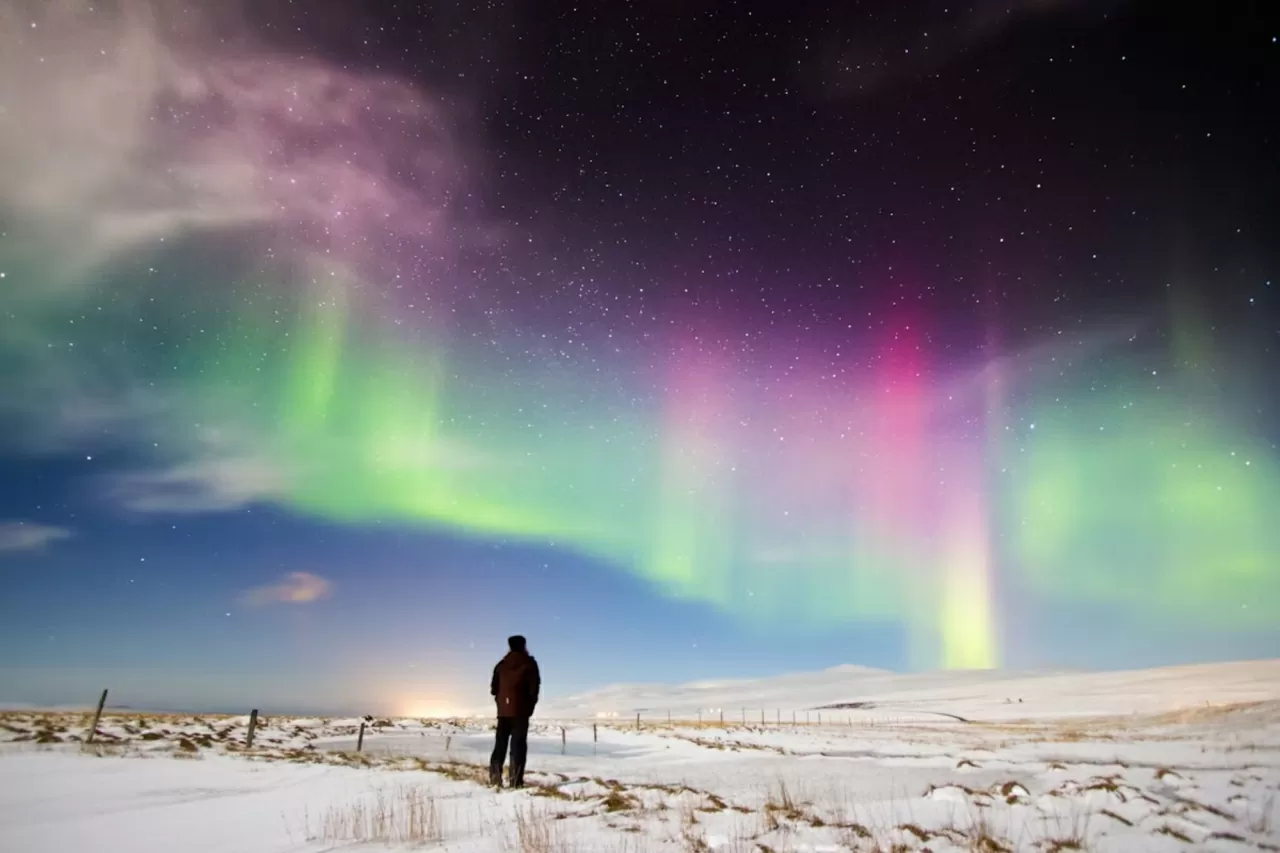 |
| The "Northern Lights" in the Icelandic sky. (Source: Lonely Planet) |
As autumn gives way to longer, darker nights, the most spectacular light show on the planet begins in the snow-covered wilderness of the Arctic.
You'll hold your breath as you witness the sky suddenly shift, and the shimmering aurora borealis—blue, pink, and purple—like a magic wand drawing across the heavens. It's a moment that makes anyone's heart race as they frantically raise their camera, confronted by a sight that seems otherworldly.
Although there are many places in the North to see the aurora borealis, Iceland consistently ranks among the top destinations. Located at approximately 65° North latitude, the island sits perfectly within the aurora belt. The aurora season here is also extended, from September to April of the following year.
Visitors only need to leave Reykjavík a short distance to admire this spectacular sight. However, the further away from the city, the greater the chance of seeing the aurora borealis. Therefore, the northern city of Akureyri is an emotionally charged stop, especially if you're viewing the aurora from the hot springs along the bay in the Lagoon Forest, where steam rises amidst the icy night.
Winter kayaking in Norway
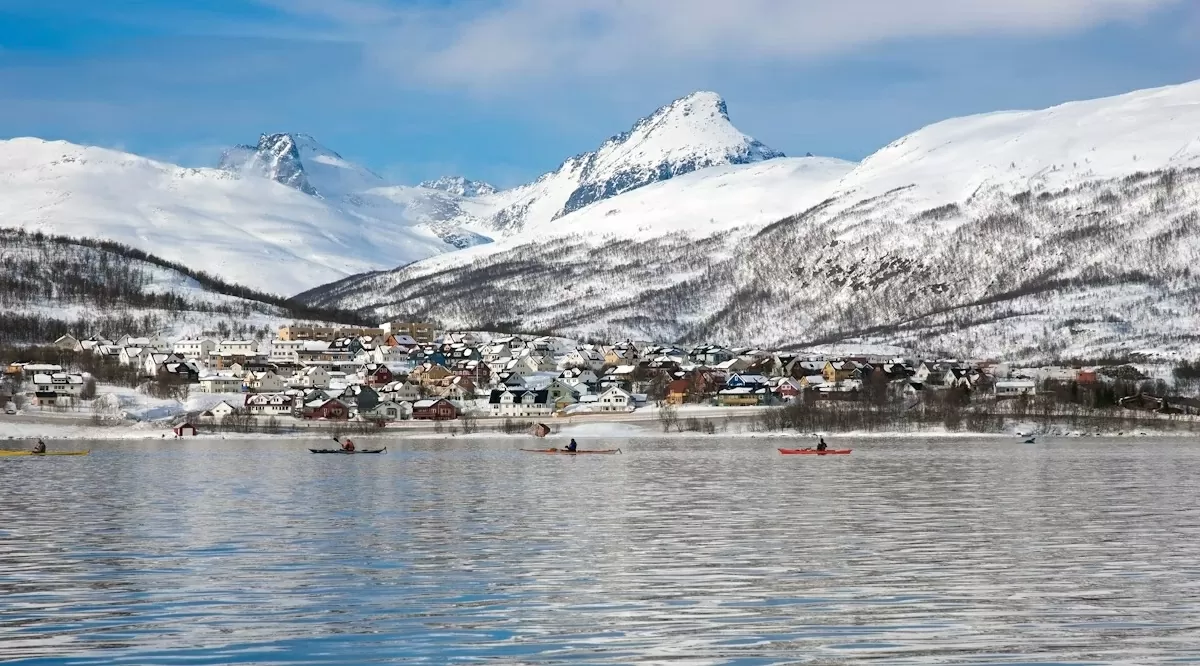 |
| Kayaking on rivers in Norway during winter is always a popular activity. (Source: Shutterstock) |
Known for its towering mountains, winding fjords, majestic waterfalls, and icy peaks, Norway is truly a paradise for winter adventures.
Norwegians fully embrace the philosophy of friluftsliv (living in harmony with nature outdoors), regardless of the cold weather, and always have a passionate love for wild beauty.
There are countless ways to explore the natural beauty of this place, but few experiences can compare to putting on your best clothes, grabbing a paddle, and embarking on a multi-day kayaking trip off the coast of Rebbenesøya Island, about a two-hour drive from Tromsø.
At the Elements Arctic off-grid eco-camp, professional guides will take you gliding smoothly across crystal-clear waters, nestled among pearly white mountains as temperatures drop below 0°C. Soft pastel lighting creates a magical atmosphere, and the steady paddling rhythm provides a meditative feeling, only occasionally interrupted by a white-tailed eagle, otter, or seal passing by. When the aurora borealis appears, visitors can curl up by a wood-fired fireplace in a warm yurt.
For an extra adrenaline rush, combine kayaking with snowshoeing and cross-country skiing. This is sure to be an unforgettable experience.
Discover the Sami culture in Finland.
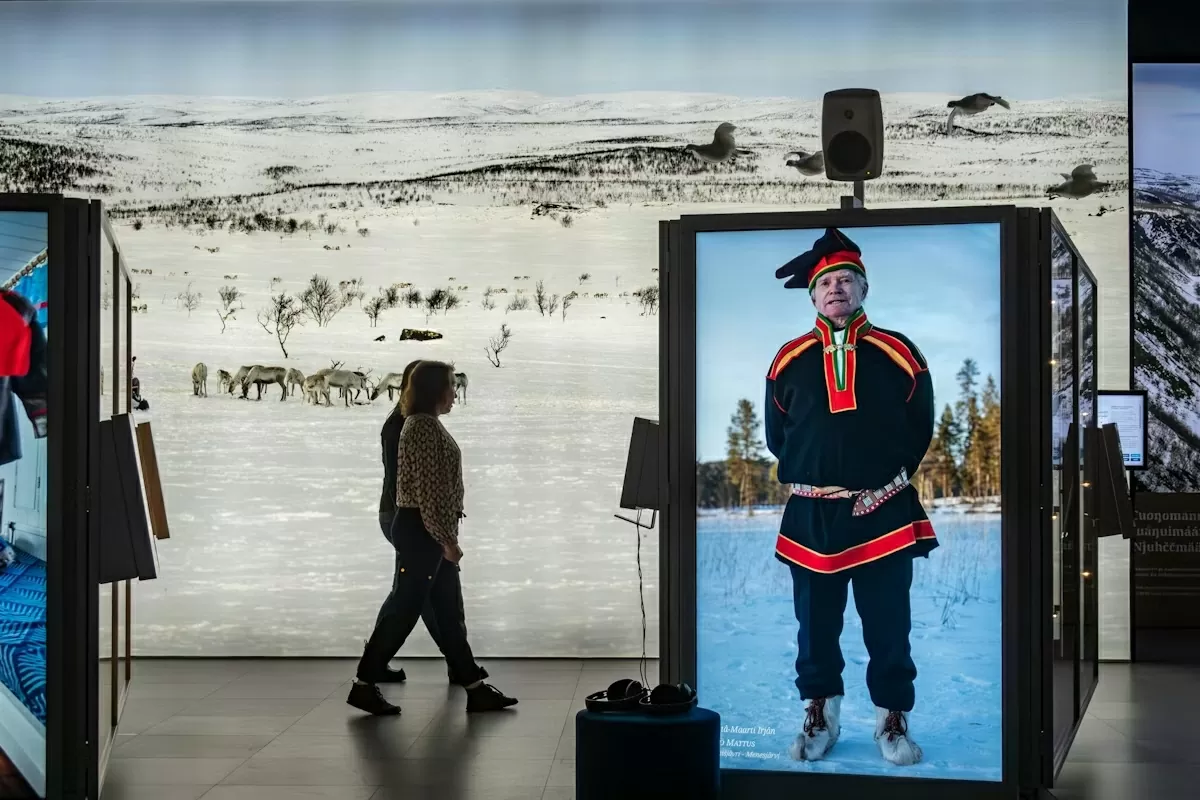 |
| Siida Museum. (Source: Shutterstock) |
When you think of Lapland in Finland, you often immediately think of Santa Claus with his "headquarters" in Rovaniemi, a place with reindeer, sparkling caves, gift-wrapping elves, and a festive Christmas atmosphere. However, this stunning Arctic region holds even more wonders waiting to be discovered.
In winter, Lapland appears like a fairytale postcard: tranquil, pristine, and stretching endlessly in the white of frozen hills and vast, snow-covered taiga forests.
The stillness here resonates with every breath. And in the night sky, the Northern Lights, or "revontulet" as the Finns call them, meaning "fox fire," flicker magically. According to legend, these are sparks of fire erupting from the tail of an Arctic fox as it runs across the snowfields.
Lapland is also home to the Sami people – an indigenous community deeply rooted in reindeer herding in the far north of Finland. Their way of life and identity are most evident in Inari, the lakeside capital of the Sami people.
Here, visitors can explore the Sami Parliament, visit the Siida Museum – a modern building that helps visitors gain a deeper understanding of the people's lifestyle in harmony with nature, the seasons, and the cycles of the earth and sky. Or you can hop on a sled and cross the snow-covered wilderness to Petri Mattus's reindeer farm, and hand-feed the reindeer amidst the tranquil winter scenery.
Note that if you want to witness the most exciting reindeer race of the year, come here at the end of March when the King's Cup takes place.
Enjoy a snowmobile ride in Svalbard, Norway.
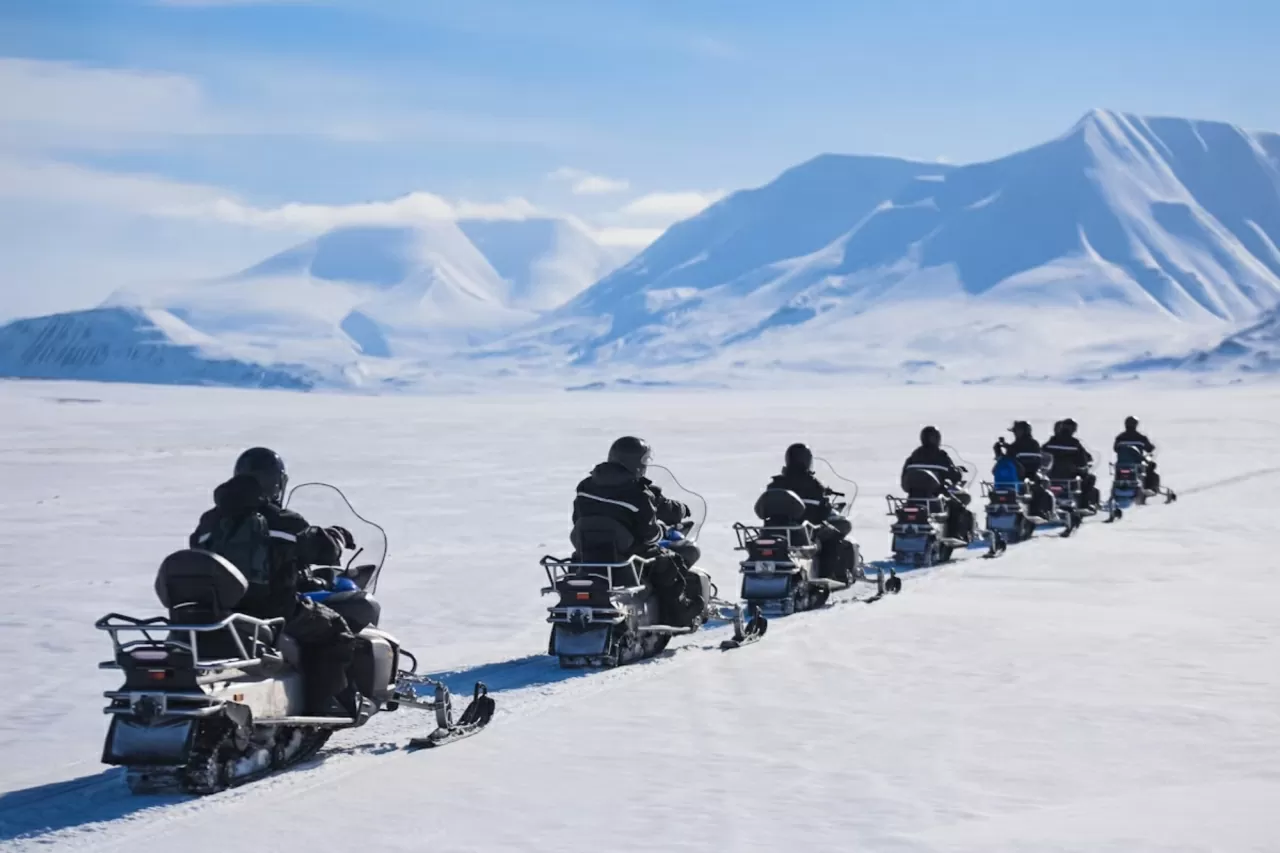 |
| Snowmobiles in the Svalbard archipelago, Norway. (Source: Shutterstock) |
At 78° North latitude, Spitsbergen Island, part of the Svalbard archipelago, is the "true" Arctic region and also the final stop for humans before embarking on their journey to the Earth's North Pole.
This is a desolate, harsh, yet breathtakingly beautiful land – a world of rocks, ice, towering mountain ranges, and endless frozen grasslands. Polar bears are quite numerous here, so locals always carry guns for self-defense.
Winter in Spitsbergen is extremely harsh, with temperatures frequently dropping to -20°C and sudden snowstorms. During the polar night, which lasts from mid-November to mid-January, the sun is completely absent, replaced instead by a magical pink, purple, and blue light, like something out of a dream.
From the Longyearbyen settlement, visitors can get a glimpse of the vastness of this snow-covered world. But nothing beats a multi-day snowmobile adventure. Once you've mastered the controls, you'll glide across ice floes, frozen fjords, and crystal-clear lakes, passing by old hunter-gatherer huts, and ending the long day in a cozy cabin where the aurora borealis twinkles on the horizon.
In Spitsbergen, polar bears are generally quite reclusive, but visitors can still spot Svalbard reindeer, Arctic foxes, or walruses.
Experience dog sledding in Greenland.
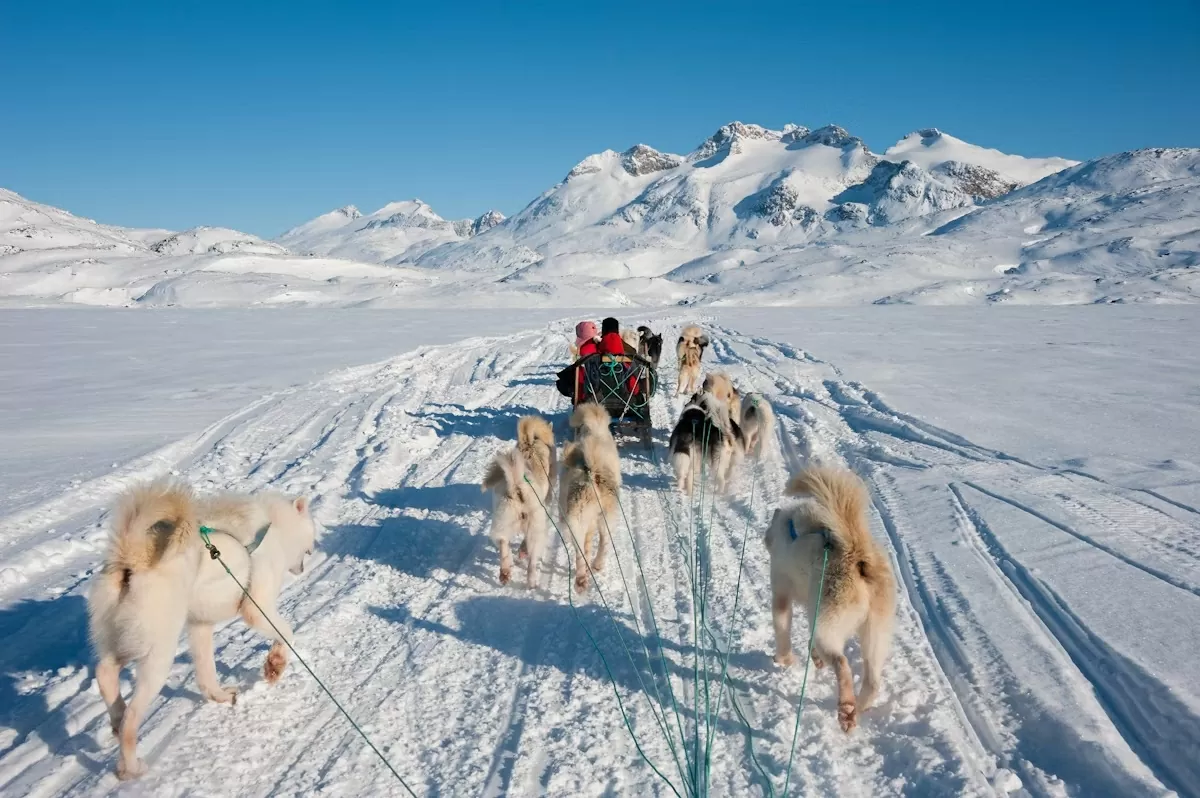 |
| Dog sleds are part of the more than 4,000-year history of the Inuit people in Greenland. (Source: Shutterstock) |
The cheerful barking of huskies, the pounding of their hooves on the icy snow – it's all the same, sending shivers down your spine. While dog sledding is common in many Arctic regions, in Greenland it's more than just an experience; it's part of a history spanning over 4,000 years.
Approximately 80% of Greenland is covered in ice, so for the Inuit, dog sleds were once a means of survival. In one of the world's harshest environments, it was the only way to navigate icy fjords for fishing and seal hunting.
As the journey begins, travelers must navigate the vehicle through winding roads and steep slopes, gradually accelerating as it glides across vast snow-covered landscapes and frozen lakes. The feeling is like flying, both wild and utterly free. And if traveling at night, tourists may even be lucky enough to witness the spectacular aurora borealis directly overhead.
The peak season for dog sledding is from February to April, when the snow is at its ideal time.
Located at 69° North latitude, on the ice-filled Disko Bay, Ilulissat is an ideal starting point for this journey. Choose reputable tour companies like World of Greenland, which organizes a variety of tours, from short 90-minute experiences to two-day treks through the wilderness, with overnight stays in tents near glaciers.
Immerse yourself in the icy weather of Sweden.
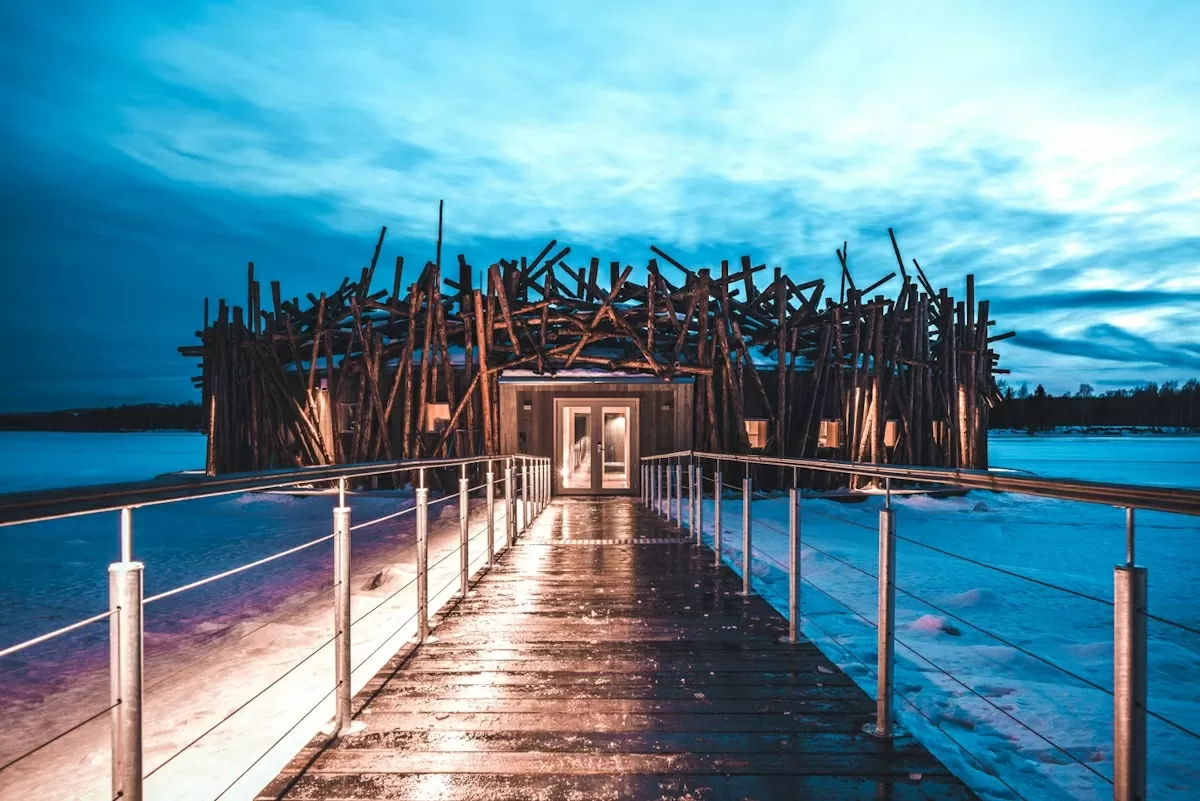 |
| The Arctic Bath hotel is designed to resemble a wooden beaver dam. (Source: Arctic Bath) |
If the cold makes you shiver even in your thickest thermal suit, then plunging into the icy waters of the Arctic Bath hotel in Harads (Sweden) will certainly leave you breathless, quite literally.
Floating on the Lule Glacier, this unique hotel and spa is designed like a beaver's wooden dam, reminiscent of the local people's past of transporting timber along the river.
At the heart of the complex is a circular, open-air pool, where the brave can immerse themselves in the bone-chilling water. This experience is said to improve mood, boost blood circulation, and enhance immunity. Afterwards, visitors can warm up in the sauna and enjoy a massage with pine essential oils.
If you stay in rooms floating on the river, you can even lie on your private balcony and watch the aurora borealis twinkling above.
For an even greater challenge, head east to Filipsborg, known as the "Arctic villa" of Kalix. Here, visitors can combine reindeer sledding, snowshoeing, snowmobiling, and floating on icy waters in neoprene survival suits—all under the shimmering aurora borealis.
Additionally, if you have time, venture a little further north to visit the Icehotel – a famous ice hotel, newly built each year from massive blocks of ice taken from the Torne River.
Velogemel sliding in the Jungfrau mountain range, Switzerland
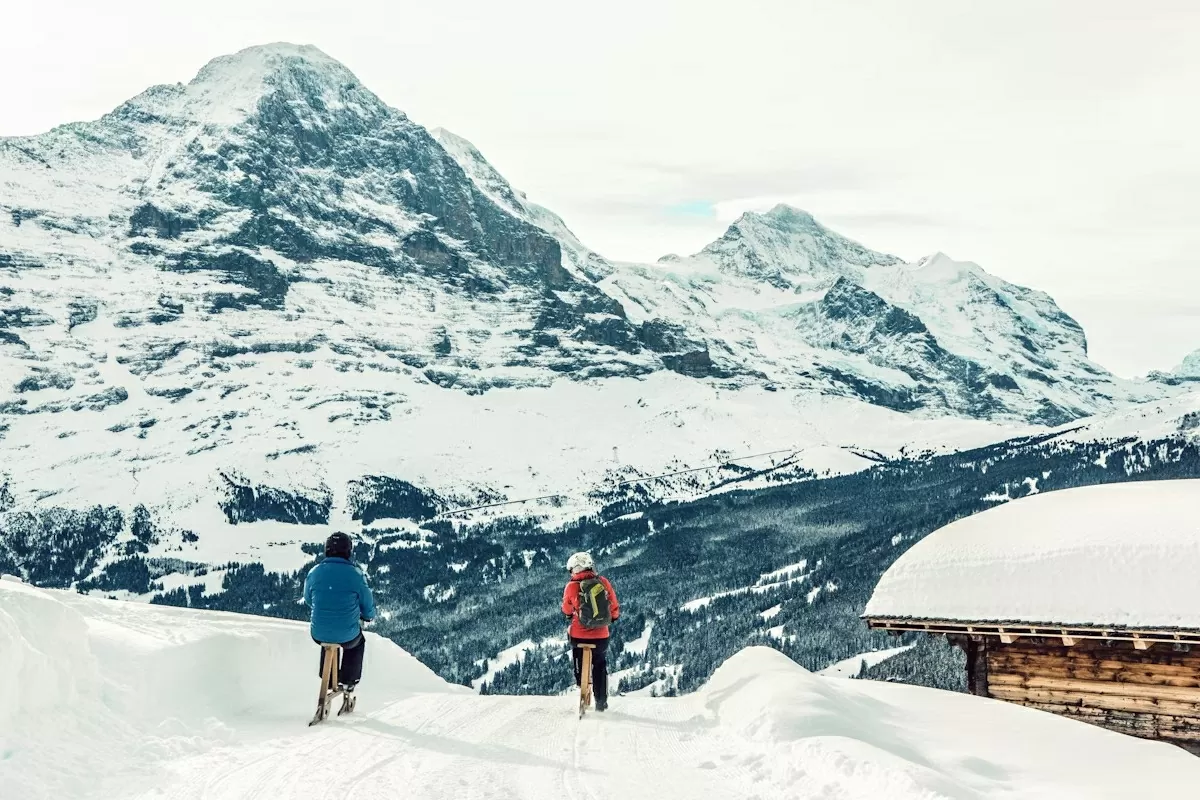 |
| Tourists "travel" on unique velogemels. (Source: Switzerland Tourism) |
In the Jungfrau region of Switzerland, there are unique, classic-style wooden velogemels (a type of bicycle with two small sliding sides instead of tires). These unusual vehicles are used to descend the snow-covered slopes of the Bernese Oberland, where the mythical peaks of the Eiger, Mönch, and Jungfrau stand tall.
Velogemel has no brakes, no pedals, and no gears, so losing balance is inevitable. But with a little courage and a few tries, you'll quickly glide down the slopes to the sound of the wind whistling in your ears and the spectacular scenery stretching out before you. This type of vehicle travels quite fast, so if you want to slow down, press your heels firmly into the snow.
The village of Grindelwald is the birthplace of the velogemel, with the first one designed in 1911 by Christian Bühlmann, the son of a sawmill owner. After contracting polio and having difficulty walking, he invented this unique means of transportation.
Later, it became a popular mode of transportation on snow-covered streets. Today, the velogemel is making a comeback as an eco-friendly and stylish option for winter.
Source: https://baoquocte.vn/bat-mi-8-hoat-dong-trai-nghiem-sieu-thuc-nhat-cho-chuyen-du-hi-mua-dong-336460.html


























![[Photo] Prime Minister Pham Minh Chinh holds a phone call with the CEO of Russia's Rosatom Corporation.](/_next/image?url=https%3A%2F%2Fvphoto.vietnam.vn%2Fthumb%2F1200x675%2Fvietnam%2Fresource%2FIMAGE%2F2025%2F12%2F11%2F1765464552365_dsc-5295-jpg.webp&w=3840&q=75)














































Comment (0)