

A 3-year-old child from Vinh Phuc province was attacked by two large German Shepherd dogs (approximately 25kg each) belonging to a neighbor. Upon arrival at the hospital, the child was panicked, crying, and had multiple wounds on the head, face, groin, back, and legs, along with hematuria (blood in the urine).
The child received immediate first aid, wound cleaning, pain relief, and tetanus and rabies vaccinations. After ultrasound and X-ray examinations to assess the extent of organ damage, doctors discovered the child had a ruptured right kidney.
The child was scheduled for a contrast-enhanced abdominal CT scan to assess the extent of kidney damage. The results showed that the right kidney was fractured into two pieces, with contrast material leaking into the perirenal space.
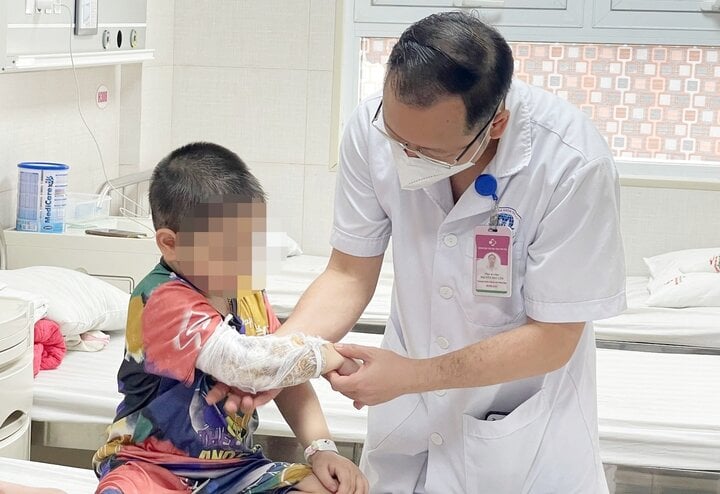
A doctor examines the wound of a child bitten by a dog. (Photo: Provided by the hospital)
The doctor concluded that the child had a grade IV right kidney injury according to the ASST (American Society of Trauma Surgery) classification of kidney injuries.
The child was treated according to an intensive protocol, including intravenous fluids, urinary catheterization to monitor urine color and quantity, the use of three types of antibiotics in combination, pain relief, and hemodynamic monitoring and blood oxygen saturation every hour on the first day.
On the second day of hospitalization, the child received a transfusion of 150ml of red blood cells of the same blood type, and continued testing was conducted to monitor the bleeding over time.
After 4 days of treatment, the child is now alert, fever-free, able to eat, the soft tissue wounds have minimal oozing from the dressings, the abdomen is not distended, there is tenderness on palpation in the right flank, and urine through the catheter is clear.
Dr. Nguyen Duc Lan, Head of the General Pediatric Surgery Department at Phu Tho Provincial Obstetrics and Pediatrics Hospital, assessed this as a complex case. Although the external soft tissue injuries were not too severe, there was a serious blunt abdominal trauma (grade IV kidney rupture) requiring close monitoring and emergency surgical intervention if conservative treatment was ineffective.
A week earlier, this unit also admitted a 4-year-old child from Vinh Phuc who was attacked and bitten on the head and right arm by his grandfather's dog. Upon arrival at the hospital, the child had multiple abrasions, including two lacerations on the head measuring 3x2cm, and two wounds on the elbow and right arm measuring 3x8cm, with significant bleeding.
The child received daily wound care, including dressing changes, cleaning, and plasma therapy, along with antibiotics and painkillers. The wound was sutured after 5 days of treatment.
Currently, after one week of treatment, the child's condition is stable, the wounds are dry, the child is eating well, and is preparing to be discharged from the hospital.
Based on these two cases, doctors advise parents and caregivers to be vigilant and not allow children to play with dogs and cats, especially unfamiliar dogs or large animals. If a child is bitten or injured by a dog, cat, or wild animal, they should be taken to a medical facility immediately for examination, consultation, and treatment guidance.
At the same time, dog and cat owners need to ensure their pets are fully vaccinated and receive annual booster shots as recommended by the veterinary industry; dogs and pets should not be allowed to roam freely on the streets. If dogs and pets are taken out on the street, they must wear muzzles to prevent them from attacking others.
Source













































































Comment (0)