

The Government proposes to remove the referral procedure for some rare diseases, serious diseases... to be transferred directly to a higher level of expertise to reduce procedures, create convenience, reduce out-of-pocket expenses for people, and save costs for the Health Insurance Fund (HIF). Accordingly, the draft law stipulates that patients can go to medical examination and treatment facilities at the basic or advanced technical level in cases of confirmed diagnosis and treatment of some rare diseases, serious diseases, diseases requiring surgery or using high technology according to the list of diseases and techniques prescribed by the Minister of Health : 100% payment of inpatient and outpatient health insurance examination and treatment costs according to the prescribed percentage of the benefit level.
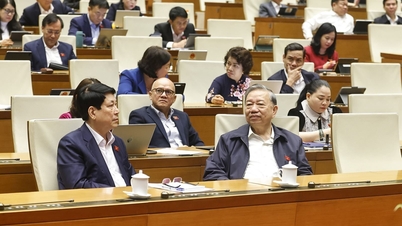
However, during the National Assembly's discussion session on the draft Law amending and supplementing a number of articles of the Law on Health Insurance, some National Assembly deputies proposed to "keep intact" the referral procedure.
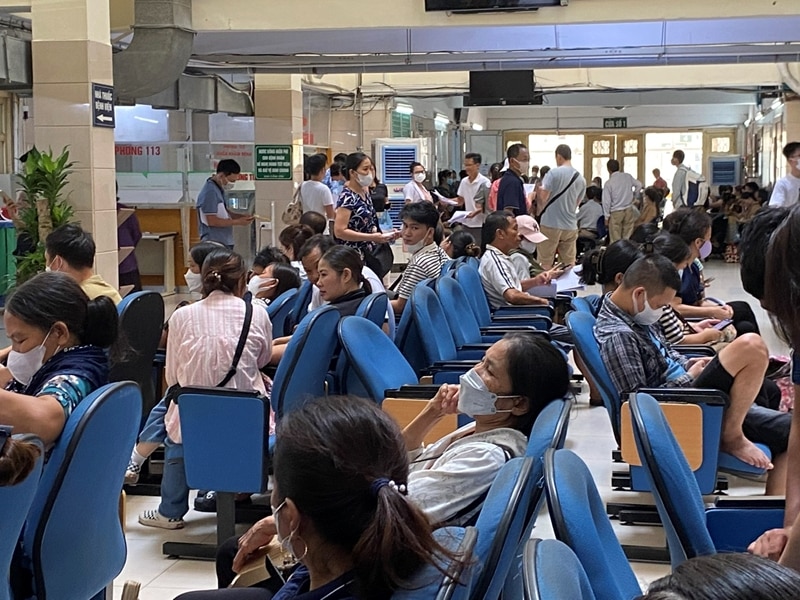 |
| The proposal to remove the referral procedure for some rare and serious diseases, which can be directly promoted to a higher level of expertise, is considered to be a long-standing bottleneck for people, solving the problem of reducing administrative procedures, creating convenience and saving costs for people and health insurance. (Illustration: Do Thoa) |
According to this delegate, the referral form provides administrative information as well as medical condition, treatment history, etc., helping the receiving facility prepare timely information for effective and quick treatment.
In addition, these delegates proposed that the Ministry of Health should supplement the definition of "rare disease" and the list of critical diseases that are granted a one-time referral certificate for the entire treatment process, instead of granting it for each fiscal year as is currently the case.
The request to legalize the definition of rare diseases and the list of critical diseases is correct and necessary. However, maintaining the referral procedure for rare diseases and critical diseases in the current context seems no longer appropriate and should be abolished as proposed by the Government for many reasons.
Referral procedures still cause trouble for patients
Delegate Nguyen Hoang Bao Tran (Binh Duong delegation) said that currently, according to the provisions of the Law on Health Insurance, the registration of primary medical examination and treatment facilities is based on administrative boundaries. However, in some special cases such as rare diseases and serious diseases, people are not allowed to go to the upper level for examination and treatment, while the lower level does not have enough professional capacity to treat and must be transferred to another level.
Some chronic diseases have not been included in the primary health care system for management and medication by higher levels. This limits the rights of health insurance participants and complicates unnecessary procedures.
In addition, the regulations on initial medical examination and treatment registration are still heavily administrative, making it inconvenient for patients to go to other medical examination and treatment facilities at the same or lower levels, affecting the rights of patients.
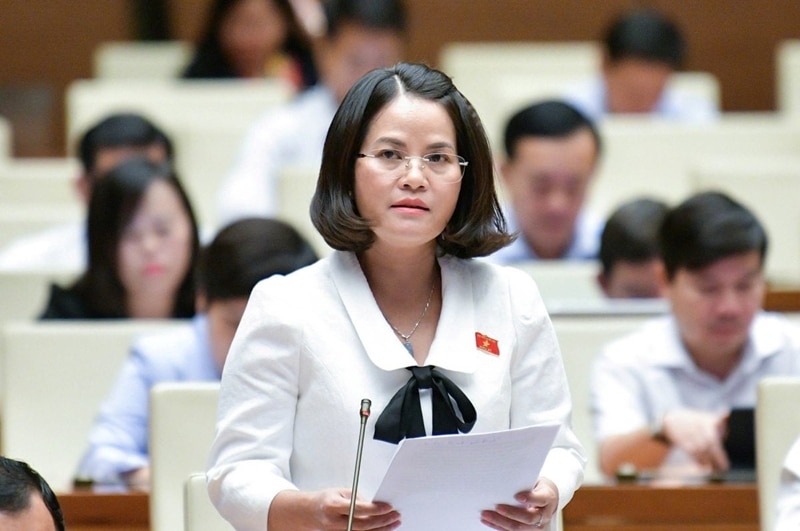 |
| Delegate Nguyen Hoang Bao Tran (Binh Duong delegation) commented: Currently, referral procedures still cause inconvenience to patients in some places, even causing negativity, causing frustration for patients and their families. Photo: QH |
According to delegate Tran, currently, referral procedures still cause inconvenience to patients in some places, even causing negativity and frustration for patients and their families.
From January 1, 2016, medical examination and treatment will be connected between commune health stations, polyclinics and district hospitals; from January 1, 2021, medical examination and treatment will be connected to provinces nationwide for inpatient medical examination and treatment.
This route connection causes some problems related to routes, crossing routes, and transferring routes, leading to overload for upper routes and reducing the rate of initial medical examination and treatment at grassroots health facilities.
The 2023 Law on Medical Examination and Treatment stipulates 03 levels of technical expertise (including initial medical examination and treatment, basic medical examination and treatment, and high-tech specialized medical examination and treatment) instead of technical expertise and hospital level, leading to the regulation on calculating medical examination and treatment service prices based on technical expertise/hospital level no longer being effective. Therefore, delegate Tran proposed to amend and adjust the contents related to the hospital level technical expertise in the draft Law on Health Insurance to synchronize with the Law on Medical Examination and Treatment, ensuring consistency in health insurance management and payment of medical examination and treatment costs under health insurance.
Proposal for people with rare and serious diseases to use referral papers throughout the treatment process
Meanwhile, delegate Tran Khanh Thu (Thai Binh delegation) said that the Draft Law stipulates a mechanism to allow patients to go to other facilities for examination and treatment without a referral, which seems to support health insurance participants to access services more conveniently. However, this may miss the opportunity to detect some disease symptoms early because patients have skipped primary health care to go to higher-level health care, even in unnecessary cases. This will lead to reduced efficiency and even disrupt the professional hierarchy of the health system.
According to delegate Tran Khanh Thu, the cause of frustration for patients going to see a doctor under health insurance is due to the difficulty in requesting a referral for patients with chronic and serious illnesses; or the list of drugs at grassroots health facilities is less and poorer than at higher levels when treating the same illness.
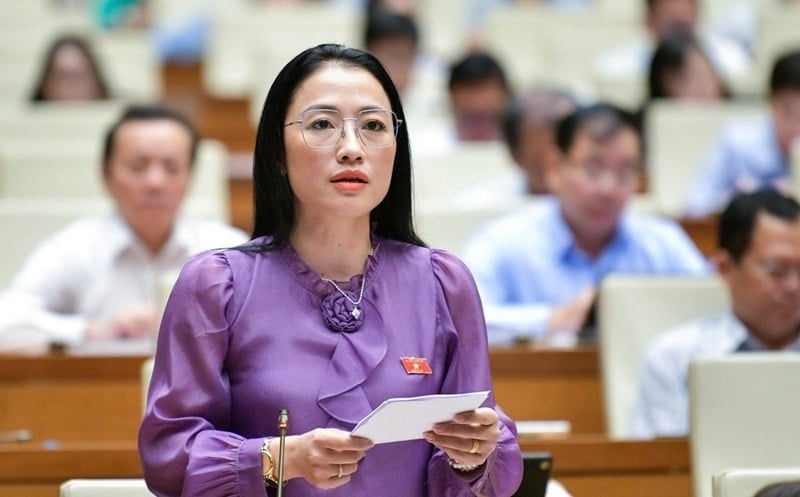 |
| Delegate Tran Khanh Thu (Thai Binh delegation) proposed that people with rare and serious diseases be allowed to use referral papers throughout the entire treatment process. Photo: QH |
“The nature of the referral regulations is important and necessary in handling medical examination and treatment for people. In addition to providing administrative information, the referral form also provides the patient's condition, treatment history, etc., helping the receiving facility have timely information about the patient to receive, care for, and treat the patient quickly and conveniently,” emphasized delegate Tran Khanh Thu.
From the above analysis, delegate Thu proposed to keep the scope of benefits as the current roadmap for health insurance coverage, but to adjust and supplement the regulations assigning the Minister of Health to issue the definition of rare diseases and the list of critical diseases and rare diseases that can use a one-time referral paper for the entire treatment process, not for a period of 1 fiscal year as at present.
Along with that, strengthen the capacity of the grassroots health system to be able to provide outpatient treatment for a number of chronic diseases uniformly at all professional levels in health facilities and thoroughly resolve pressing issues in issuing hospital referral papers.
For example, the delegate said that a patient diagnosed with cancer at the K Hospital would continue to be treated until the end of the treatment regimen, instead of requiring the patient to return and request a referral as is currently the case; or a patient who has an accident and is brought to the hospital would be immediately admitted, processed, and treated.
Regarding some opinions that referral papers should be removed from health insurance, with many years of working in the health sector, delegate Nguyen Tri Thuc (Ho Chi Minh City delegation) said that referral papers in the health sector are very necessary, otherwise it will easily lead to a situation where the grassroots health system has no patients, while the upper level is overloaded, at that time the grassroots health system no longer has enough funds to operate, reducing the role of the grassroots health system.
In addition, the referral form plays a very important role, which is to summarize the medical record, when the patient enters the primary or primary line, the patient has signs and symptoms and has recorded the history of intervention measures and medications. This information is very important when transferring to the specialized line, the doctor knows the summary of the disease progression to have an appropriate treatment plan.
“In the medical field, there are symptoms that appear at one point, but lose their diagnostic value later. If we don’t have a referral letter, we won’t know that the patient has those symptoms, and we will unintentionally harm the patient further. With the development of information technology, I think referral letters are very convenient,” said delegate Nguyen Tri Thuc.
Previously, grassroots hospitals were allocated a budget to pay for medical examination and treatment under health insurance, so when transferring patients to higher-level hospitals, the higher-level hospitals had to bear the cost of transferring patients, so hospitals were reluctant to transfer patients. But now that this regulation has been removed, hospitals have created easier and more favorable conditions for transferring patients to higher-level hospitals, delegate Nguyen Tri Thuc added.
It can be said that while ordinary people suffer one thing when they go to the hospital, those who suffer from rare or serious diseases suffer ten or a hundred times more. Not only physically, but also financially, because if just one person gets seriously ill, the family can fall into financial ruin.
The proposal to abolish referral papers for patients with rare and serious diseases is not only a reasonable but also humane solution, helping to reduce the burden and anxiety for patients as well as their relatives!


![[Photo] 60th Anniversary of the Founding of the Vietnam Association of Photographic Artists](/_next/image?url=https%3A%2F%2Fvphoto.vietnam.vn%2Fthumb%2F1200x675%2Fvietnam%2Fresource%2FIMAGE%2F2025%2F12%2F05%2F1764935864512_a1-bnd-0841-9740-jpg.webp&w=3840&q=75)
![[Photo] National Assembly Chairman Tran Thanh Man attends the VinFuture 2025 Award Ceremony](/_next/image?url=https%3A%2F%2Fvphoto.vietnam.vn%2Fthumb%2F1200x675%2Fvietnam%2Fresource%2FIMAGE%2F2025%2F12%2F05%2F1764951162416_2628509768338816493-6995-jpg.webp&w=3840&q=75)





































































Comment (0)